TokyoTokyo Mon - Fri 10:00-18:00 +81 (366) 701-751
info@mountequitygroup.com

Blog

Google claims it is using A.I. to design chips faster than humans

Source: GoogleGoogle claims that it has developed artificial intelligence software that can design computer chips faster than humans can.The tech giant said in a paper in the journal Nature on Wednesday that a chip that would take humans months to design can be dreamed up by its new AI in less than six hours.The AI has already been used to develop the latest iteration of Google’s tensor processing unit chips, which are used to run AI-related tasks, Google said.   “Our method has been used in production to design the next generation of Google TPU,” wrote the authors of the paper, led by Google’s head of machine learning for systems, Azalia Mirhoseini.To put it another way, Google is using AI to design chips that can be used to create even more sophisticated AI systems.Specifically, Google’s new AI can draw up a chip’s “floorplan.” This essentially involves plotting where components like CPUs, GPUs, and memory are placed on the silicon die in relation to one another — their positioning on these miniscule boards is important as it affects the chip’s power consumption and processing speed.It takes humans months to optimally design these floorplans but Google’s deep reinforcement learning system — an algorithm that’s trained to take certain actions in order to maximize its chance of earning a reward — can do it with relatively little effort.Similar systems can also defeat humans at complex games like Go and chess. In these scenarios, the algorithms are trained to move pieces that increase their chances of winning the game but in the chip scenario the AI is trained to find the best combination of components in order to make it as computationally efficient as possible. The AI system was fed 10,000 chip floorplans in order to “learn” what works and what doesn’t.Whereas human chip designers typically lay out components in neat lines, Google’s AI uses a more scattered approach to design its chips. This isn’t the first time an AI system has gone rogue after learning how to perform a task off the back of human data. DeepMind’s famous “AlphaGo” AI made a highly unconventional move against Go world champion Lee Sedol in 2016 that astounded Go players around the world.Google’s engineers noted in the paper that the breakthrough could have “major implications” for the semiconductor sector.Facebook’s chief AI scientist, Yann LeCun, hailed the research as “very nice work” on Twitter, adding “this is exactly the type of setting in which RL shines.”The breakthrough was hailed as an “important achievement” that will “be a huge help in speeding up the supply chain” in a Nature editorial on Wednesday.However, the journal said “the technical expertise must be shared widely to make sure the ‘ecosystem’ of companies becomes genuinely global.” It went on to stress “the industry must make sure that the time-saving techniques do not drive away people with the necessary core skills.”

Half of pandemic unemployment money may have been stolen: report

Fraudsters may have plundered as much as half of the unemployment benefits that the US pumped out in a hurry during the pandemic.

Blake Hall, CEO of ID.me, a fraud prevention service, told Axios that the US has lost more than $400 billion to crooked claims.

The US may have been robbed of as much as half of all money given out through unemployment benefits during the pandemic, Hall told the outlet.

Haywood Talcove, the CEO of LexisNexis Risk Solutions, estimated that most of the stolen money, at least 70 percent, probably ended up outside the US, according to Axios.

Much of the pilfered funds likely went to criminal syndicates in China, Nigeria, Russia and elsewhere, he said, according to the outlet.

“These groups are definitely backed by the state,” Talcove told Axios.

A lot of the money was also likely stolen by US street gangs, who have been taking a greater share of the stolen funds in recent months, Axios reported.

The US may have been robbed of as much as half of all money given out through unemployment benefits during the pandemic, according to one executive.Los Angeles Times via Getty Images

Criminals were likely able to defraud the government by stealing personal information and using it to impersonate would-be unemployment claimants, Axios reported.

Other groups, the report said, may have tricked legitimate claimants into handing over their personal information.

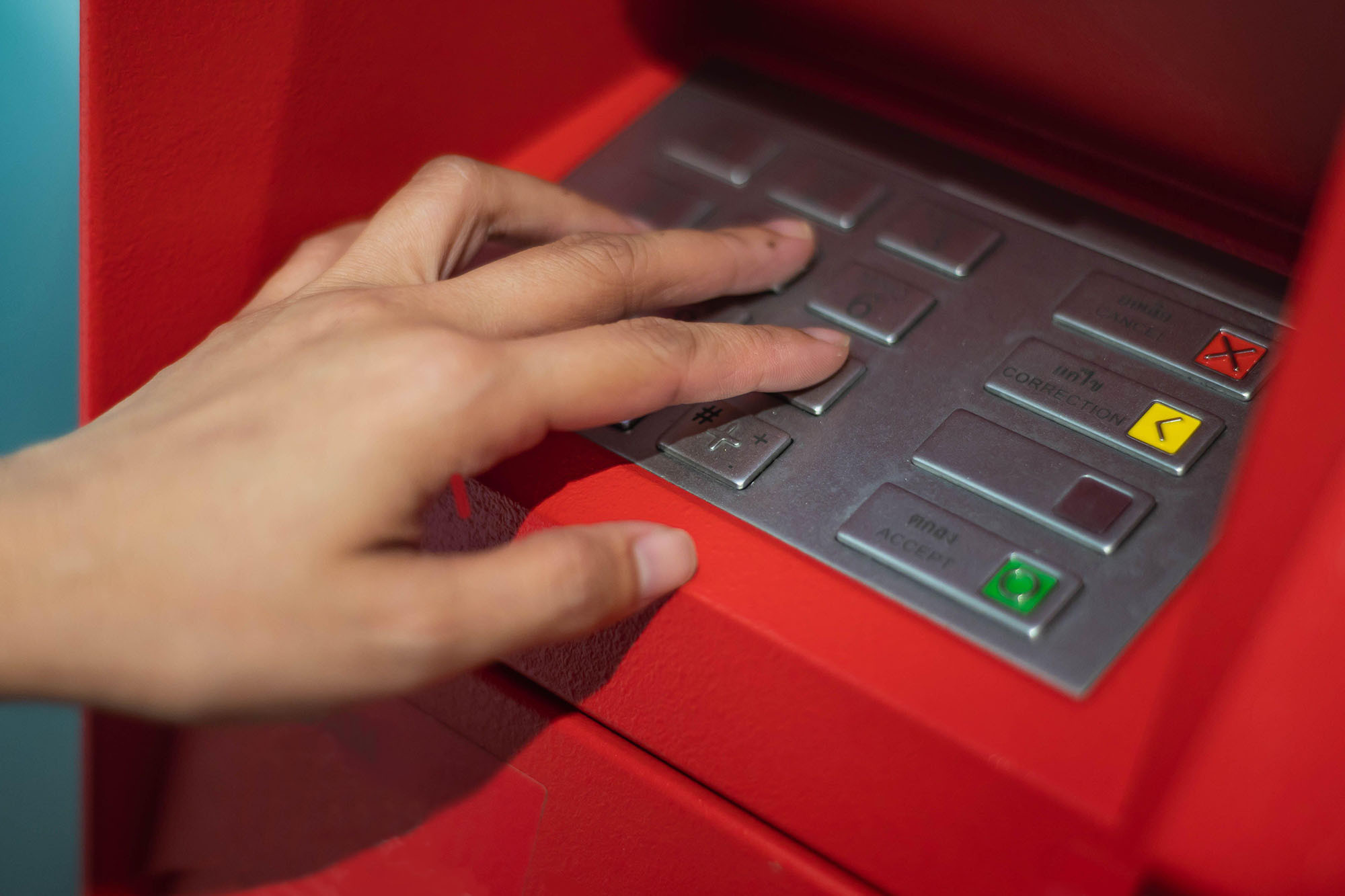
Low-level criminals, or so-called mules, would then be given debit cards and asked to withdraw money from ATMs, the report said. That money could then be transferred abroad, often via untraceable cryptocurrencies like bitcoin.

Criminals were likely able to defraud the government by stealing personal information and using it to impersonate would-be unemployment claimants.AFP via Getty Images

It’s long been assumed by many politicians and government watchdogs that criminals would make off with at least some of the emergency pandemic relief funds.

State unemployment systems were ill-prepared for the demands of the pandemic. It was widely assumed that some of the hundreds of billions doled out would slip through the cracks, but many politicians said it was critical to get the money out as quickly as possible.

Now, the latest estimates reveal the scope of the fraud that took place over the past year.

Much of the pilfered funds likely went to criminal syndicates in China, Nigeria, Russia and elsewhere.Alamy Stock Photo

China arrests 1,100 crypto users on money laundering charges

China’s crackdown on cryptocurrencies is heating up with a series of arrests that suggest digital currency users can be traced.

More than 1,100 people who allegedly used cryptocurrencies to launder profits from frauds were arrested Wednesday, the country’s Ministry of Public Security said in a statement. 

The busts involved 170 criminal groups who authorities say hired “coin farmers” to open crypto accounts after bank accounts they used for their alleged scams had been seized.

“The high illegal income attracts a large number of people to participate, causing serious social harm,” the ministry said of the alleged plots.

The arrests may cast further doubt on the supposed un-traceability of cryptocurrencies. On Tuesday, the price of bitcoin fell almost 12 percent after it was revealed that US authorities were able to reclaim most of a bitcoin ransom that Colonial Pipeline paid to hacker group DarkSide in May. 

“Criminals have been using bitcoin because of the supposed inability of governments to get at it,” Anthony Denier, CEO of trading platform Webull, told the Post on Tuesday. “If governments can claw it back, that hurts its appeal.” 

Wednesday’s arrests are part of a broader Chinese crackdown on crypto. They come less than a month after the government called for greater regulation of digital currencies.

A committee presided over by a member of China’s Politburo wrote in May that it is necessary to “crack down on bitcoin mining and trading behavior, and resolutely prevent the transmission of individual risks to the social field.” 

Worries about bitcoin’s traceability and the looming threat of government regulations have sent the cryptocurrency plummeting from its peak of more than $63,000 in April. Bitcoin was trading at about $37,600 Thursday morning. 

Additional reporting by Will Feuer

Apple and other U.S. companies are under pressure to answer for China's 'repression,' key Biden ally says

Apple, Cisco and other U.S. companies with deep ties to China are under increasing pressure to address Beijing’s “repression of human rights and democracy,” one of President Joe Biden’s key allies in the Senate said Thursday on CNBC’s “Squawk Box.”The comments from Sen. Chris Coons, D-Del., came two days after his chamber passed a bipartisan bill to boost U.S. competitiveness with China.Coons compared the U.S.-China relationship to America “decoupling” from the former Soviet Union during the Cold War.While U.S. business ties now are far more robust with China than they were with the USSR, Coons said that there is “some gradual distancing” taking place between the two economic superpowers.Coons, who serves on the Senate Foreign Relations Committee, also made the case that Chinese conduct in its own country and around the world is growing increasingly hard to ignore.The most important Great Wall of China this century, Coons said, is what he called the “Great Firewall of China” that the government uses to “block off the internet in China and require censorship and use it to coordinate surveillance and repression of their own people.”Coons also noted that both the Biden and Trump administrations called China’s treatment of Uighurs in Xinjiang province a genocide.CNBC PoliticsRead more of CNBC’s politics coverage:Senate passes $250 billion bipartisan tech and manufacturing bill aimed at countering ChinaColonial Pipeline paid $5 million ransom one day after cyberattack, CEO tells SenateBezos, Buffett, Bloomberg, Musk, Icahn and Soros pay tiny fraction of wealth in income taxes, report revealsCompanies that are trying to manufacture and operate in both countries “are facing increasingly difficult questions in the west about what you’re doing to help facilitate the repression of human rights and democracy in China and by the Chinese in other places around the world,” Coons said.Asked what those companies should be telling China right now, Coons replied: “Stop stealing our intellectual property.””They force you to transfer technology to your Chinese operations and then frankly steal them from you,” he said. “They are competing with us in vaccine diplomacy and in fighting for the next generation of technology.”Coons sang the praises of a $250 billion technology and manufacturing bill, which is aimed specifically at positioning the U.S. to better compete with China. The legislation, dubbed the U.S. Innovation and Competition Act, passed the Senate on Tuesday with rare bipartisan support.The bill’s sizable investments in semiconductors, 5G, quantum computing and other industries “will make it far more likely that the United States and our close allies are ahead of the curve, rather than behind the curve, in the next generation of technologies that are dual use for both civilian and military,” Coons said.Out-competing China will involve “coordinating our investments in new technologies,” Coons said.He gave an example of then-Secretary of State Mike Pompeo urging U.S. allies not to use Chinese telecommunications giant Huawei due to security concerns.”What a lot of our allies said was, ‘Well, that’s interesting. What is your alternative?’ And there wasn’t an American alternative,” Coons said.”We need to invest in being competitive for this century with China.”

FDA Approves Medtronic's Recharge-Free Spinal Cord Stimulation Platform 'Vanta'

(RTTNews) – The U.S. Food and Drug Administration has approved Medtronic plc’s (MDT) Vanta, a high performance recharge-free implantable neurostimulator with a device life that can be optimized up to 11 years.

The Vanta neurostimulator offers nearly twice the device life than competitive primary cell devices. It also utilizes Medtronic’s proprietary AdaptiveStim technology for personalized pain relief that adapts to the patient’s movement or body position using a built-in accelerometer.

AdaptiveStim technology goes beyond in-office programming by automatically adjusting stimulation to maintain each patient’s optimal dose.

The Vanta neurostimulator also provides unmatched full-body MRI access with Medtronic SureScan technology. Approximately 82% of SCS-implanted patients will need at least one MRI within five years of implant.

Medtronic said it is continually innovating to advance spinal cord stimulation therapy technologies that improve quality of life for people with chronic pain. The Vanta neurostimulator represents a 10% increase in longevity compared to PrimeAdvanced, Medtronic’s previous generation recharge-free device. It is also 20% smaller than the PrimeAdvanced neurostimulator, with a more rounded, ergonomic contouring to offer enhanced comfort.

Microsoft is developing new hardware to bring its 'Netflix for games' service to TVs

In this articleMSFTA gamer plays soccer title Pro Evolution Soccer 2019 on an Xbox console.Sezgin Pancar | Anadolu Agency via Getty ImagesMicrosoft is developing dedicated streaming hardware that people will be able to hook up to their TVs to use its Netflix-like cloud gaming service.The company is betting the future of video games will be a subscription-based model where people pay a certain amount of money each month to get access to a plethora of titles.Its Xbox Game Pass service does exactly that, offering access to a library of games developed both in-house and by third-party studios.That’s mostly digital downloads, but last year streaming was added with Microsoft publicly releasing Xbox Cloud Gaming. The feature is sort of like a “Netflix for games,” allowing gamers to play games that are hosted on remote servers and then streamed to users over the internet.A number of other companies have launched similar game-streaming services, including Google with Stadia and Amazon with Luna.Now, Microsoft is aiming to push its cloud gaming product to other platforms. It started rolling out Xbox Cloud Gaming to some users via a web browser on iPhones, iPads and PCs in April (Microsoft couldn’t launch a proper mobile app for cloud gaming on Apple devices due to a dispute over App Store policies). And on Thursday, the company announced it wants to expand the service to TVs as well.One way it plans to do that is by partnering with manufacturers to add cloud gaming to smart TVs. But Microsoft is also developing streaming devices which users can plug into their TV or computer monitor to stream games from the cloud. The company didn’t elaborate on what those devices could look like, though it’s reminiscent of Amazon’s Fire TV and Google’s Chromecast dongles, both of which now support cloud gaming.In addition, Microsoft says it is working with mobile carriers like Telstra in Australia to offer new Xbox subscription models. It’s also expanding cloud gaming to four new countries — Australia, Brazil, Mexico and Japan —  later this year, and aims to publicly launch the browser-based version of the software to all members of its $15-a-month Xbox Game Pass Ultimate subscription in the coming weeks.Microsoft said it plans to add cloud gaming to its new Xbox Series X console, which launched last November to compete with Sony’s PlayStation 5. In the next few weeks, the company will also upgrade the servers that power its cloud gaming service from its old Xbox One hardware to the Xbox Series X.Microsoft competes aggressively with Sony when it comes to gaming. But it’s taking a different strategy to its Japanese counterpart. While Sony is known for blockbuster exclusives that can only be played on a PlayStation console, Microsoft is focusing on embedding its Xbox services onto multiple platforms, including mobile and PC.Microsoft has been stepping up its investments in gaming, buying the iconic studio Bethesda for $7.5 billion in its biggest video game-related acquisition yet.The company is holding a joint event with Bethesda on Sunday as part of the E3 gaming conference to show off new games, with fans speculating they will reveal some details about a hotly-anticipated sci-fi game called Starfield.

US workers file 376,000 new jobless claims, signaling a recovering labor market

The number of Americans seeking new unemployment benefits fell again last week to a fresh pandemic low, the feds said Thursday.

Initial worker filings for jobless claims, seen as a proxy for layoffs, reached 376,000 last week, down from 385,000 reported the prior week, according to data released Thursday by the Labor Department.

It’s the sixth consecutive week of steady declines, but initial claims still remain substantially higher than pre-pandemic levels. The country was averaging just over 200,000 new claims per week in 2019.

The downward trend of new claims is an indication of a labor market that appears to be healing, albeit slower than some economists expected earlier this year.

The US added 559,000 jobs last month, fewer than the 671,000 expected by economists, with some hailing the figure as a sign of progress and others saying US hiring continues to disappoint.

As of mid-May, more than 15.4 million Americans remained on some form of government assistance through all unemployment programs.

That data comes even as US job openings soared to a new record 9.3 million in April, according to data released this week from the Labor Department.

Millions of those Americans on unemployment benefits could also soon see their benefits slashed, as at least 25 states are now looking to lure workers back into the labor market by withdrawing from the federal program that provides an extra $300 in additional unemployment benefits every week.

As of mid-May, more than 15.4 million Americans remained on some form of government assistance through all unemployment programs. REUTERS

President Joe Biden confirmed last week that he would let the federal unemployment benefits program expire after Labor Day, but some states will pull out of it as soon as this week.

Some companies, politicians and economists have said the extra benefits add up to more than what businesses can afford to pay people, particularly for entry level jobs.

Companies have reported struggles to recruit new workers amid the reopening, with many citing the pandemic-boosted federal unemployment benefits as a cause. Other reasons for the labor crunch include fear of getting COVID-19 and school closures keeping parents at home, economists say.

Companies have reported struggles to recruit new workers amid the reopening, with many citing the pandemic-boosted federal unemployment benefits as a cause.

Some economists have warned that the labor shortage could hold back the US economic recovery, while others have urged patience as businesses grapple with temporary issues in the hiring pool.

The White House has defended the extra benefits, saying that businesses should pay people more.

But many economists are growing increasingly worried about wage inflation driving prices up. Companies have already begun raising prices, blaming higher labor and supply costs.

Chipotle, for example, has raised its menu prices by up to 4 percent to cover the costs of higher wages for employees. Executives from other major companies, including General Mills, Unilever and JM Smucker, have also warned recently about rising costs and inflationary pressures.

Virgin Galactic founder Richard Branson may try to beat Bezos to space: report

The billionaire space race is heating up.

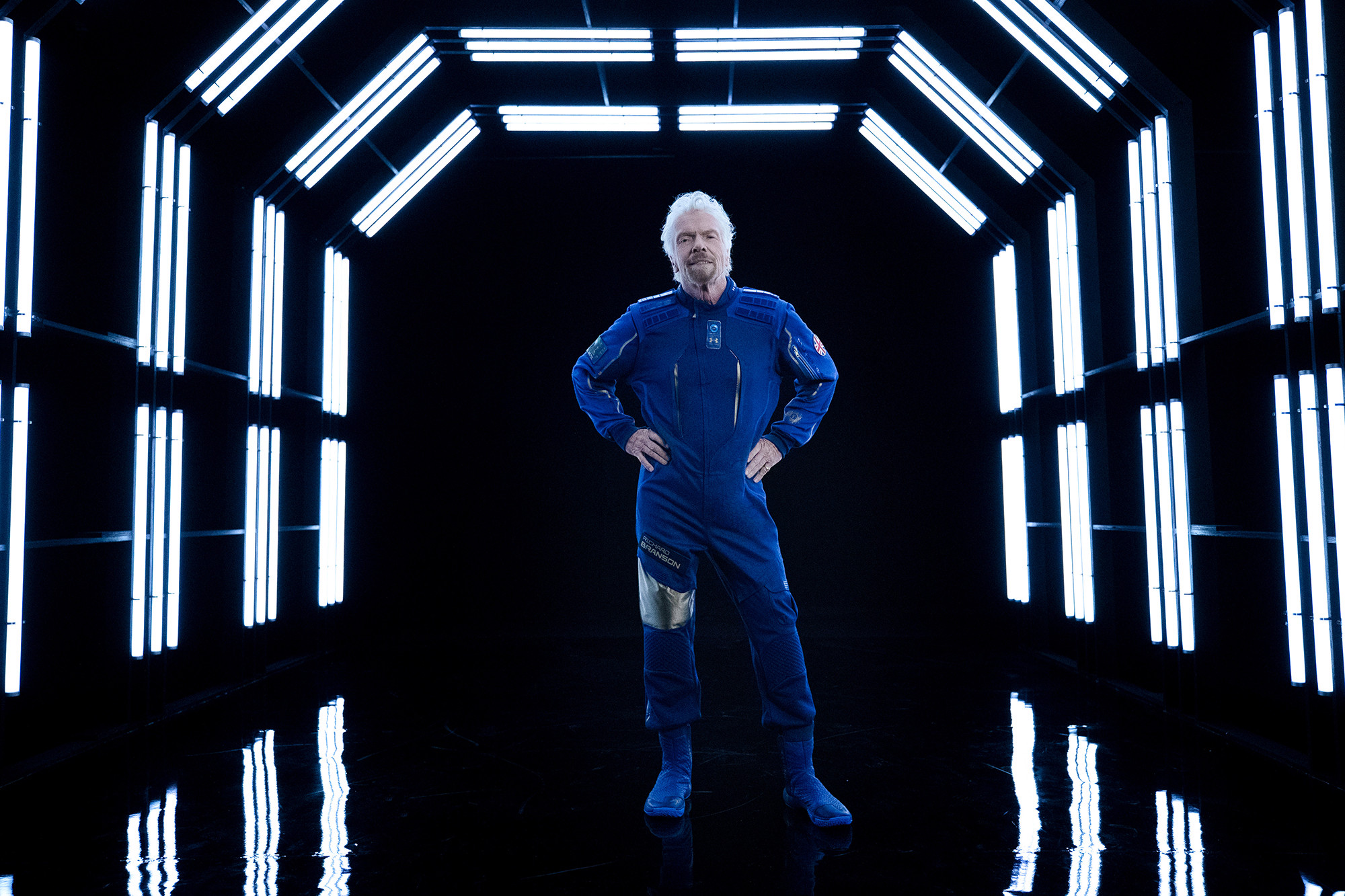
Virgin Galactic founder Sir Richard Branson is reportedly weighing how he can beat Amazon founder Jeff Bezos to space next month.

Bezos, who has a net worth of about $191 billion, announced on Monday that he and his younger brother will be among the passengers on Blue Origin’s first crewed flight to the edge of space on July 20.

On Tuesday, a source told the blog Parabolic Arc that Virgin Galactic wants to send Branson, who has a net worth of about $6.9 billion, up on a test flight of its VSS Unity SpaceShipTwo rocket plane over the July 4 weekend.

Both men are jockeying to be the first tycoons to make it to space. SpaceX founder Elon Musk hasn’t yet announced any intent to fly to space this summer.

Virgin Galactic’s purported plans come over a month after Blue Origin set July 20 as the date for its flight.

Amazon founder Jeff Bezos is heading into space on July 20. EPA

A Virgin Galactic spokesman told the blog: “We expect to complete the final test flights this summer through to early fall. At this time, we have not determined the date of our next flight.”

A spokesperson told Insider that Branson’s flight is “expected in the summer months.”

A separate test flight with four “mission specialists,” who are employees playing the role of future passengers, is also expected this summer, the spokesperson told Insider.

The Parabolic Arc report noted that Virgin Galactic would need additional regulatory approval from the Federal Aviation Administration before Branson can fly as the company’s first “spaceflight participant.”

Virgin Galactic still needs approval from the Federal Aviation Administration to participate in the space voyage. Virgin Galactic

But space regulation experts told Insider that the plan seems achievable in the amount of time available.

“To me, it looks absolutely very doable,” said George Nield, a former associate administrator of the FAA, where he led its Office of Commercial Space Transportation. Nield noted that he is not privy to communications between Virgin Galactic and the FAA, which licenses commercial rocket launches.

An interior view of a Virgin Galactic SpaceshipVirgin Galactic

Nield said it would likely be simple and easy for the company to get the necessary approval to allow Branson to fly as a participant, so long as data from its last successful flight doesn’t raise any eyebrows.

And he added that it’s possible Virgin Galactic just gives Branson a new role as a crew member rather than a participant, bypassing the regulatory scrutiny of a passenger flight.

“In my opinion, there is nothing preventing Richard Branson from also flying as a member of the flight crew,” Nield said. “He is an employee of the company, and they can assign him whatever duties they want to. That’s not something the FAA gets involved in. That’s up to the company.”