TokyoTokyo Mon - Fri 10:00-18:00 +81 (366) 701-751
info@mountequitygroup.com

Blog

Palantir gets aggressive in SPAC investments, backing digital health, aviation and robot companies

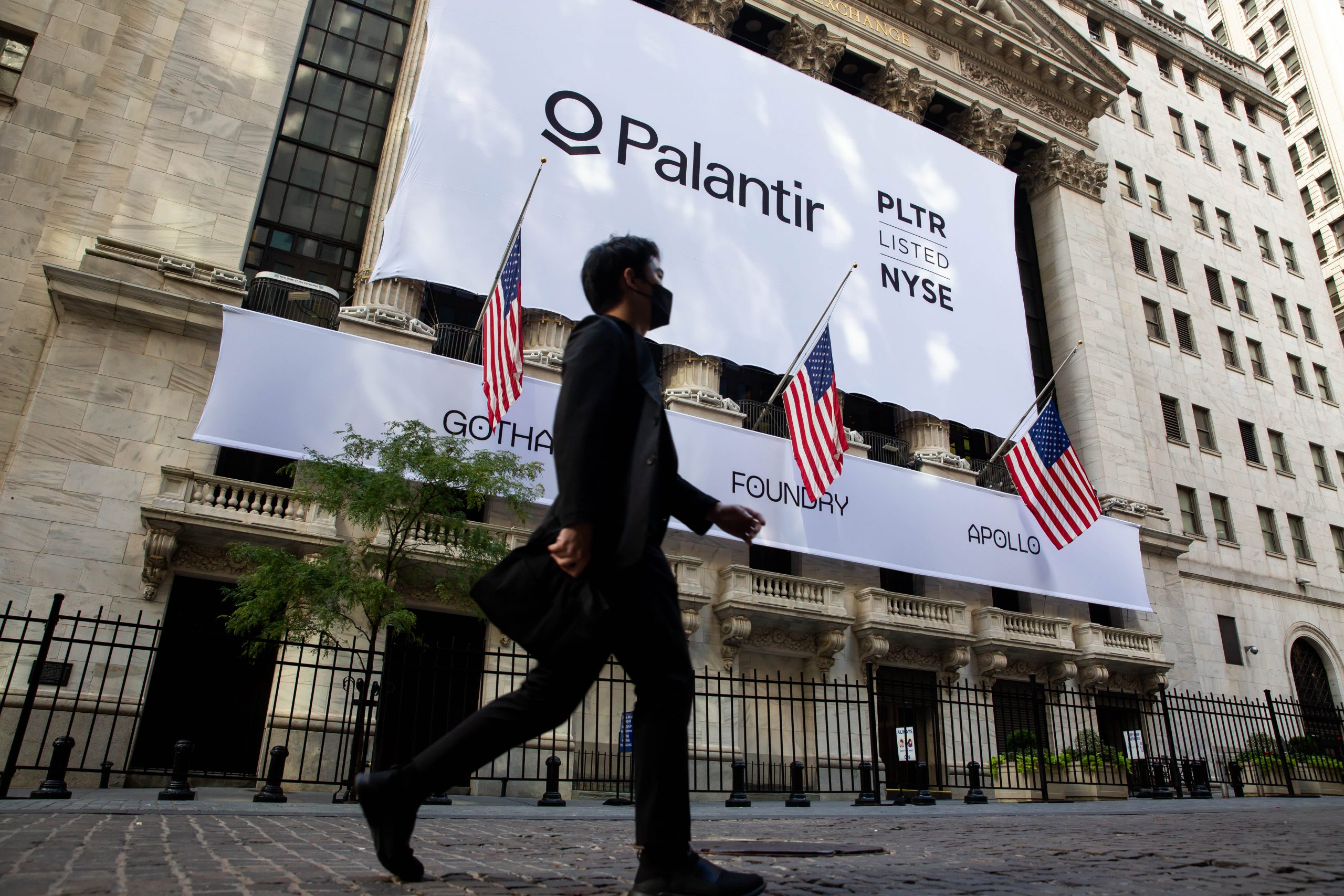
A pedestrian passes a banner displaying Palantir Technologies signage during the company’s initial public offering (IPO) in front of the New York Stock Exchange (NYSE), Sept. 30, 2020.Michael Nagle | Bloomberg | Getty ImagesLast year at this time, Palantir was gearing up for its long-awaited stock market debut. Now, the data analytics software developer has emerged as a major investor in other tech companies that are themselves getting ready for the public markets.Palantir’s latest investment was announced on Thursday, when Babylon Health said it’s going public through a special purpose acquisition company (SPAC). A group of investors, including Palantir, committed to invest a combined $230 million into the Babylon transaction.Palantir has now agreed to at least six SPAC deals in less than three months. A SPAC is a blank-check company that raises money to buy a private entity through a reverse merger and take it public with the help of financing from additional investors. By participating in the PIPE, or private investment in public equity, Palantir is guaranteed ownership of a certain amount of stock once the transaction closes and the shares in the operating company start trading.While many tech companies like Google, Salesforce and Intel have large venture groups that back start-ups at various stages, Palantir’s focus on SPACs is unique among strategic investors. It means Palantir is betting on more mature companies that are often already valued in the billions of dollars.SPACs have come to market at a breakneck pace over the past year as an alternative to IPOs. However, the market has cooled of late amid regulatory concerns and an overall pullback in tech stocks. The CNBC SPAC 50 index, which tracks the 50 largest U.S.-based pre-merger blank-check deals by market cap, has slumped nearly 4% year to date, while the Nasdaq has gained close to 6%.Zoom In IconArrows pointing outwardsSPACs vs. the NasdaqCNBC Beyond the financial returns, Palantir is looking for innovative companies in big markets that can make use of its data tools.Palantir has backed companies ranging from drug discovery to robotics and air transport. Last week, it teamed up with General Motors in a $100 million investment in Wejo, a U.K.-based developer of connected vehicle data systems. In March, it agreed to invest $41 million in Lilium, an air taxi company that’s developing a seven-seat, electric vertical takeoff and landing aircraft.”We’re seeing an opportunity to back really good management teams with big visions,” said Kevin Kawasaki, Palantir’s head of business development, in an interview. We can partner and “allow them to have our data operating systems platform that we’ve put 15 years and billions of R&D dollars into,” he said.Palantir’s software helps government agencies and large businesses collect, analyze and visualize vast amounts of disparate data. The company grew up serving the public sector and was best known for providing software and services to intelligence agencies. It’s since expanded into the commercial sector, which accounted for close to 40% of revenue in the first quarter.Since its direct listing on the New York Stock Exchange in September, Palantir’s shares have more than doubled in value lifting the company’s market cap to $39 billion.Not just the moneyBabylon CEO Ali Parsa said the Palantir investment is part of a longer-term partnership between the two companies. Babylon works with health insurers and governments to offer them a way to provide mobile services to patients, who gain much easier and cheaper access to health-care providers, whether for primary care, urgent care or a specific procedure.Parsa founded the company in 2013 and, until recently, was focused primarily on Europe, while also forging agreements with governments like in Rwanda, where Babylon helps provide primary care access to the country’s residents. In 2020, he launched the service in the U.S. and, mostly through partnerships with insurers, bolstered revenue by fivefold last year. He expects 80% of revenue to come from the U.S. in 2021.Babylon Health home screenSource: Babylon HealthThe SPAC agreement values Babylon Health at about $4.2 billion and is expected to close in the second half of this year.Where Palantir’s technology can help, Parsa said, is in providing more advanced ways for his company and its customers to analyze individual patients to know when they may need to take action or seek specific help. It’s similar to how companies use Palantir to know precisely when their products need an upgrade or refresh, he said.”With health care, one of the biggest challenges is the massive amount of data generated by the human body is really not used well at all,” Parsa said.Parsa said the product discussions with Palantir were underway before any discussion of a SPAC had emerged.”After that, they said they like the business and we want to be an investor in the process,” Parsa said.Betting on life sciencesPalantir is putting hefty resources into the health side of its business. Last month, it hired Dr. Bill Kassler, formerly of IBM Watson Health, as its first U.S. government chief medical officer. The Food and Drug Administration, Centers for Disease Control and Prevention and National Institutes of Health are all Palantir customers.Babylon Health is Palantir’s first digital health SPAC, but the company has had others in life sciences. On May 1, it agreed to invest $30 million into the SPAC for drugmaker Roivant Sciences. Palantir said in its quarterly report that as part of the agreement, Roivant signed a five-year subscription contract for products and services.Shyam Sankar, Palantir’s operating chief, said on the first-quarter earnings call that the company was partnering with Roivant to “work across their portfolio on drug discovery and development.”Four days after the Roivant announcement, Palantir said it’s investing $20 million in the SPAC for Celularity, a clinical-stage biotech company. That agreement also includes a five-year subscription to Palantir’s products.”With Celularity, we’re going to help accelerate the science around their breakthrough cell-based therapies and a cutting edge biotech that’s focused on translating biology into medicine,” Sankar said on the call.Between April and May, Palantir was involved in two other SPAC investments outside of life sciences, according to its quarterly report.The company agreed to invest $21 million into the deal for Sarcos Robotics, which makes industrial robot systems. On May 11, Palantir agreed to put $20 million into a “mobility company” that it didn’t name in the filing. Both of those deals also included multi-year subscription agreements.WATCH: Palantir doubles down on life sciences business


DENTSPLY SIRONA Acquires the Assets of Propel Orthodontics, a Leading Innovator in Orthodontic Devices

CHARLOTTE, N.C., June 04, 2021 (GLOBE NEWSWIRE) — DENTSPLY SIRONA Inc. (“Dentsply Sirona”) (Nasdaq: XRAY), today announced that it has acquired substantially all of the assets of Propel Orthodontics in an all-cash deal for $131 million. The assets acquired include the VPro device and the Fastrack Mobile App. Propel Orthodontics is a leading innovator, manufacturer, and worldwide seller of orthodontic devices. Propel Orthodontics offers in-office and at-home orthodontic solutions to dentists and their patients. The acquisition is an important step for Dentsply Sirona to further strengthen its position in the fast-growing clear aligner market. The acquired product lines perfectly complement the Byte® and SureSmile® businesses.About Propel Orthodontics Propel Orthodontics is a leading innovator, manufacturer and worldwide seller of orthodontic devices with offices in Briarcliff Manor, New York, and San Jose, California. The company provides in-office and at-home orthodontic accessory devices to orthodontists and their patients, including the VPro5™, a vibratory orthodontic device used to properly seat aligners in 5 minutes a day. About Dentsply SironaDentsply Sirona is the world’s largest manufacturer of professional dental products and technologies, with a 134-year history of innovation and service to the dental industry and patients worldwide. Dentsply Sirona develops, manufactures, and markets a comprehensive solutions offering including dental and oral health products as well as other consumable medical devices under a strong portfolio of world class brands. As The Dental Solutions Company, Dentsply Sirona’s products provide innovative, high-quality and effective solutions to advance patient care and deliver better, safer and faster dentistry. The Company’s shares of common stock are listed in the United States on Nasdaq under the symbol XRAY. Visit www.dentsplysirona.com for more information about Dentsply Sirona and its products.

Contact InformationInvestors:Andrea DaleyVP, Investor Relations+1-704-805-1293Andrea.Daley@dentsplysirona.com  

Europe, UK hit Facebook with formal antitrust investigations

Regulators in Europe and the United Kingdom on Friday announced they have launched formal competition investigations into Facebook in a two-front offensive on the social media giant’s use of data to dominate markets.

The UK’s Competition and Markets Authority said it’s investigating whether Facebook is “abusing a dominant position in the social media or digital advertising markets through its collection and use of advertising data.”

Specifically, the agency said it’s probing whether Facebook has gained an unfair advantage in the digital classified advertisements business through Facebook Marketplace, and in its online dating business, Facebook Dating.

Separately, regulators in Brussels announced that the European Commission is also opening a formal antitrust investigation into the social media giant.

“We intend to thoroughly investigate Facebook’s use of data to assess whether its business practices are giving it an unfair advantage in the online dating and classified ad sectors,” said Andrea Coscelli, chief executive of the UK’s Competition and Markets Authority.

European Commission President Ursula von der Leyen delivers her first State of the Union speech of 2020 in Brussels, Belgium, where regulators will be probing Facebook.NurPhoto via Getty Images

“We will be working closely with the European Commission as we each investigate these issues, as well as continuing our coordination with other agencies to tackle these global issues.”

The European Commission said it’s exploring whether Facebook ties its online classified ads business, Facebook Marketplace, to its social media network, which may violate EU competition rules.

“Facebook collects vast troves of data on the activities of users of its social network and beyond, enabling it to target specific customer groups,” Margrethe Vestager, executive vice president of the European Commission, said. “We will look in detail at whether this data gives Facebook an undue competitive advantage in particular on the online classified ads sector, where people buy and sell goods every day, and where Facebook also competes with companies from which it collects data.”

“In today’s digital economy, data should not be used in ways that distort competition.”

The European Commission noted that “a preliminary investigation” raised concerns about Facebook’s practices.

European antitrust regulators previously sent questionnaires to Facebook in 2019 about its marketplace service. And last year, European regulators sent another round of questionnaires, asking whether Facebook Marketplace benefits unfairly from the massive amounts of data the social media giant collects.

An activist wears a mask depicting Facebook CEO Mark Zuckerberg during a protest marking the release of the Digital Services Act.AFP via Getty Images

In July of last year, Facebook sued EU antitrust regulators for seeking information they said was beyond what’s necessary for their investigations into the company’s data and marketplace.

Representatives for Facebook did not immediately return The Post’s request for comment.

Turkish start-up Getir rides the speedy grocery delivery craze to a $7.5 billion valuation

A Getir scooter in London.GetirLONDON — Turkish grocery delivery start-up Getir has raised $550 million in a new investment round, valuing the company at a whopping $7.5 billion.The Istanbul-based firm raised the fresh cash from the likes of Silver Lake, Mubadala, Sequoia and Tiger Global. Getir has now raised almost $1 billion over three separate funding rounds so far in 2021. The company was last privately valued at $2.6 billion in a May funding round.It is the latest sign of frenzied venture investment in the red-hot speedy grocery delivery space. Apps that promise groceries shipped to customers’ doors in just 10 minutes have cropped up across Europe, with a raft of companies from Turkey’s Getir to Germany’s Gorillas raising huge sums from investors.These firms operate so-called “dark stores,” fulfilment centers designed to carry out online orders rather than serve customers in person. Gorillas and U.K. rivals like Dija and Zapp hire their couriers rather than relying on contractors like Deliveroo and other players in the gig economy.Gorillas is reportedly seeking an investment round of at least $500 million that would value the company at $6 billion, according to Bloomberg. Gorillas declined to comment when contacted by CNBC.Elsewhere in the space, German rival Flink said Friday that it had raised $240 million in fresh funds from Prosus, Bond and Mubadala Capital.Getir, which launched in London and Amsterdam earlier this year, plans to use the fresh cash for an expansion into Paris, Berlin and several cities in the United States. That would see the company directly compete with the likes of food delivery giants that have expanded into groceries, such as Uber and DoorDash, as well privately-held start-up Instacart.”There is great appetite for Getir and rapid grocery delivery,” Nazim Salur, founder of Getir, said in a statement Friday. “As the pioneers of the market, we continue to stand out by constantly innovating to provide the industry standard.”The rapid grocery delivery phenomenon has been fueled in no small part by the coronavirus pandemic, as people have spent more time indoors due to lockdown restrictions around the world. It has become a highly competitive market, however. Some experts doubt the model can survive over the long term, particularly given the level of investment required to scale.

Facebook hit with new antitrust probes in the UK and EU

In this photo illustration, the Facebook logo is seen on a smartphone screen with the EU flag in the background.Chukrut Budrul | SOPA Images | LightRocket via Getty ImagesLONDON — Regulators in the U.K. and the EU launched formal competition investigations into Facebook at the same time on Friday.The U.K.’s Competition and Markets Authority said it is investigating whether Facebook is abusing a dominant position in the social media or digital advertising markets through its collection and use of ad data.The CMA said it will look into whether Facebook has unfairly used the data gained from its advertising and single sign-on option, known as Facebook Login, to benefit its buying and selling platform, Facebook Marketplace, as well as its online dating service, Facebook Dating.Andrea Coscelli, chief executive of the CMA, said in a statement: “We intend to thoroughly investigate Facebook’s use of data to assess whether its business practices are giving it an unfair advantage in the online dating and classified ad sectors.”He added: “Any such advantage can make it harder for competing firms to succeed, including new and smaller businesses, and may reduce customer choice.”Meanwhile, The European Commission, the executive arm of the EU, said it was opening a formal antitrust investigation to assess whether Facebook breached its rules “by using advertising data gathered in particular from advertisers in order to compete with them in markets where Facebook is active such as classified ads.”The investigation will also seek to determine whether the link between the main Facebook social network and Facebook Marketplace is in breach of EU competition rules.Margrethe Vestager, the European Commission’s executive vice president, said in a statement: “Facebook is used by almost 3 billion people on a monthly basis and almost 7 million firms advertise on Facebook in total. Facebook collects vast troves of data on the activities of users of its social network and beyond, enabling it to target specific customer groups.””We will look in detail at whether this data gives Facebook an undue competitive advantage in particular on the online classified ads sector, where people buy and sell goods every day, and where Facebook also competes with companies from which it collects data. In today’s digital economy, data should not be used in ways that distort competition,” added Vestager.A Facebook spokesperson said: “We are always developing new and better services to meet evolving demand from people who use Facebook. Marketplace and Dating offer people more choices and both products operate in a highly competitive environment with many large incumbents. We will continue to cooperate fully with the investigations to demonstrate that they are without merit.”The company’s share price was down a little over 1% in the premarket to $322 a share on the back of the announcements.

Campaign launches to try to force Palantir out of Britain’s NHS

In this articlePLTRPeter Thiel, co-founder and chairman of Palantir Technologies Inc., pauses during a news conference in Tokyo, Japan, on Monday, Nov. 18, 2019.Kiyoshi Ota | Bloomberg | Getty ImagesLONDON — A campaign is being launched to try to stop U.S. tech giant Palantir from working with the U.K.’s National Health Service.The “No Palantir in Our NHS” campaign —launched at an event on Thursday — comes after Palantir partnered with the NHS on a Covid-19 “Data Store.” The project was designed to help the government and health service use data to monitor the spread of the virus.Foxglove, which describes itself as a tech-justice non-profit, is leading the campaign, while over 50 other organizations working on civil liberties, anti-racism, migrant justice and public health have also backed it.”We got dozens of organizations to realize and agree that this company has no place in the NHS in the long term,” Cori Crider, the lawyer who co-founded Foxglove, told CNBC on Wednesday.Palantir, which has been criticized by privacy campaigners and human rights groups on multiple occasions, declined to comment when contacted by CNBC. A spokesperson for the NHS did not respond.What is Palantir?Founded in 2003 by a host of tech entrepreneurs including tech billionaire Peter Thiel — a Facebook board member who reportedly donated $1.25 million to Donald Trump’s presidential campaign — Palantir sells software that’s designed to help public and private organizations to analyze huge quantities of data and pull out meaningful patterns and connections.Since its inception, the $45 billion publicly listed firm, has supported spy agencies, border forces and militaries, with the finer details of contracts often kept a closely guarded secret.In April 2018, Bloomberg published an article headlined: “Palantir Knows Everything About You.”Named after the fictional “seeing stones” in “Lord of the Rings,” Palantir has been linked to everything from efforts to track down undocumented Americans to the development of unmanned drones for bombings and intelligence.”Their background has generally been in contracts where people are harmed, not healed,” Crider said.Clive Lewis, a U.K. Member of Parliament for the Labour Party and one of the campaign’s backers, accused Palantir of having an “appalling track record.””It’s built its business supporting drone and missile strikes, immigration raids and arrests, not the delivery and care of medicine,” Lewis told CNBC. “It’s got a questionable agenda and I think that will have a negative impact on patient trust, particularly among minoritized communities who may feel a threat from big government.”Palantir — which has been trying to grow its European business in recent years — has a significant presence in London’s Soho neighborhood, with hundreds of employees across multiple offices in the area.Covid-19 Data StoreThe Covid-19 Data Store project, which involves Palantir’s Foundry data management platform, began in March 2020 alongside other tech giants as the government tried to slow the spread of the virus across the U.K. It was sold as a short-term effort to predict how best to deploy resources to deal with the pandemic.The contract was quietly extended in December when the NHS and Palantir signed a £23 million ($34 million) two-year deal that allows the company to continue its work until December 2022.The NHS was sued by political website openDemocracy in February over the contract extension. “December’s new, two-year contract reaches far beyond Covid: to Brexit, general business planning and much more,” the group said.The NHS Covid-19 Data Store contract allows Palantir to help manage the data lake, which contains everybody’s health data for pandemic purposes.”The reality is, sad to say, all this whiz-bang data integration didn’t stop the United Kingdom having one of the worst death tolls in the western world,” said Crider. “This kind of techno solution-ism is not necessarily the best way of making an NHS sustainable for the long haul.”Patient data is “pseudonymized” before it is processed by Palantir’s software as part of an effort to protect patient privacy. The data management technique involves switching the original data set, with an alias or pseudonym. However, it is a reversible process that allows for re-identification in the future if necessary and some have questioned whether it’s enough. Palantir may argue that it isn’t interested in the patient data itself and that it only provides the platform that allows the NHS to analyze the data.While Palantir is processing the patient data, the NHS remains the data owner, limiting what Palantir can do with it.Pivot to healthThere have been some signs that government appetite for limitless spend on security has started to wane and Palantir may have lost a couple of deals as a result, Crider said, pointing to a report in The Guardian that highlights some of the difficulties the EU’s law agency had with Palantir’s software.Crider believes the firm has been trying to find new sources of government contracts beyond security as a result. “They hit on a new possibility, which was health data,” she said.The company was reportedly lobbying officials from the U.K. Department of Trade as well as health executives back in 2019. But it struggled to secure any contracts.When the pandemic hit, however, the laws changed so that data sharing was done in a mandatory way and for the first time in U.K. history everyone’s data was pooled into a huge lake. Procurement rules were also reportedly changed. “Palantir pounced and they managed to get in,” Crider said, adding that there was no bid or competitive tender.Palantir’s interest in health was highlighted again on Thursday when it emerged in a Financial Times report that the company has taken a strategic stake in British health firm Babylon as part of a $4.2 billion blank-check deal to take the start-up public in the U.S.Babylon CEO Ali Parsa told the newspaper that “nobody” has brought some of the tech that Palantir owns “into the realm of biology and healthcare.” Parsa, whose app offers a variety of health care services to 24 million patients, added: “Their knowledge of healthcare can overhaul what we could do [together]. We wanted to take … the day to day biometrics of the human body and be able to construct a more pre-emptive image, by building a digital twin of each of us.”A boy runs past a mural supporting the NHS, by artist Rachel List, on the gates of the Hope & Anchor pub in Pontefract, Yorkshire, as the UK continues in lockdown to help curb the spread of the coronavirus.Danny Lawson | Getty ImagesCrider believes the U.K. is at an inflexion point when it comes to health data.From July 1, the NHS is planning to pool the full medical histories of 55 million patients in England into a single database that will be available to academic and third parties for research and planning purposes. Patients have until June 23 to opt out. Campaigners said Friday the “data grab” violates patient trust and they’re threatening to take legal action.”The British public need to realize that we are now coming into a period where the future of the NHS health data, and the health data settlement of this country, is now kind of up for grabs and up for debate,” Crider said. “Companies have seen it for a while. Palantir don’t want to monetize the data they want to monetize the infrastructure, but there are other companies who absolutely do want to monetize access to the data.”

CAC 40 Edges Lower In Lackluster Trade

(RTTNews) – French stocks fell slightly in lackluster trade on Friday as strong U.S. economic data released overnight intensified expectations of the likelihood of U.S. Federal Reserve paring back its bond-buying program.

While ADP private payrolls surged in May, U.S weekly jobless claims fell below 400,000 last week, indicating a strengthening of the labor market.

Separate data from the Institute for Supply Management showed that U.S. service sector activity hit a record high in May.

The U.S. nonfarm payrolls report due later in the day might offer more clues on labor market recovery and the direction of policy.

The benchmark CAC 40 slid 7 points or 0.1 percent, to 6,501 after declining 0.2 percent in the previous session.

Vivendi shares were down half a percent. Hedge-fund billionaire William Ackman’s special-purpose acquisition company, Pershing Square Tontine Holdings Ltd. (PSTH), confirmed that it is in discussions with the French media giant to acquire 10 percent of the outstanding ordinary shares of Universal Music Group B.V. or “UMG” for about $4 billion, representing an enterprise value of 35 billion euros for UMG.