TokyoTokyo Mon - Fri 10:00-18:00 +81 (366) 701-751
info@mountequitygroup.com

Blog

NYS pension fund shot up a record 33 percent during pandemic

The COVID-19 outbreak was a boon to Wall Street and the main pension fund for state government workers and retirees in New York state.

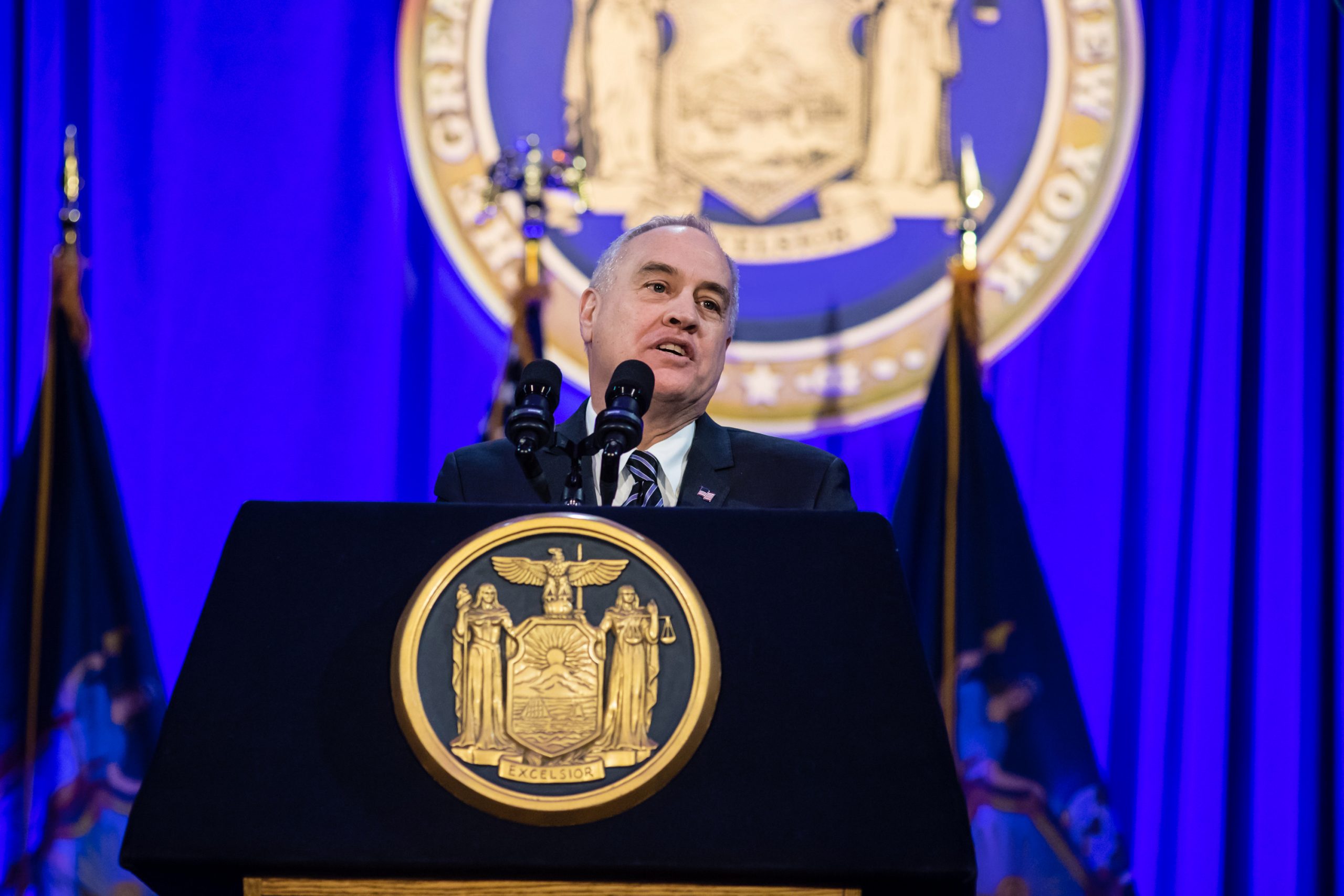
The value of the New York State Common Retirement Fund skyrocketed by a record 33.5 percent — from $194.3 billion to $254.8 billion, state Comptroller Tom DiNapoli reports.

The historic increase in investment returns occurred during the fiscal year running from April 1, 2020 to March 31, 2021 — the period when the pandemic ravaged New York, leading to safety shutdowns of businesses and massive unemployment that ravaged Main Street.

The record return is good news for local governments, which are required to cover a portion of the pension costs of their retired municipal workers. Higher fund investment returns means lower contributions are required for employers.

The pension fund paid out $13.7 billion in retirement and death benefits last year.

Local government or employer contribution rates are determined by investment results over several years to avoid dramatic fluctuations when the pension fund loses money.

“The state pension fund rode the market rebound from the depths of the pandemic and enjoyed the largest one-year investment return in its history,” DiNapoli said.

Unemployment has been on the rise in the pandemic while pensions and stocks have continually grown.Frank Franklin II/AP

“This outsized return reinforces the Fund’s position as one of the strongest in the nation, but it comes with a caution. Markets remain volatile and as unpredictable as ever. With our talented investment staff, I will continue to manage our state’s pension fund with prudence and a focus on stable, long-term results that ensure continued retirement security for our members for generations to come.”

The retirement fund had 52.82 percent of its assets invested in publicly traded equities at the end of the last fiscal year. The remaining assets were invested in more conservative cash, bonds, and mortgages (23.14 percent), private equity (10.57 percent), real estate and real assets (8.24 percent) and other alternative assets 5.23 percent).

The Fund’s long-term expected rate of return is 6.8 percent.

Thomas DiNapoli said the state pension fund saw its biggest one-year return ever.Stefan Jeremiah

By comparison to the pension fund’s fat investment returns, New York’s economy and workforce are only slowly emerging from the modern-day plague that killed more than 50,000 residents.

The unemployment rate in New York City, for example, is a stubborn 11 percent.

JPMorgan bankers thrown into awkward race to succeed Jamie Dimon

JPMorgan Chase is bending over backwards to show that a pair of bankers racing to succeed Jamie Dimon are happy with the arrangement — but not everybody on Wall Street is buying it.

Marianne Lake and Jennifer Piepszak — who last week were named co-heads of the mega-bank’s consumer lending and community banking businesses, effectively launching a contest to decide its next chief executive — appeared in a Zoom town hall broadcast last Thursday as a few hundred of JPMorgan’s top bankers looked on, sources told The Post.

Seated next to each other at the mega-bank’s headquarters at 270 Park Ave. in Midtown Manhattan, the top-ranking finance execs — each of them 51 years old — were chummy and chatty, kept the conversation light and touched on how they were even friends socially, according to a source close to JPMorgan.

Jennifer Piepszak sits with Detroit Mayor Mike Duggan and JPMorgan Chase & Co. Chairman and CEO Jamie Dimon.AP Images for JPMorgan Chase & C

“We’ve been close colleagues for over 15 years,” Piepszak told employees at the meeting, according to the source. “We take barre class together.” Lake quickly added that Piepszak was far better at the ballet fitness class than she was, according to the source.

For good measure, the women emphasized a united approach in an internal memo sent Friday that was obtained by The Post. “Having known each other for decades across many businesses and roles, we will be very efficient in our management practices,” they wrote.

“When one of us makes a decision, it will stand for both of us,” they added. “We will make decisions together.”

But to many insiders and experts, that sounds like a hopelessly awkward situation — and a possible recipe for disaster.

Lake, previously the head of consumer lending, had been widely seen as the frontrunner to succeed Dimon. Now, she’s sharing an equal role with Piepszak, who succeeded her as chief financial officer when she was promoted two years ago.

“I’m sure they were very good friends … up until a week ago,” Dick Bove, Wall Street Analyst at Odeon Capital Group, told The Post. “If you put two people in the position where only one can survive, it’s difficult for them to work harmoniously.”

JPMorgan this week dismissed such concerns, as well as criticism that the C-suite shuffle looked like a textbook case of bad management, as “sexist and ridiculous.”

Marianne Lake, one of two women competing for the top spot at the head of JP Morgan Chase & Co.REUTERS

“The New York Post is sexist, falsely pitting women against each other,” spokesman Joe Evangelisti said in a statement. “That’s sexist and ridiculous.”

But experts including Sandra Sucher, a management professor at Harvard Business School, disagreed, arguing that it’s JPMorgan’s top brass that appears sexist after last week’s move.

“It looks like a bakeoff — we want to give it to a woman so let’s pit them against each other,” Sucher told The Post. “If I were Marianne I’d be embarrassed. I’m being made a co-head in a line of business that doesn’t typically have co-heads — it makes it look like by herself she wasn’t strong enough to do the role.”

Indeed, the two women will be sharing a role previously held by Dimon’s longtime right hand Gordon Smith, who at 62 has signaled plans to retire. “Marianne Lake emerges as the biggest loser—this was a downgrade for her.” according to Bove. “Why wouldn’t she be put in the same situation as Gordon Smith — why wouldn’t she be the natural successor to him?” 

Not all analysts were entirely downbeat about JPMorgan’s unusual moves.

“JPMorgan denies it’s a horse race, but it seems to me like a horse race,” Wells Fargo analyst Mike Mayo said. But “don’t miss the forest for the trees — the big news is the successor will likely be a woman.”

Indeed, Dimon has told the board he plans to stay on for another five years. As such, Daniel Pinto, JPMorgan’s 58-year-old head of investment banking, is viewed more as an “emergency CEO” who would take the reins in a “Jamie got hit by a bus scenario,” but would be too old by the time the job becomes available.

Jennifer Piepszak, one of two women competing for the top job at JPMorgan. JP Morgan Chase

Nevertheless, JPMorgan could use a more deft approach with female executives in the meantime, according to Sucher, the Harvard professor who is author of the upcoming book “The Power of Trust: How Companies Build It, Lose It, Regain It.”

“If we’re here to advance women into very senior roles, you do this carefully with the full understanding and explanation of the new appointments,” Sucher said. “It all begs the question of why wasn’t Marianne given head of CCB (Consumer and Community Banking).”

Time to get paid: Patreon CEO says creators have 'incredible leverage' now that they haven't had in many years

Even in a post-pandemic world, celebrities with millions of fans — as well as those with just a few hundred fans — are turning to platforms where they can control their relationships, data and the content they create. Patreon, which has amassed a $4 billion valuation in just eight years, is a platform for doing just that.”This is such a great time to be a creative person,” co-founder and CEO Jack Conte said in an appearance on CNBC’s “Closing Bell” on Wednesday. “Creators have incredible leverage now that they haven’t had for many years because these platforms were so focused on driving content production instead of getting creators paid.”The company, ranked No. 48 on this year’s CNBC Disruptor 50 list, allows illustrators, authors, podcasters, musicians and other independent creators to receive crowdfunding directly from their audience.”I think now people are starting to realize ‘oh, these are real businesses and creators ought to be making money like everyone else’,” Conte said. “We’re hyper-focused on providing the business infrastructure to allow creators to be successful in growing and running their businesses.”More coverage of the 2021 CNBC Disruptor 50Meet the 2021 CNBC Disruptor 50 companiesWhy Robinhood is the No. 1 companyA look back at the CNBC Disruptor 50: 9 years, 233 companiesWhen disruption becomes a force for good — and badWatch: Plaid, a gateway to Coinbase, on crypto investingDiscord lays out its game theory on the virtual ‘space’ of the futureWatch: Chime CEO on building big financial IPO … but maybe not bankClubhouse has ‘millions more’ waiting to join its audio appHow we choose Disruptor companiesWhile social media influencers like Instagram and YouTube stars can receive big bucks, for the vast majority of creators, a new model was needed to connect directly with a paying audience. Platforms like Patreon free idea makers from reliance on the internet’s trillion-dollar gatekeepers like YouTube parent Alphabet and Instagram parent Facebook, which keep most of the advertising-generated revenue.”A lot of the distribution platforms are starting to wake up to this and see that creators have a lot of earnings potential,” Conte said. “All the distribution platforms — whether it’s Spotify or YouTube or Twitter or Facebook — they’re all creating ways for creators to earn subscription revenue from their fans.”Twitter made a recent decision to begin experimenting with a “Tip Jar” for individual accounts.Patreon was, in fact, founded by former YouTube creators. The company is part of a wider trend influencing many creative endeavors, including journalism, where Substack has emerged as a way for journalists to be rewarded for their work through subscriptions and leave behind bigger media organizations. Clubhouse and Discord, two internet communications platforms that made the 2021 CNBC Disruptor 50 list, provide new ways for people to share ideas, and discover and engage with new audiences.”Now I think the shift we’re starting to see is these platforms realizing that creators needing to get paid to,” Conte said. “Ultimately, our competitive advantage is that we’re the most creator-first company on the planet.”Under its business model, Patreon creators receive the majority of revenue from their content while Patreon takes a 5% cut of monthly income and a fee for transactions. It also has Pro and Premium tiers with more support for businesses on the platform, but higher fees (8% and 12%, respectively).Last month the company raised $155 million in the fresh round led by new investor Tiger Global Management, with participation from Woodline Partners and previous investors Wellington Management, Lone Pine Capital, New Enterprise Associates, Glade Brook Capital, and DFJ Growth.SIGN UP for our weekly, original newsletter that goes beyond the list, offering a closer look at CNBC Disruptor 50 companies, and the founders who continue to innovate across every sector of the economy.

Snowflake reports widening losses but raises full-year guidance

Snowflake banners decorate the New York Stock Exchange to market the debut of the software company’s shares in New York on Sept. 16, 2020.Source: SnowflakeSnowflake shares fell as much as 8% in extended trading on Wednesday after the data-analytics software company barely met analysts’ expectations for product revenue, the company’s main source of total revenue, for the full fiscal year.Here’s how the company did:Earnings: Loss of 70 cents per shareRevenue: $228.9 million, vs. $212.9 million expected by analysts, according to Refinitiv.Revenue grew 110% year over year in the fiscal first quarter, which ended on April 30, according to a statement. In the previous quarter revenue increased by 117%. The company’s net loss swelled to $203.2 million from $93.6 million.Renegotiations with cloud providers benefited the company’s gross margin, Mike Scarpelli, the company’s finance chief, said on a conference call with analysts. He said that in April Snowflake implemented a storage compression change that will widen margins.He also said the company is working on new chip technologies that could bring performance gains. “That’s more next year,” Scarpelli said.With respect to guidance, Snowflake said in the fiscal second quarter it expects to generate $235 million to $240 million in product revenue, which delivered 93% of Snowflake’s total revenue in the fiscal first quarter. At the middle of the range that would represent 171% growth. The projection came in above the FactSet consensus estimate of $235.4 million.For the full 2022 fiscal year Snowflake called for $1.020 billion to $1.035 billion in product revenue, which at the middle of the range implies 86% growth and is more than the $1.02 billion FactSet consensus. In March Snowflake’s full-year guidance was $1.00 billion to $1.02 billion in product revenue. Snowflake also raised the forecast for adjusted operating margin to -17% from -23%.Excluding the after-hours move, Snowflake shares are down about 17% year to date, while the S&P 500 index is up almost 12% over the same period.Earlier this month Goldman Sachs analysts upgraded their rating on Snowflake stock to buy from the equivalent of hold.”With the stock ~50% off its highs from December 2020 relative to a 1% decline for our broader software coverage and +4% for the Nasdaq over the same time period, we believe investor expectations have become more balanced and see a path towards outperformance, as we believe the durability of growth is not fully reflected in the company’s current valuation,” the analysts wrote. They said that investors could rotate back into growth opportunities, and that Snowflake could introduce long-term growth and margin guidance at its Snowflake Summit conference in June that could lift the stock.WATCH: Why this trader is buying Snowflake shares

Jeff Bezos says he will pass baton to new Amazon CEO on July 5

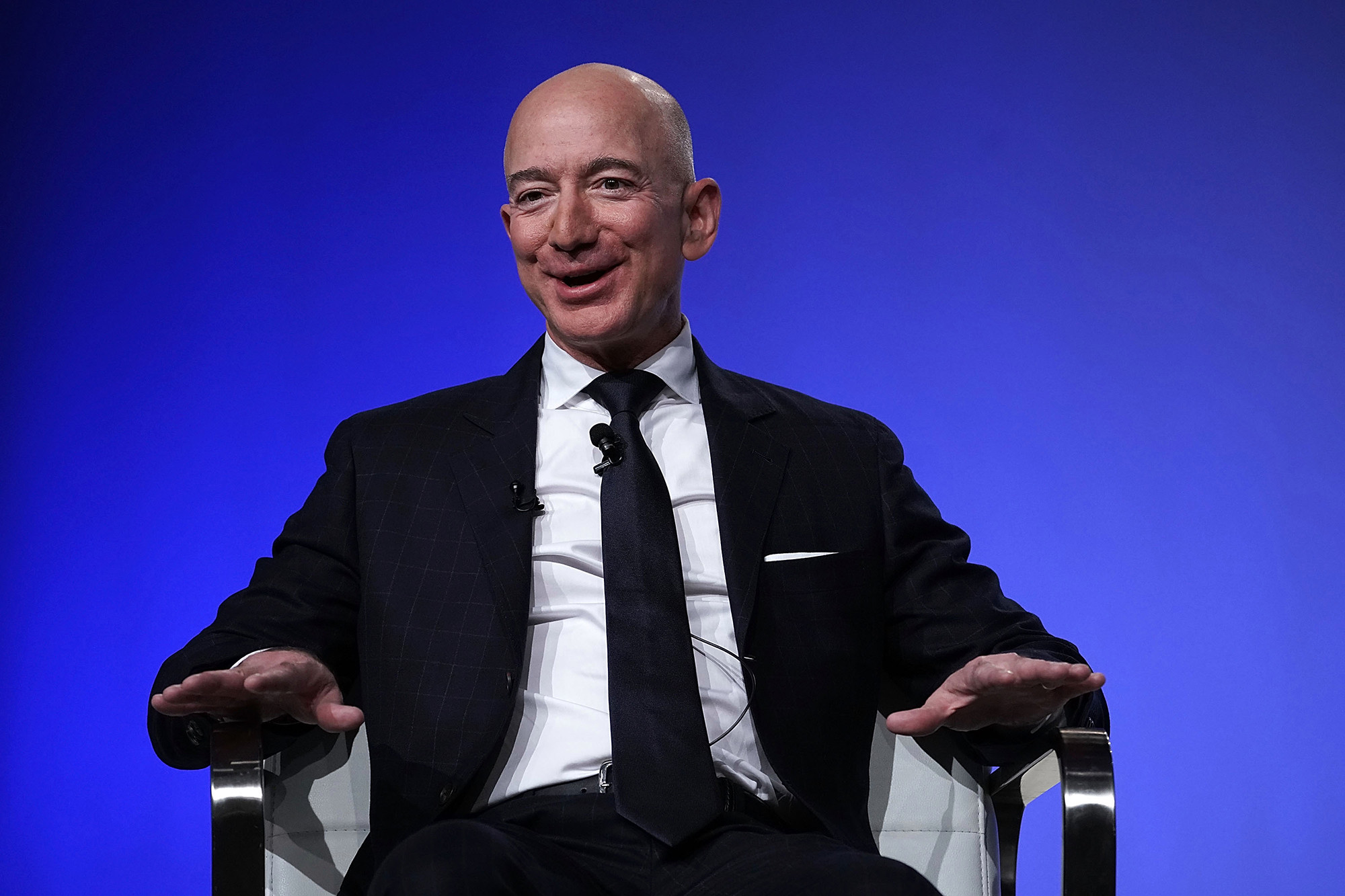
Amazon founder Jeff Bezos has picked a date to step down as CEO.

Bezos, who grew Amazon from an internet bookstore to an online shopping behemoth, said Wednesday that Amazon executive Andy Jassy will take over the CEO role on July 5.

“We chose that date because it’s sentimental for me,” Bezos said during an Amazon shareholder meeting Wednesday. He explained that it was exactly 27 years ago on that date in 1994 that Amazon was incorporated.

Seattle-based Amazon.com Inc. announced that Bezos was stepping down as CEO in February, but didn’t provide a specific date. Jassy, his replacement, currently runs the company’s cloud-computing business.

Bezos, 57 and with a personal fortune of $167 billion, won’t be going far. He will become executive chair at Amazon and focus on new products and initiatives. He also plans to focus on his other ventures, such as his rocket ship company, Blue Origin, and his newspaper, The Washington Post.

On Wednesday, Amazon also announced it would buy storied Hollywood studio MGM for $8.45 billion with the hopes of filling its video streaming service with more shows and movies to watch.

Kylie Jenner Beauty taps new CEO amid sales decline

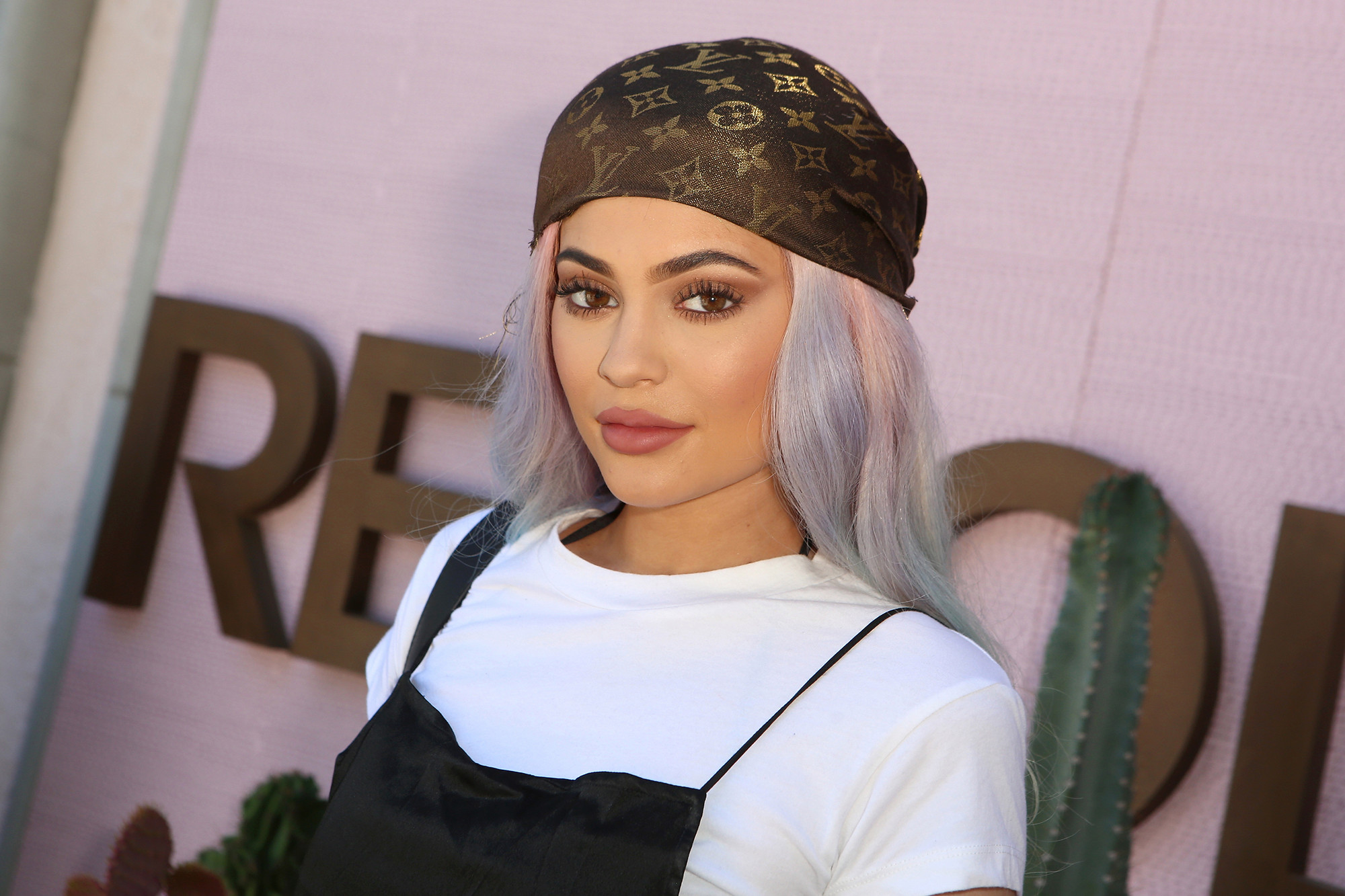
The rapid-fire reshuffling at the top of Kylie Jenner’s cosmetic company continued this week with what appears to be the company’s fourth new chief in less than two years.

Coty on Wednesday said it’s tapped Andrew Stanleick — Coty’s executive vice president of the Americas since 2017 — to head up Kylie Jenner Beauty Brands.

Stanleick will also oversee Coty’s 20 percent stake in big sister Kim Kardashian West’s beauty business, which Coty secured last year for $200 million. The cosmetic company behind CoverGirl and OPI brands bought a majority stake in Jenner’s brand of make-up and skincare products in 2019 for $600 million.

Wednesday’s move bumped Jenner’s mom, Kris Jenner, from the role of interim CEO of Kylie Cosmetic and Kylie Skin.

Coty says Jenner — whose family rose to fame with hit reality TV show “Keeping Up with the Kardashians” — took on the role of interim CEO in April 2020.

That’s where things start getting confusing.

In January 2020, Coty named Christoph Honnefelder, a former executive with European specialty retailer Douglas, as CEO of Kylie Cosmetics. But Honnefelder never officially joined the company. And by June, Coty said it had tapped Simona Cattaneo, head of the beauty company’s luxury brands, to oversee Kylie Cosmetics’ global expansion.  

Kylie Jenner’s cosmetics line is displayed at an Ulta Beauty in New York. Getty Images

Cattaneo, who recently announced she would be stepping down from Coty after five years to pursue other interests, was given the expanded role following explosive reports claiming that the unit’s then 22-year-old founder had allegedly been lying about her sales in a desperate attempt to be named a billionaire.

Jenner has denied the reports, but Coty was still slapped with shareholder lawsuits alleging that it overpaid for its 51 percent stake in the beauty business, which was valued at $1.2 billion at the time.

Kylie Jenner has also been sued by California-based Seed Beauty LLC, the private-label manufacturer that used to make and distribute Kylie Cosmetics products. It has alleged that Jenner’s company shared trade secrets with Coty. 

Without disclosing details, Coty has said Kylie Cosmetics saw sales of its lip kits and other makeup products plummet during the pandemic when consumers were hunkered down in their homes and hiding their mouths with face masks.

Cccording to DA Davidson analyst Linda Bolton Weiser, Coty has said very little about its explosive 2019 acquisition in recent earnings reports. The company’s “failure to mention the brand as one that is growing” will only lead investors to believe its sales have been declining, she said.

“Andrew is a very experienced and respected Coty leader who has demonstrated strong business development acumen, strategic rigor, and customer orientation,” Coty CEO Sue Nabi said in a statement. “This is a great opportunity for Andrew and Coty to fully leverage our global knowledge and capabilities in R&D, manufacturing, distribution, commercial and go-to-market expertise.”

Kylie Jenner (right) with mom, Kris Jenner, at a 2015 film premiere in Los Angeles.Getty Images

Kris Jenner will remain closely involved in the business, the company said, leading along with her daughters “the strategic direction of both partnerships.”

The famous family will also continue to lead “all creative efforts” including communicating about the products on their vast social media networks.

“Andrew is a beauty industry veteran with a proven track record of expanding brands into global markets,” Kris Jenner said in a statement, “and we very much look forward to working closely with him to further accelerate the businesses.”

Stanleick, who will continue in his role as EVP as well, said in a statement, “We have a clear plan in place to accelerate growth and ensure these businesses are able to continue to deliver outstanding products that are new, innovative and sustainable.”

The plan for Kylie’s business, he said includes a direct to consumer website “which will finally allow consumers to seamlessly shop the full assortment of her cosmetics and skincare products.”

Nvidia revenue jumps 84% from last year as gamers demand graphics chips

In this articleNVDAJen-Hsun Huang, president and chief executive officer of Nvidia Corp., speaks during the company’s event at Mobile World Congress Americas in Los Angeles on Oct. 21, 2019.Patrick T. Fallon | Bloomberg | Getty ImagesNvidia reported first quarter results for its fiscal 2022 on Wednesday, with sales growing 84% compared to last year. Earnings and sales both beat Wall Street expectations, but the shares were basically unchanged in extended trading.Here’s how the chipmaker did, versus Refinitiv consensus estimates:Revenue: $5.66 billion versus $5.41 billion estimatedEarnings: $3.66, adjusted, versus $3.28 per share estimatedNvidia’s earnings come during a period of sustained, massive growth in its business amid a shortage of semiconductors worldwide.The number-crunching graphics processors Nvidia makes are essential for PC games, artificial intelligence, and cryptocurrency mining. Nvidia said it expected $6.30 billion in revenue in the current quarter. Its graphics segment, mostly graphics cards, was up 81% to $3.45 billion in revenue. Nvidia said that sales of its consumer GeForce GPUs drove the increased revenue, in addition to chips it sells to game console makers.Broken down by market platform instead of reportable segment, Nvidia said its Gaming products were up 106% on an annual basis to $2.76 billion in sales.The compute and networking segment, which includes chips for data centers, was up 88% to $2.21 billion. Nvidia said that sales were boosted partially by Mellanox, a data center company it bought last year, as well as increased demand for graphics processors in servers. Nvidia has also had supply issues for months. Its consumer graphics cards are consistently sold out around the world, and Nvidia has added new software to make them less attractive to cryptocurrency miners in an effort to reserve supply for other buyers.Nvidia said on Wednesday that it believed cryptocurrency miners were partially responsible for its increased revenue, but “it is hard to determine to what extent.” Nvidia said that the processors it sells specifically for cryptocurrency miners had sales of $155 million. Nvidia announced last year that it planned to buy ARM, a core processor technology company, for $40 billion.Last week, Nvidia announced that it plans to split its stock four-to-one, pending shareholder approval.This story is developing, check back for updates.

Amazon looking at opening pharmacy stores in US

Amazon is considering the launch of brick-and-mortar pharmacies in the United States, Insider reported on Wednesday, triggering a drop in shares of drugstore chain operators CVS and Walgreens.

The talks are mostly exploratory and any meaningful rollout of stores can take more than a year, according to the news site, citing people familiar with the matter.

Insider also reported there were talks about putting the pharmacies inside of Amazon-owned Whole Foods locations.

An Amazon spokesperson said the company does not comment on rumor or speculation but added that Amazon Pharmacy is focused on making at-home delivery pharmacy easier and more convenient for customers.

Mizuho analyst Ann Hynes said the sell-off in drugstore company’s shares was overdone as Amazon’s plan to enter the pharmacy business was not new, and adding physical locations is likely a natural progression.

“We think Amazon’s roll-out of pharmacies will initially be focused on locations located in Whole Foods stores, similar to the Target and Walmart model,” Hynes said.

The e-commerce giant launched an online pharmacy in November for delivering prescription medications in the United States and stirring up competition with drug retailers such as Walgreens, CVS and Walmart.

The move was built on its 2018 acquisition of PillPack, which Amazon said would remain separate and cater to customers who need pre-sorted doses of multiple drugs.

Analysts say an Amazon entrance into the brick-and-mortar pharmacy space would likely have the business based in its Whole Food stores, much like how rivals Target and Walmart offer pharmaceutical services to their customers.Smith Collection/Gado/Getty Images

The company, founded as an online bookseller, has disrupted multiple industries including retail and technology, and its potential move into the physical pharmacy space will pit it directly against established players.

Shares of Walgreens, CVS and Rite Aid were all down between 1 percent and 3 percent on Wednesday.

CVS declined to comment on the report, while Walgreens and Rite Aid did not immediately respond to Reuters’ requests for comment.

Shares of drug distributors McKesson, Cardinal Health and AmerisourceBergen were marginally lower.

Facebook and Instagram will let users hide likes on posts

Facebook’s photo-sharing app Instagram is launching the option for users globally to hide like counts on posts and the change will soon roll out on Facebook, after years of tests focused on lessening the pressure of using their services.

Instagram users will be able to hide like counts on all posts in their feed and on their own posts. Both options will be available on Facebook in “the next few weeks,” Instagram said in a blog on Wednesday.

In a call with reporters, Instagram chief Adam Mosseri said the aim was to give people control over their experiences on the app. He said the platform’s tests on hiding like counts had not shown particular changes in users’ psychological well-being, but had polarized user opinion.

“Likes,” which are heart-shaped on Instagram and denoted by a thumbs-up on Facebook, can be used to measure the popularity of posts both personally for users and professionally by social media creators and businesses.

Instagram recently tested giving a small number of global users the option of toggling between showing like counts and hiding them. In the blog, the company said some users had found it beneficial, while users were annoyed by losing the metric.

Mosseri said he did not expect to see a significant change in user engagement from the move. He said social media creators, who make content on the service for their large followings, had been split in their reactions but there had been concern from some less-established creators.

Users of Facebook’s Instagram will now be able to hide the likes or “hearts” posts receive, and Facebook users will soon be able to do the same with the thumbs-up counter.AFP via Getty Images

Instagram has faced heat recently over its plans to build a version of the app for children under 13 years old, with attorneys general from 44 US states calling for Facebook to abandon the plan.

The default setting will be for likes to be turned on. Mosseri said Instagram would explore whether to hide like counts by default for users under the age of 18.

Elizabeth Warren calls Jamie Dimon ‘star of the overdraft show’ at Senate hearing

Sen. Elizabeth Warren branded Jamie Dimon “the star of the overdraft show” as she accused him and other Wall street titans of dinging customers with fees while they struggled during the pandemic.

At a testy Senate Banking Committee hearing on Thursday, the Massachusetts Democrat noted that financial regulators had eased conditions for banks at the outbreak of the pandemic. Banks, she griped, didn’t respond by waiving customers’ overdraft fees as the government had suggested.

Warren then asked each CEO with a consumer bank to raise their hands if had waived their customers’ overdraft fees as the government had suggested. Citigroup CEO Jane Fraser, Bank of America CEO Brian Moynihan, Wells Fargo CEO Charles Scharf and Dimon, CEO of JPMorgan kept their hands down.

Warren then turned the spotlight on Dimon, noting that she had “done the math” and found that his bank had charged nearly $1.5 billion in overdraft fees last year — more than seven times any other competitor.

“Mr Dimon, will you commit right now to refund the $1.5 billion you took from consumers during the pandemic?” Warren demanded.

“No,” Dimon responded tersely, looking visibly annoyed and exasperated. “We waived fees for customers upon request if they were under stress because of COVID.”

Chase boss Jamie Dimon was among big bankers who were grilled on Capitol Hill during a Senate Banking Committee hearing Thursday. SOPA Images/LightRocket via Getty Images

Warren then needled Dimon about the fees, noting that JPMorgan had racked up $27.6 billion in profits last year, implying that it could have easily afforded to ease the burden on its cash-strapped clients.

“This past year has shown corporate profits are more important to your bank than offering just a little help to struggling families even when we’re in the middle of a worldwide crisis,” Warren said. “You and your colleagues come in today to talk about how you stepped up and took care of customers during the pandemic, and it’s a bunch of baloney.”

This episode was just the latest installment of the ongoing clash between Dimon and Warren. The two have been at odds since the 2008 financial crisis. Dimon has claimed Warren doesn’t understand banks while Warren has said Dimon doesn’t like her because she understands banks too well.

“We refunded fees for more than a million customers last year,” a person close to the JPMorgan told The Post, asked about the testy Thursday exchange. “When they called us and said we’re having financial issues, we said no problem and no questions asked.”