TokyoTokyo Mon - Fri 10:00-18:00 +81 (366) 701-751
info@mountequitygroup.com

Blog

Amazon to buy MGM Studios for $8.45 billion

Amazon said Wednesday that it will acquire MGM Studios for $8.45 billion, marking its boldest move yet into the entertainment industry and turbocharging its streaming ambitions.The deal is the second-largest acquisition in Amazon’s history, behind its $13.7 billion purchase of Whole Foods in 2017.Amazon said it hopes to leverage MGM’s storied filmmaking history and wide-ranging catalog of 4,000 films and 17,000 TV shows to help bolster Amazon Studios, its film and TV division.”The real financial value behind this deal is the treasure trove of IP in the deep catalog that we plan to reimagine and develop together with MGM’s talented team,” said Mike Hopkins, senior vice president of Prime Video and Amazon Studios, in a statement. “It’s very exciting and provides so many opportunities for high-quality storytelling.”In a statement, MGM Chairman Kevin Ulrich said: “The opportunity to align MGM’s storied history with Amazon is an inspiring combination.”Shares of Amazon barely moved on the announcement.The deal emphasizes Amazon’s willingness to spend deeply to remain competitive in the crowded streaming market. Amazon, Netflix, Disney and other video streaming services have been looking to beef up their content libraries to win over subscribers, committing billions toward licensing content and developing original programming.Meanwhile, media juggernauts have undergone further consolidation to achieve greater scale to take on the likes of Amazon and Netflix. Discovery’s $43 billion deal to merge with WarnerMedia after a spinoff from AT&T, announced last week, is the latest symptom of that.Amazon has long been willing to make big investments on video content as a strategy to buoy Prime memberships, which now surpass 200 million globally. It spent $11 billion on video and music content last year, up from $7.8 billion in 2019. CEO Jeff Bezos has argued that these investments reinforce Amazon’s “flywheel effect,” in that it attracts more Prime subscribers, who in turn, tend to spend more on the site.Amazon has landed hits in film and television programming, including “The Big Sick” and “Manchester By The Sea,” winner of the 2017 Academy Award for best original screenplay, as well as series “The Marvelous Mrs. Maisel” and “Transparent.”Another closely watched project, an adaptation of “Lord of the Rings,” is currently in production. “Lord of the Rings” has a season one price tag of $465 million, likely making it one of the most costly television series ever made.Amazon has also made an aggressive push into sports content, inking a deal with the NFL in May to broadcast Thursday Night Football starting in 2022.Amazon has a seasoned representative in Hollywood. The company announced last week that it would bring back Jeff Blackburn, formerly a top lieutenant to Bezos, to oversee a new Global Media & Entertainment division, which consolidates its entertainment offerings under one heading, including Prime Video, Amazon Studios, its music and podcasting businesses, Amazon Games and Twitch.James Bond wears Tom Ford’s knitted sleeve bomber jacketCourtesy of SonyMGM will make Amazon’s TV and film library even more robust. The Hollywood studio owns the James Bond catalog and its studio has made several hit shows including “The Handmaid’s Tale” and “Fargo.” It also owns premium cable network Epix and owns a number of popular reality TV shows, including “Shark Tank,” “Survivor” and “The Real Housewives” series.MGM, which is a private company, has been seeking a buyer for several years. Its owners include Anchorage Capital, Highland Capital Partners, Davidson, Kempner Capital Management, Solus Alternative Asset Management and Owl Creek Investments — funds that took control of the studio when it emerged from bankruptcy in 2010.The MGM deal could heighten antitrust concerns for Amazon. The company faces ongoing probes by multiple federal agencies, state attorneys general and Europe’s antitrust watchdog. The House Judiciary antitrust subcommittee issued a sweeping report last October that found Amazon has monopoly power over third-party sellers on its marketplace.On Tuesday, Washington, D.C., Attorney General Karl Racine announced he’s suing Amazon on antitrust grounds, alleging the company’s pricing contracts with third-party sellers have unfairly raised prices for consumers and harmed competition. Amazon pushed back against the lawsuit’s claims, saying that sellers set their own prices for the products they sell on its marketplace.—CNBC’s Alex Sherman contributed to this report.This story is developing. Refresh for updates.
Amazon buys MGM Studios for $8.45B in Hollywood mega deal

Amazon is ready for its closeup.

The e-commerce giant announced Wednesday it has purchased MGM Studios — once one of Hollywood’s Big Five major production and distribution companies until it fell into bankruptcy in the 21st Century.

It’s Amazon’s biggest acquisition since it bought Whole Foods for $13.7 billion in 2017. The deal also marks the $1.6 trillion e-commerce giant’s biggest push yet into Hollywood.

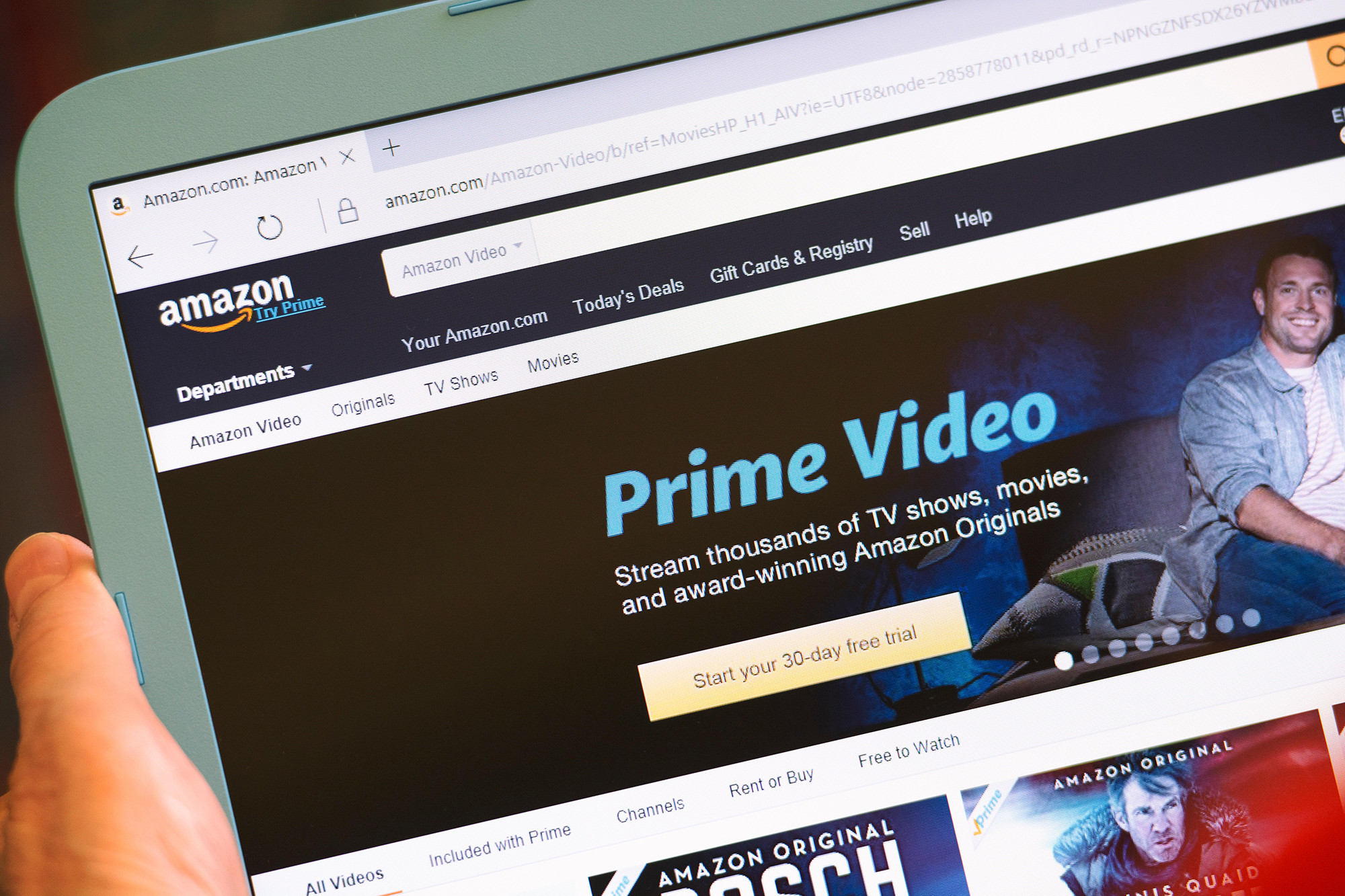
The $8.45 billion acquisition brings a slew of movies and shows to Amazon’s Prime Video streaming service as it seeks to compete with giants like Netflix and Disney.

The company also owns a slate of reality TV series that include “Shark Tank” and “Survivor.”

MGM Studios fell into bankruptcy in 2010.Anadolu Agency via Getty Images

Metro-Goldwyn Mayer did not age well. The nearly 100-year-old Tinseltown titan behind hits such as Rain Man and One Flew Over the Cuckoo’s Nest became a target for corporate raiders who sold off much of its production assets.

The company still owns a massive catalog of content, though, from the James Bond and Rocky franchises to a studio responsible for more recent streaming hits like “The Handmaid’s Tale.”

MGM is currently owned privately and counts a number of hedge funds among its owners, including Anchorage Capital Group, Highland Capital Management and Solus Alternative Asset Management.

The James Bond films will now be a part of Amazon’s collection.©Columbia Pictures/courtesy Everett Collection

The deal comes amid rapid consolidation across the media industry, with cable giants seeking partners to take on new-age streaming behemoths. Last week, telecom giant AT&T announced a deal to spin off its content unit WarnerMedia and merge it with Discovery, in an effort to create a massive studio that can compete with streaming rivals Netflix and Disney.

EU reportedly set to open formal antitrust probe into Facebook

European regulators are reportedly set to open a formal probe into whether Facebook has violated antitrust laws by undermining rivals in the classified advertising market.

The European Commission has already sent questionnaires to Facebook and its rivals asking whether the tech giant is warping the classified advertising business by promoting its online marketplace for free to its users, the Financial Times reported Wednesday.

Facebook is one of the few US Big Tech companies that’s managed to escape formal antitrust scrutiny from the European Union so far. The EU had previously investigated Microsoft, Amazon, Apple and Google, with most of those probes launched in the past couple of years.

The launch of a formal probe by the EU could come in days, but the timing and the scope of the investigation are still being discussed, the FT reported, citing three senior people with direct knowledge of the case.

Representatives for Facebook did not immediately return The Post’s request for comment.

Facebook CEO Mark Zuckerberg is now facing an antitrust probe by the European Union.REUTERS

European antitrust regulators previously sent questionnaires to Facebook in 2019 about its marketplace service, according to Reuters. And last year, European regulators sent another round of questionnaires, asking whether Facebook Marketplace benefits unfairly from the massive amounts of data the social media giant collects, Reuters previously reported.

In July of last year, Facebook sued EU antitrust regulators for seeking information they said was beyond what’s necessary for their investigations into the company’s data and marketplace.

Bitcoin price bounces back above $40,000 after a wild week of trading

In this articleTSLAA photo illustration depicting the cryptocurrency bitcoin.Jakub Porzycki | NurPhoto via Getty ImagesThe price of bitcoin climbed back above $40,000 on Wednesday morning, a week after its price tumbled 30% to around $30,000.The world’s most popular cryptocurrency was trading at $40,344.50 at 5:24 a.m. ET on Wednesday, up over 5% over the last 24 hours, according to Coin Metrics data.All the other major digital coins were also in the green Wednesday. Ethereum’s price has risen over 10% in the last 24 hours to $2,865.61, while Dogecoin’s price has climbed a little over 2% to 36 cents a coin.Last week’s crypto sell-off came after authorities in China and the U.S. moved to tighten regulation and tax compliance on cryptocurrencies. Chinese authorities called for tighter regulation on crypto mining and trading on Friday, reinforcing rules announced in 2017, and the U.S. Treasury announced Thursday that it would require stricter crypto compliance with the IRS.But the cryptocurrency market is trying to recover some of the losses this week after it plunged again on Sunday to almost $31,000.Bitcoin’s latest price rise comes after Tesla CEO Elon Musk said on Monday he spoke to bitcoin miners in North America about renewable energy solutions. Elsewhere, hedge fund billionaire Ray Dalio said in an article published on Monday that he has some bitcoin.Read more about cryptocurrencies from CNBC ProHow another ‘crypto winter’ could affect Coinbase’s stock price, according to MizuhoCramer sees ‘one more cathartic decline’ in bitcoin as a buy sign to those who missed crypto crazeMohamed El-Erian says volatility in the price of cryptocurrency is here to stay

Bitcoin 'time to buy' ad banned in the UK for being irresponsible

An advert for bitcoin on a bus in London’s West End.Barry Lewis | In Pictures | Getty ImagesLONDON — An advertising campaign telling people in the U.K. “it’s time to buy” bitcoin has been banned by the nation’s advertising regulator for being irresponsible and misleading.Posters for cryptocurrency exchange service Luno — shown across the London Underground network and on London buses this year — contained a cartoon image of a bitcoin with the words “If you’re seeing Bitcoin on the Underground, it’s time to buy.”The Advertising Standards Authority (ASA) said Wednesday that the ads must not appear again in their current form and that they failed to highlight the risks.It comes a week after the price of bitcoin collapsed by 30% in a single day, leaving many retailer investors who had bought bitcoin significantly out of pocket. It also comes two weeks after the Bank of England governor said cryptocurrency investors should be prepared to lose all their money.The watchdog said that it received four complaints concerning the ad. Three of them were from people who believed the ad failed to illustrate the risk of the investment and accused it of being misleading. One said the ad took advantage of consumer’s inexperience or credulity.”We considered that consumers would interpret the statement ‘it’s time to buy’ as a call to action and that the simplicity of the statement gave the impression that bitcoin investment was straightforward and accessible,” the ASA said.The regulator added, “bitcoin investment was complex, volatile, and could expose investors to losses and considered that stood in contrast to the impression given by the ad, that investment was simple and conventional.””For that reason, we concluded that the ad irresponsibly suggested that engaging in bitcoin investment through Luno was straightforward and easy,” it added.It has told Luno to ensure that its future marketing communications make “sufficiently clear that the value of investments in bitcoin was variable and could go down as well as up.” They must also highlight that Luno and the bitcoin market are unregulated.Read more about cryptocurrencies from CNBC ProHow another ‘crypto winter’ could affect Coinbase’s stock price, according to MizuhoCramer sees ‘one more cathartic decline’ in bitcoin as a buy sign to those who missed crypto crazeMohamed El-Erian says volatility in the price of cryptocurrency is here to stayLuno has agreed not to share the ads in their current form again and pledged to ensure that future ads carry an appropriate risk warning, the ASA said.Luno, which is part of a group that also owns the CoinDesk website, did not immediately respond to CNBC’s request for comment.Susannah Streeter, senior investment and markets analyst at Hargreaves Lansdown, said in a statement that regulators are becoming increasingly concerned about the risks that cryptocurrency investments can pose to consumers.”Cryptocurrencies are very complex, and are highly difficult to value, not least because the rules of the game can change so quickly,” she said.Bitcoin’s volatilityLast week’s crypto sell-off came after authorities in China and the U.S. moved to tighten regulation and tax compliance on cryptocurrencies. The sell-off was a major reversal for the cryptocurrency, which appeared to be gaining traction among major Wall Street banks and publicly traded companies.Tesla CEO Elon Musk, who helped fuel bullish sentiment when his company announced in February it has bought $1.5 billion of bitcoin, delivered a blow earlier this month when he announced that the automaker had suspended vehicle purchases using the cryptocurrency over environmental concerns.Bitcoin’s price was boosted this week after Musk said he’d been talking to bitcoin miners about how to make the cryptocurrency more environmentally friendly.The price of bitcoin at 3:49 a.m. ET was $40,445,17 and it’s climbed around 4% in the last 24 hours, according to CoinDesk.

Google gets the green light to build multi-billion dollar megacampus in San Jose

In this articleGOOGLSan Jose city officials on Tuesday night officially approved a plan for Google to build a massive campus in the heart of California’s third-largest city.For its “Downtown West” project, Google will develop 80 acres of land in downtown San Jose, including 7.3 million square feet of office space for 20,000 workers and thousands of housing units. It’s Google’s first mixed-use campus and will be one of its largest when completed. The San Jose city council unanimously approved the company’s plans Tuesday evening and several council members held back tears while doing so.The approval comes as Google aims to model a shift away from closed-off tech campuses to stem the growing alienation toward tech companies, whose success has contributed to a shortage of affordable housing and big cultural shifts in Silicon Valley and other tech hubs. Google, which is doubling down on bringing workers back to offices amid the weakening pandemic, is also planning another massive, town-like hub just 10 miles up the road in Mountain View.”There’s tremendous mistrust of the government and suspicion of Big Tech and it could have been easy for many of our community members simply to succumb to slogans and  simplistic thinking but thousands rolled up their sleeves,” San Jose mayor Sam Liccardo said at Tuesday’s meeting. “Rather than jump in one camp or another, community members pushed and prodded, and urged the city and Google to stretch and reach higher.”Liccardo continued, thanking community groups, Google, and parent company Alphabet’s finance chief Ruth Porat and SVP Kent Walker, who he said “we’re committed to seeing this through.” “We’d like to thank the City and community for years of engagement and true partnership,” said Google’s San Jose Development Director Alexa Arena in a statement Tuesday night. “Together, we have created a foundation for an equitable and environmentally focused place that represents the best of San Jose and Google.”The Downtown West campus will include 4,000 housing units, 1,000 of which will be designated for a range of “affordable” housing. In the city of San Jose, “extremely low-income” qualifiers — the bottom range of low-income housing — earn 30% of the average medium income. Exact housing prices haven’t been determined yet, officials said.Downtown West will also include up to 300 hotel rooms and 800 residences for short-term lodging for Google’s corporate guests. While Google will own all 80 acres, more than half of the project will be allocated for residential and public space and include features like parks, restaurants, retail space, entertainment space and ecological viewing stations.Construction on the project could begin as early as next year but is expected to take between 10 and 30 years to fully build.A four-year journeyDowntown West’s approval comes after four years of planning, adjusting and earning buy-in from community and housing advocates after facing early and intense pushback for displacement concerns. Within one week of the news breaking in 2017, home prices in a three-mile radius of the site jumped 7%, growing to a 25% rise six months later, according to real estate experts.On Tuesday night, while San Jose city council meeting was still being held, the company reached a last-minute deal with NHL team the San Jose Sharks, which was the most vocal opponent of Google’s plan, complaining about the lack of proposed parking spaces for its home at the nearby SAP arena. In exchange for modifications, the Sharks agreed not to sue the city or Google. The Santa Clara County Airport Land Use Commission rejected the project in December, citing concerns about building heights in the airport’s path but the city council’s unanimous vote overrode the commission’s rejection.Google’s chief legal officer and Global Affairs SVP Kent Walker joined Calif. governor Gavin Newsom last week as he hosted the signing of Senate Bill 7 at the Downtown West site, which stands to benefit from the bill that speeds up large real estate developments.Not including office space, Google will pay more than $1 billion for infrastructure features such as parks, walkways, and preservation of historic sites. It’ll also pay approximately $265.8 million in land and infrastructure fees as well as $200 million in “community benefits,” which includes anti-displacement and job readiness programs. A company spokesperson said it’s too early to estimate the costs of the offices.”We’re especially proud of the community fund that was created with local social equity organizations to give underserved communities a voice in where community investments should be made,” Alexa Arena said in a statement. Arena said the company had conducted more than 100 community feedback sessions.Arena said late last year that, after years of back and forth with the community, the company’s goal was for “much less the corporate campus” and more “a resilient neighborhood.”

Tesla is ditching radar, will rely on cameras for Autopilot in some cars

In this articleTSLAThe interior of a Tesla Model S is shown in autopilot mode in San Francisco, California, U.S., April 7, 2016.Alexandria Sage | ReutersTesla announced Tuesday that it is ditching radar in its driver-assistance features, including Autopilot.In a blog post, the company said its best-selling Model 3 and Model Y vehicles made for customers in the U.S. and Canada starting this month would instead feature a camera-based system to enable Autopilot features such as traffic-adjusted cruise control or automatic lane-keeping.Radar sensors are relatively expensive, and processing data from them takes significant computing power in a vehicle. Tesla has previously told shareholders that it believes “a vision-only system is ultimately all that is needed for full autonomy” and that it was planning to switch the U.S. market to Tesla Vision. CEO Elon Musk also said in a tweet on March 12 that the company would move to a “pure vision” approach.Tesla said these will be the first Tesla vehicles to rely on camera vision and neural net processing to deliver “Autopilot, Full-Self Driving and certain active safety features.”The company also cautioned that Autopilot and FSD systems would not be as useful or as strong during this period of technical adjustments.”For a short period during this transition, cars with Tesla Vision may be delivered with some features temporarily limited or inactive, including: Autosteer will be limited to a maximum speed of 75 mph and a longer minimum following distance. Smart Summon (if equipped) and Emergency Lane Departure Avoidance may be disabled at delivery.”Customers who already ordered a Model 3 or Model Y but didn’t know about this modification will be informed before they accept delivery of their cars.All new Tesla vehicles include a standard set of advanced driver assistance features dubbed Autopilot.Tesla also sells a $10,000 premium software package marketed as “Full Self Driving” or FSD. Tesla gives select drivers early access to a beta version of FSD — effectively turning thousands of customers into software testers on public roads in the U.S.According to the company’s website, Autopilot currently enables a Tesla vehicle to “steer, accelerate and brake automatically within its lane” and FSD adds features such as automatic lane changing and summon. Summon enables a driver to call their car to come pick them up across a parking lot using the Tesla app like a remote control.Tesla cautions in its owner’s manual and on its website that Autopilot and FSD require active supervision. But some drivers incorrectly believe that a Tesla is safe to operate hands-free, asleep at the wheel or even while sitting in the back of the car.One Tesla owner who posted social media videos of himself using Autopilot without his hands on the wheel died in a fatal collision in Southern California earlier this month. Another was arrested by the California Highway Patrol for taking his Tesla for unsafe joy rides during which he sat in the back seat and let the car operate on public highways with no driver at the wheel.Most using radar and lidarOther automakers are taking a different tack when it comes to the development, rollout and marketing of automated driving systems. GM Cruise, Alphabet’s Waymo, Aurora and others are including radar and lidar alongside cameras in their systems.While cameras capture video that can be labeled by human data analysts and interpreted by machine-learning software, radar and lidar sensors provide additional data that can give cars a more robust way to detect and avoid obstacles on the road — especially when visibility is lower, including at night or in inclement weather.Musk has called lidar a “crutch” and a “fool’s errand,” saying it’s too expensive and hard to use. But he has not dismissed radar entirely yet.Tesla intends to keep radar in its higher-cost Model S and Model X vehicles and in Model 3 and Model Y cars made in China or for shipment to markets beyond North America.According to Phil Koopman, CTO of Edge Case Research and professor of electrical and computer engineering at Carnegie Mellon University, Tesla should be able to get away with offering some features via vision today but might need to reintroduce radar later on to deliver more advanced automated features.”The sensors used by an SAE Level 2 (human driver responsible for monitoring safety at all times) is at manufacturer discretion. So it’s possible they can provide at least some features with camera only, noting that the human is responsible for handling anything the camera can’t,” said Koopman.”Tesla’s features are currently limited to this SAE Level 2. If in the future Tesla wants to achieve SAE Level 4 (automated vehicle with no human driver safety supervision — which is not the current capability), then it would prudent to use every type of sensor they can get, including cameras, radar, lidar, and possibly others.”

Facebook employees to return to NYC offices in July

Facebook employees will be allowed to return to the company’s New York City offices this summer — but they’ll still be required to wear masks and undergo coronavirus testing.

The social media outfit will reopen its offices in NoHo, Flatiron and Hudson Yards at 25 percent capacity in July, spokesperson Jamila Reeves told The Post on Tuesday.

In-person work will reportedly be optional until one month after the office returns to 50 percent capacity, a point the company does not expect to reach until September, according to Bloomberg, which first reported the news. Facebook has already reopened its San Francisco Bay Area and Seattle offices at 10 percent capacity. 

“As we return to the office, we have a number of protocols in place including physical distancing, wearing masks, and testing,” said Reeves. “Masks will be required at all times when in an office and where possible. Weekly COVID-19 testing will be required for anyone working onsite.”

Facebook Inc. CEO Mark Zuckerberg speaking in front of the logo of Instagram in San Jose, California.Kyodo News via Getty Images

Facebook is the latest in a growing list of firms to call employees back to New York offices. 

JPMorgan pushed some employees to return even before coronavirus vaccines were available, and Goldman Sachs has told US employees to be ready to work in-person starting on June 14. 

On of Facebook’s several offices in Manhattan.REUTERS

Mayor Bill de Blasio has pushed Big Apple businesses to make employees work in-person, spending over $200 million on bringing municipal buildings into compliance with coronavirus safety measures despite the widespread availability of vaccines.

In March, a Partnership for New York City survey found that less than half of Manhattan’s 1 million office workers will return to in-person work by September. 

Uber CEO is 'not happy' with how long it's taking to pick riders up or prices being charged

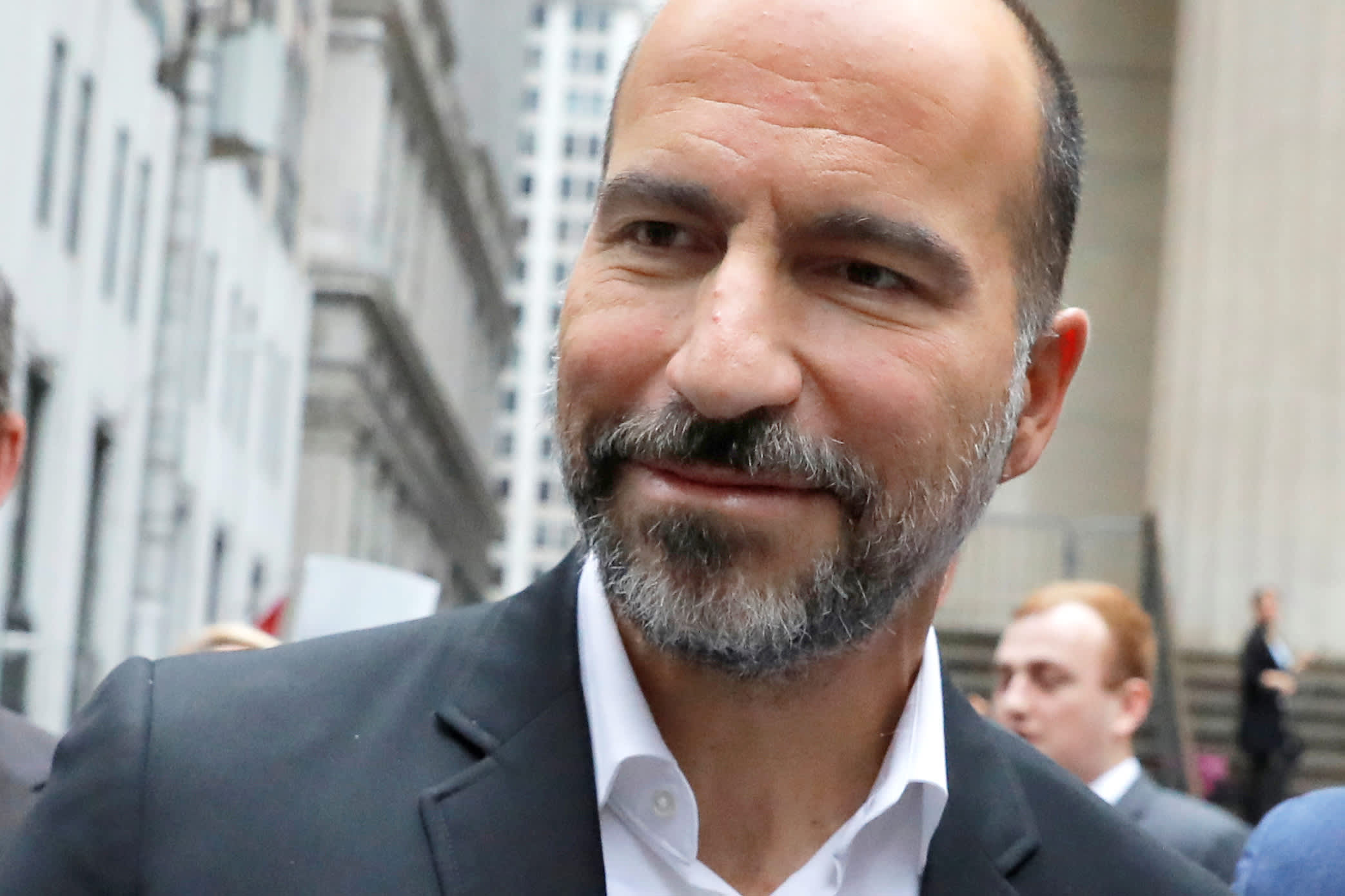
In this articleUBERUber Technologies CEO Dara Khosrowshahi outside the New York Stock Exchange ahead of the company’s IPO, May 10, 2019.Uber CEO Dara Khosrowshahi said Tuesday afternoon that while driver supply is getting better as more people get vaccinated against the coronavirus, there’s still plenty of room to go as demand for rides outpaces supply.”ETAs are higher than we want them to be, surge level prices have increased as we have not seen drivers supply keep up with the demand growth in the U.S.,” Khosrowshahi said at the J.P. Morgan Technology, Media and Communications Conference.”The supply position is something we’re still working on. It’s definitely getting better but we’re not happy with the ETAs and price levels we see and that is something we’re going to invest to improve on,” he added.With Americans getting vaccinated and governments easing pandemic restrictions, people are ready to travel and leave their homes again, turning to rideshare companies. However, Uber and Lyft are still dealing with a slow return of drivers. If the companies can’t bring in enough drivers to meet demand, they could face annoyed customers who are having to shell out more cash and wait longer.Uber said last month it would spend $250 million on a one-time stimulus aimed at getting drivers back on the road. In its first-quarter earnings call earlier this month, Khosrowshahi said they would “continue to lean in with targeted incentives for new and existing drivers.”Lyft also said earlier this month it would use its cut from elevated pricing to fund investments to bring back more drivers. In terms of bringing out more incentives, Lyft President John Zimmer said at the same conference on Monday afternoon that the company would be “smart about it.””We’re extremely confident and have already started to see significant improvement,” Zimmer said.Both Uber and Lyft said this month they expect the supply and demand issues to press on business in the second quarter, and would see recovery in the third.”We’re confident in our ability to execute,” Khosrowshahi said.Subscribe to CNBC on YouTube.

Atlanta Hawks owner accused of ‘hunting fouls’ in finance

The Atlanta Hawks’ growing reputation for cheap fouls comes as no surprise to people who’ve done business with the NBA team’s billionaire owner, The Post has learned.

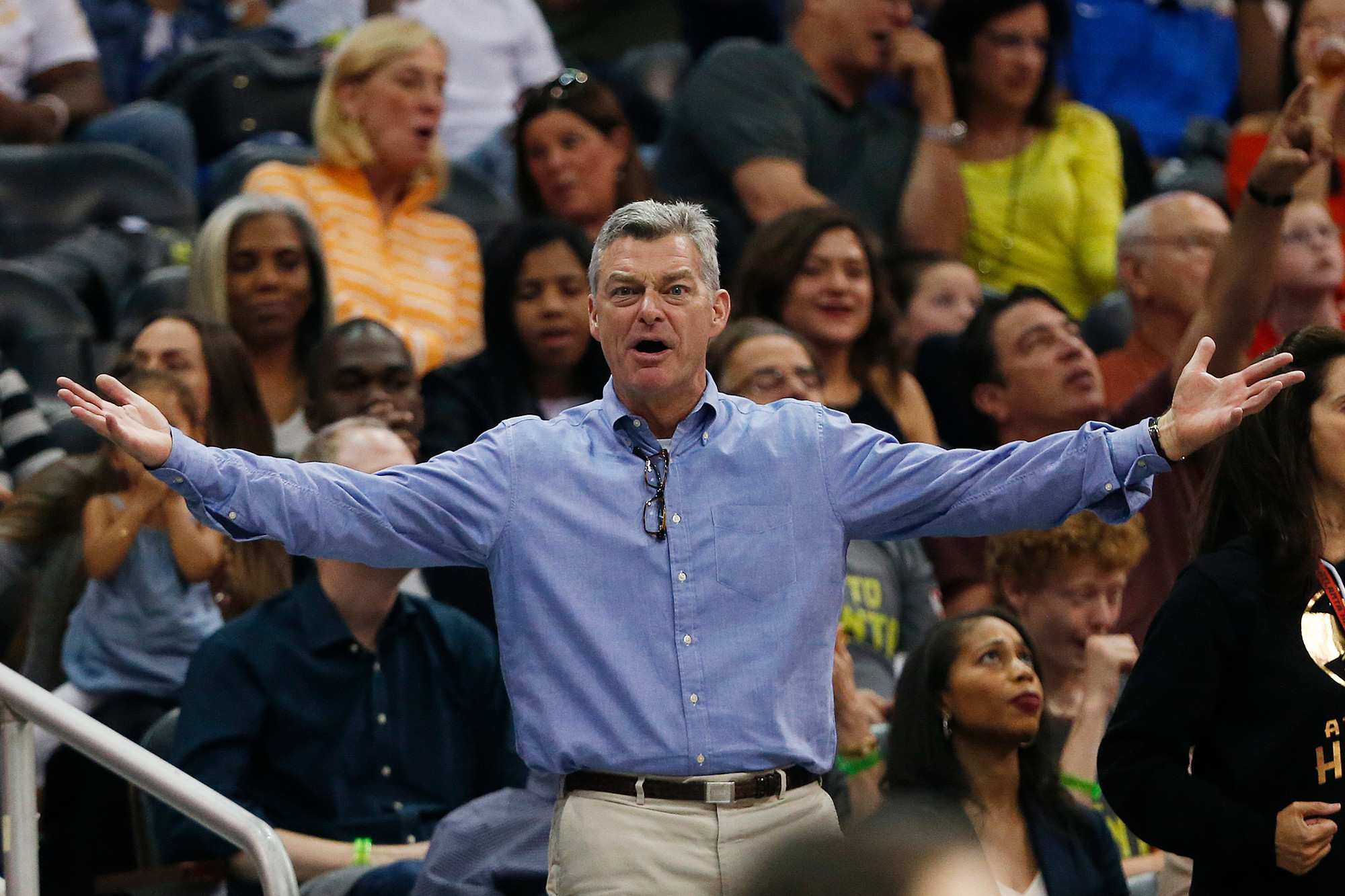
Private equity chief Antony Ressler, who bought the Hawks in 2015 with a group of investors for $850 million, has been developing a reputation in financial circles for the same unsportsmanlike tactics that had NYC Mayor Bill de Blasio accusing Hawks point guard Trae Young of “hunting fouls” following the team’s victory over the NY Knicks on Sunday, sources said.

Some lenders say just the mention of Ares Management — the $207 billion private equity firm Ressler founded in 1997 while working with his financier brother-in-law Leon Black — is enough to send chills down their spines.

“They are as aggressive as you can be,” one distressed lender said. “They take their straw and stick it in someone else’s milkshake. It’s blood sport.”

And it could come back to haunt them with some lenders telling The Post they want to stay clear of Ares deals for fear of getting shafted.

“Ares could get locked out of LBO financings,” claimed one lender involved in a lawsuit against Ares. “What they are doing is irrational.”

Ressler critics point out three lawsuits they say suggest a pattern of Ares, which separated from Black’s Apollo Global Management in 2002, pushing the legal boundaries in its business dealings and rewriting the rules to benefit itself.

The most infamous cautionary tale on Wall Street involving Ares is tied to department store chain Neiman Marcus, which filed for bankruptcy in 2020.

Ares, which led a $6 billion leveraged buyout of Neiman in 2013, was sued in 2018 for removing Neiman’s profitable e-commerce division Mytheresa into a separate holding company that put it out of reach of Neiman lenders.

The dispute came to a head last year and a deal was reached to give Neiman lenders about half of Mytheresa just before Neiman filed for bankruptcy. But the drama didn’t end there.

The Neiman angry lender who unsuccessfully sued Ares in 2018, Dan Kamensky of Marble Ridge Capital, ended up getting arrested several months later and charged with securities fraud for trying buy Mytheresa stakes from fellow lenders without making the same offer to all of them.

A judge this month sentenced Kamensky to six months in jail. Even so, some on Wall Street have come to the defense of Kamensky — the son of a corporate lawyer who earned his own law degree from Georgetown — arguing that he may never have done what he did if it weren’t for Ares. In a March 12 letter to the sentencing judge, Ben Steiner, who worked with Kamensky at Paulson & Co., called for leniency, noting that there were “many bad actors in this case from an ethical and fairness perspective.”

“I don’t think it’s clear at all that Dan should be punished as if he were solely responsible for what happened,” Steiner said, explaining that “the private equity sponsors were wrong to strip assets out of Neiman Marcus… and further wrong to fight creditors’ efforts to rectify this wrong so viciously.”

An Ares spokesman noted that Ares has not committed any wrongdoing. “The Neiman Marcus transaction fully complied with the negotiated provisions to which the lenders agreed. And no one has shown anything to the contrary.”

Ares in January took Mytheresa public. It now boasts a $2.7 billion market value.

Ares was also sued in 2018 by confectionary company Necco, which claimed that the firm “disregarded [its] fiduciary duty to Necco Candy …to further their own self-interest.”  

The case, filed in Massachusetts bankruptcy court, claimed Ares did this by killing a deal the struggling candy company had to sell its 800,000-square-foot Revere, Mass., warehouse to Cannon Capital for $35 million. The 2016 deal would also have had Cannon buy Necco for $22 million to fund its relocation and give it working capital, the lawsuit said.

Ares instead struck a different deal to sell Necco’s warehouse for $54 million, the lawsuit claims. It then had the candy company sign a pricey lease for the space, which allegedly forced it to liquidate.

Necco’s roughly 200 workers lost their jobs.

Necco claimed Ares was able to do all this because in May 2016 it had struck a deal to take control of Necco’s parent company, rival private equity firm American Capital, for $4.1 billion. American Capital, according to the suit, was required at the time to get Ares’ approval for any major changes involving Necco.

Ares in a statement “categorically” denied having terminated Cannon’s proposed transaction for Necco or having control over Necco during that time. “Ares Capital Corporation closed on its acquisition of American Capital in January 2017, and had no control of Necco until then.”

Still, Ares in April agreed to pay $13.5 million to make the case go away, including $6 million in Necco pension costs. It also agreed to share $7.5 million from its $16.5 million sale of Necco’s brand to private equity buyer Dean Metropoulos with angry creditors.

The lenders ended up with about 40 cents on the dollar, a source following the case said. Ares, by contrast, kept the $54 million it got from the warehouse sale, sources said.

Lenders of America’s largest restaurant supply company TriMark are also suing Ares in Manhattan Supreme Court over “a cannibalistic assault by one group of lenders in a syndicate against another.”

According to the lawsuit, Ares last year cut a secret deal with money-losing TriMark to lend it $120 million. In exchange, TriMark agreed to split its senior lenders, moving those who lent it new money into a new loan group to be paid off in bankruptcy ahead of the other senior lenders.Those left out of the deal, like hedge fund BlueMountain, saw the value of their loans quickly fall from about 78 cents on the dollar to 50 cents.Meanwhile, the value of the loans in the Ares group rose in value, allegedly giving them an immediate $68 million profit, covering more than half of their new TriMark loan.

Ares has denied any wrongdoing. “This transaction was supported by a majority of the existing lenders,” it said in a statement.

But Judge Joel Cohen on April 12 denied the defendant’s motion to dismiss. And experts say lenders are right to be upset.

“The type of asset-stripping that’s been happening recently goes beyond hardball,” said attorney David Elsberg of Selendy & Gay. “(It) unfairly upends the lenders’ expectations about the bargain they made and the risks they believed they were taking when they decided to buy the bonds in the first place,” he said of Ares’ restructurings in general.

Speaking in a May Ares promotional video, Ressler said, “We have an obsession on performance.” But it appears to be having trouble raising money.

Ares last raised an $8 billion flagship private equity fund in 2017. That fund has a 4.8 percent net annual rate of return as of March 31, 2021 — well below what investors might get from the S&P 500 during the same time period.

Ressler’s firm has been trying to raise a bigger $9.5 billion fund for at least 12 months, but has not yet held a final closing, sources said.

An Ares spokesman would not comment on the fundraising, but said Ares has doubled its assets under management from just four years ago.