TokyoTokyo Mon - Fri 10:00-18:00 +81 (366) 701-751
info@mountequitygroup.com

Blog

McDonald’s hit by data breach

McDonald’s said Friday that a data breach in South Korea and Taiwan has exposed some customer and employee information, making it the latest global company to be targeted by cybercriminals.

The attackers accessed emails, phone numbers and delivery addresses, but the breach did not include customer payment information, the company said.

The details of the breach in the two regions were the result of an investigation by external consultants following an unauthorized activity on the company’s network.

“While we were able to close off access quickly after identification, our investigation has determined that a small number of files were accessed, some of which contained personal data,” McDonald’s said in s statement.

The world’s largest burger chain said it will take steps to notify regulators and customers listed in the files.

Recent breaches by cybercriminals at hospitals and global companies including meat processor JBS and oil transport company Colonial Pipeline have disrupted operations for hours, leading to worries of supply shortages.

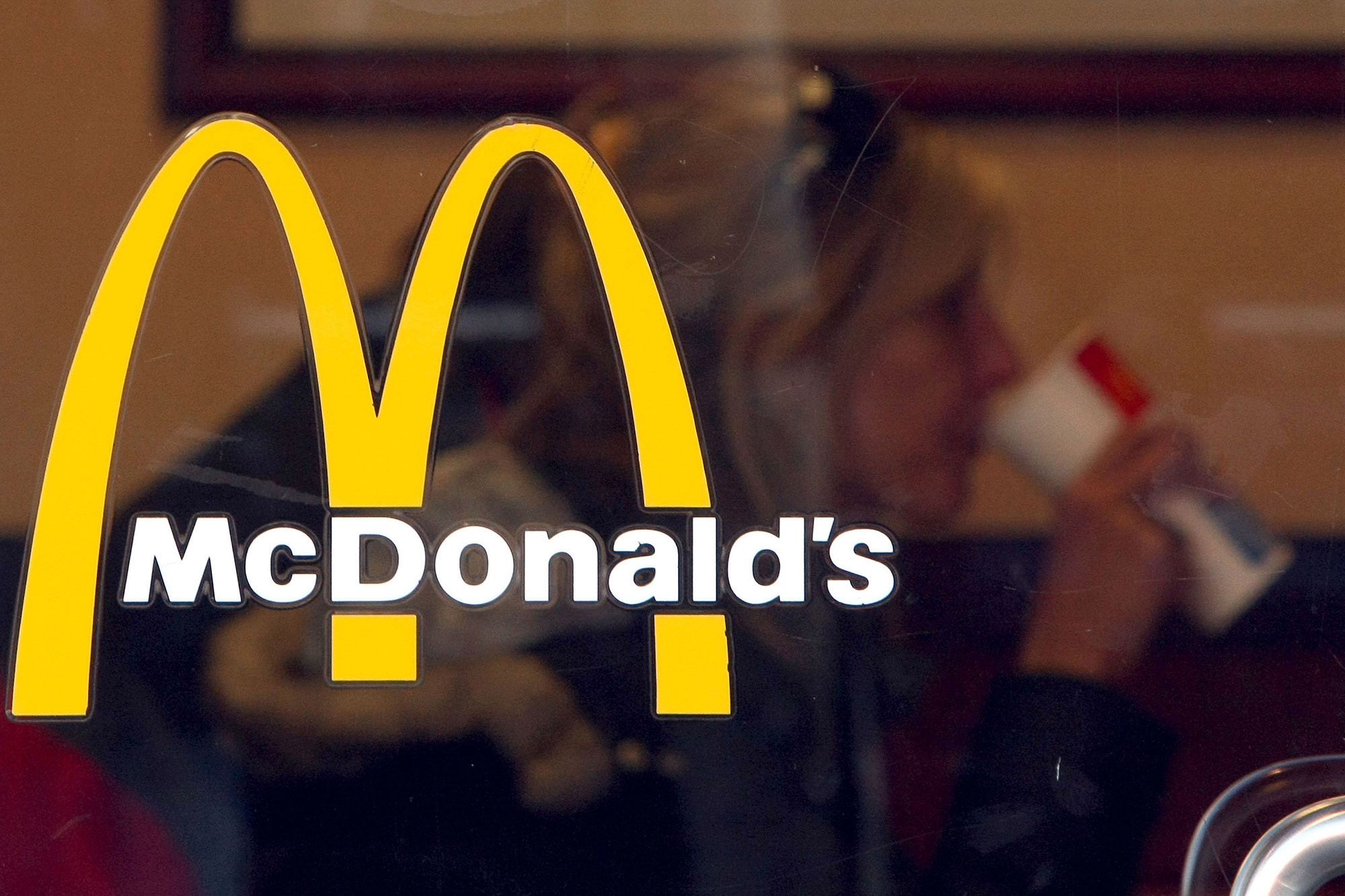
McDonald’s said the data breach affecting its business in Taiwan and South Korea (shown) was discovered after unauthorized activity was detected on its network.Getty Images

A few companies have had to pay a ransom to gain control of their operations and restart production. McDonald’s said its day-to-day operations were not affected and that a ransom was not involved.

The company said it would use the findings from the investigation to identify ways to improve its security measures.


TaskUs founders' path to Nasdaq started with high school parties and a yogurt venture in Argentina

TaskUs co-founders Bryce Maddock (left) and Jaspar WeirTaskUsFor Bryce Maddock and Jaspar Weir, the journey to the Nasdaq started in high school in southern California, continued through an entertainment venture for high-school kids and a failed yogurt business in Argentina, and finally ended up in a Texas town best known for its historic waterpark.Now in their mid-30s, Maddock and Weir are each worth about $400 million and oversee a business with 27,500 employees worldwide. Thirteen years after they plowed their life savings into a venture called TaskUs, the company held its stock market debut on Friday, and is valued at about $2.8 billion. The stock, trading under ticker symbol “TASK,” jumped 26% to $29.TaskUs provides customer support services to fast-growing tech companies including Uber, Netflix, Coinbase and Zoom. Employees are spread across eight countries, and TaskUs dedicates hundreds or even thousands of staffers to its top clients so it can handle all their support-related issues. Revenue climbed 33% last year to $478 million, and TaskUs is profitable — a rarity among newly public tech companies — showing annual net income of $34.5 million last year.Maddock, the CEO, says TaskUs is most commonly serving companies that “realize their growth is going to be so aggressive that they they can longer do it all themselves.”For instance, Zoom called in early 2020, when the video chat company’s pandemic-fueled growth spurred a 30-fold jump in support requests, according to the online roadshow. TaskUs soon had 700 employees working on the account.Clients like Zoom are the reason Maddock and Weir, the company’s president, were headed to the Nasdaq on Friday to ring the closing bell. But the trajectory wasn’t always up and to the right.High school summer partiesMaddock and Weir became best friends two decades ago while attending Santa Monica High School, a few blocks from one of California’s most famous beaches. Weir stayed nearby for college at the University of Southern California, while Maddock went across country to New York University.Still, they put their heads and pocketbooks together and formed their first business, an entertainment agency that rented out venues around Los Angeles and hosted alcohol-free parties for high school kids.”We grew up in Los Angeles and one thing we realized was that in the summer, kids in high school don’t have much to do,” Maddock said, in an interview. They called it Club Access and ran the business from 2005 to 2007, attracting 800 to 1,000 kids on the average Monday night.After college, they decided to give Buenos Aires a shot. Weir had studied abroad in Argentina and wanted to start a business there. He and Maddock settled on starting a frozen yogurt shop. They flew down together and met investors as well as chemists who could mix the flavors. However, they quickly learned that opening up a small business in Argentina and earning pesos was no way to build wealth, and they abandoned the idea before it got off the ground.They moved back in with their parents and invested the $20,000 they’d saved up from the events business into their next venture: a task-based virtual assistant. They chose to start in the Philippines, one of the top countries in the world for call centers and outsourcing.”We used our combined life savings to rent a one-room office on the side of a highway an hour south of Manila and hire our first few employees,” they wrote in the founders’ letter portion of the prospectus.In their initial conversations with start-ups, Maddock and Weir said they quickly learned that busy executives didn’t want task-based help, but rather needed more thorough support services to assist them as they grew. TaskUs broadened its focus to cover more business processes, and the founders got some venture-backed start-ups on board.”As we earned their trust, we took on more critical parts of their operations such as advanced technical support and critical content review,” they wrote.By 2012, TaskUs was established enough to hit the radar of Uber, which was still early in its development, although expanding rapidly and raising large venture rounds. Maddock said the message from Uber at the initial meeting in San Francisco was that the ride-hailing company would never outsource its services. That changed completely the following year.”They called us back and said that outsourcing sounds like a good idea now,” Maddock said.TaskUs started working with Uber in 2013, reviewing and onboarding drivers, according to the prospectus. In 2014, it began helping on rider and driver support. A year later, TaskUs had more than 2,000 people dedicated to Uber.Similarly, TaskUs began working with Coinbase as demand started surging. That was in 2017, when “bitcoin became a mainstream obsession, and support volumes spiked through the roof,” the filing says. Over time, TaskUs started handling fraud, compliance and customer safety needs for Coinbase.The Philippines is still the company’s biggest hub, with more than 19,000, or 70%, of its employees, located there. The U.S. is its second-biggest country, with over 4,000 employees, followed by India and Mexico.TaskUs was originally headquartered in Santa Monica, but started moving to Texas in 2016 with the opening of a San Antonio office, then to nearby New Braunfels, which became its current headquarters. New Braunfels is home to the Schlitterbahn, a 42-year-old water park that covers over 70 acres and is one of the 80,000-person town’s largest employers.Schlitterbahn Waterpark and Resort in New Braunfels, Texas.Erich Schlegel | Getty ImagesMaddock and Weir both live in Austin, about 50 miles north of New Braunfels. Prior to the pandemic, they said they spent about 75% of their time traveling to their various offices, including six to eight trips a year to the Philippines.They’re anxious to get back on the road and into the air, though as the key persons for a publicly-traded company, they have insurance policies that “forbid us from traveling on the same plane,” Maddock said.’Phantom stock’In addition to Maddock and Weir, the TaskUs IPO is a big windfall for Blackstone Group, which invested about $250 million in 2018 and eventually controlled about two-thirds of the company. Including shares sold in the IPO, that stake is now worth about $1.7 billion.Maddock and Weir were each able to maintain substantial ownership — 16% at the time of the IPO — because they’d only taken $15 million in outside funding prior to the Blackstone deal.”We bootstrapped the business for seven years, living on a shoestring budget with our parents,” Weir said, in an interview. “Fortunately our parents didn’t charge us rent.”Unlike the typical venture-backed tech company, TaskUs didn’t issue traditional stock options to its employees, because it was originally structured as a limited liability company. Rather, it created a “phantom stock plan” in 2015 and doled out grants that would appreciate in value as the company reached milestones and liquidity events.Maddock said that following the Blackstone transaction in 2018, the company paid out $44 million to over 200 employees, who owned phantom stock. After the IPO, he said a total of over $120 million will get paid to more than 400 employees.”We have teammates and leaders in the Philippines who will make hundreds of thousands and, in some cases, over $1 million,” Maddock said.WATCH: Cryptocurrencies see sudden sell-off — Here’s what experts say

El Salvador volcanoes to power bitcoin mining

Bitcoin is red-hot in El Salvador — and the country says it plans to use power from its volcanoes to mine it.

El Salvador President Nayib Bukele — just hours after the country’s legislature approved the “Bitcoin Law,” making it the first to accept Bitcoin as legal tender — revealed Wednesday that the nation’s state-owned geothermal electric company will harness volcanic energy to mine the cryptocurrency.

Bukele said the country is already designing a mining hub that will use “very cheap, 100% clean, 100% renewable” energy from volcanoes to power the operation, which effectively would be a bank of super-powered computers that solve the complex mathematical equations required to mine Bitcoin.

“Our engineers just informed me that they dug a new well,” Bukele tweeted, saying it would generate 95 megawatts of energy — enough to power more than 500 homes for a year. “What you see coming out of the well is pure water vapor.”

He has yet, however, to reveal when the new operation will be live or how many Bitcoins he expects to be able to mine.

Our engineers just informed me that they dug a new well, that will provide approximately 95MW of 100% clean, 0 emissions geothermal energy from our volcanos 🌋Starting to design a full #Bitcoin mining hub around it.What you see coming out of the well is pure water vapor 🇸🇻 pic.twitter.com/SVph4BEW1L— Nayib Bukele 🇸🇻 (@nayibbukele) June 9, 2021

It’s been a bullish week for Bitcoin in El Salvador. The digital coin can now be used as payment for goods, services, and taxes in the public and private sector. Bitcoin rose 6 percent on the news, according to data from Coindesk.

According to a study by Cambridge University, Bitcoin mining consumes more energy per year than the Philippines. Elon Musk has met with Bitcoin miners about environmental concerns, recently citing them as he announced Tesla would no longer accept Bitcoin as payment.

Details about the mining efforts and how El Salvador will widely adopt Bitcoin remain vague. The law states it will provide “the necessary training and mechanisms” to allow the 70 percent of its citizens that don’t have access to traditional banking services to understand how they can use Bitcoin but didn’t elaborate.

Still, Bukele remains an enthusiastic advocate for the currency and his mining project. Late Thursday he tweeted drone footage of the new mine with a rainbow in the background.

Canadian Market Holds In Positive Territory; TSX Hits New Peak

(RTTNews) – The Canadian stock market has scaled a new peak Friday, lifted by strong gains in energy, industrials and consumer discretionary sections.

The mood is fairly bullish amid continued optimism about global economic growth and higher crude oil prices.

The benchmark S&P/TSX Composite Index is up 95.40 points or about 0.5% at 20,144.87, a few points off a new high of 20,151.54 it touched this morning.

Among energy shares, Tourmaline Oil Corp (TOU.TO) is soaring more than 8%. Crescent Point Energy (CPG.TO) is gaining 2.3%, while Arc Resources (ARX.TO), Canadian Natural Resources (CNQ.TO), Whitecap Resources (WCP.TO) and Vermilion Energy (VET.TO) are up 1 to 1.5%.

In the industrials section, Brookfield Business Partners (BBU.UN.TO) and Mullen Group (MTL.TO) are up 2.75% and 2.5%, respectively. Air Canada (AC.TO) is up by about 2.1%. Westshore Terminals (WTE.TO), Ritchie Bros Auctioneers (RBA.TO), Ballard Power Systems (BLDP.TO) and Stantec Inc (STN.TO) are gaining 1.5 to 1.8%.

Consumer discretionary stocks Canada Goose Holdings (GOOS.TO) and Aritzia Inc (ATZ.TO) are up 3.2% and 3%, respectively. Brp Inc (DOO.TO) is up 1.8%, while Dollarama (DOL.TO) and Canadian Tire Corporation (CTC.A.TO) both are up nearly 1%.

Technology stock Enghouse Systems (ENGH.TO) is down 4.4% on weak results. The company announced on Thursday that it posted a net income of $20.7 million in the second quarter, compared with $27.1 million in the year-ago quarter.

Data from Statistics Canada showed Canadian industries operated at 81.7% of their production capacity in the first quarter of 2021, following an upwardly revised 79.7%. Economists expected capacity utilisation to come in at 80.6%.

Airbnb and Vrbo are working together to target banned ‘party houses’

Vacation rental giants Airbnb and Vrbo are cracking down on properties that frequently host raucous parties, the companies said Friday.

The companies are co-developing a “community integrity program” to identify problem properties — and share the information with each other, they said in a release.

“The information will be available for each company to take the appropriate action,” according to the companies, which said they’ll work through a “trusted third-party intermediary” to identify properties that have been permanently banned from each platform.

It wasn’t immediately clear if a ban on one platform automatically means the same fate on the other. The Post has reached out to the companies.

When Airbnb boots a certain property — such as the Brooklyn rental where an alleged gang member was fatally shot at a party this month, for example — Vrbo, which is owned by Expedia, will be notified of the ban, and vice versa. 

Airbnb, which went public in December and is currently valued at about $89 billion, imposed a ban on all parties at properties listed on its platform in August 2020.SOPA Images/LightRocket via Gett

The companies encouraged other vacation rental platforms to join the program, arguing that banning problem properties is much less effective if their owners can simply turn to other platforms. 

“While rare, disruptive parties can meaningfully impact the community’s quality of life,” the companies said. “Neither Airbnb nor Vrbo have tolerance for this type of irresponsible activity.” 

Airbnb, which went public in December and is currently valued at about $89 billion, imposed a ban on all parties at properties listed on its platform in August of last year.

Expedia-owned Vrbo is cooperating with Airbnb in the “community integrity program.” Alamy Stock Photo

The company said 73 percent of its rentals had already banned parties.

In May, the company extended the ban through at least this summer despite rising vaccination rates across the globe. It also banned US guests who do not have a history of positive reviews from booking one-night full-home rentals during the weekend of July 4th. 

In March, three people were reportedly shot at a party in an illegally rented home on Long Island. Police said the house had been rented on Airbnb, but the company denied that it was responsible for the property at the time of the shooting. 

Amazon will overtake Walmart as the largest U.S. retailer in 2022, JPMorgan predicts

In this articleWMTAMZNSaul Loeb | AFP | Getty ImagesAmazon is on track to overtake Walmart as the largest U.S. retailer in 2022, according to JPMorgan research released Friday.Amazon’s U.S. retail business is the “fastest growing at scale,” according to the company’s analysts. Between 2014 and 2020, Amazon’s U.S. gross merchandise volume, or GMV — a closely watched industry metric used to measure the total value of goods sold over a certain time period — has grown “significantly faster” than both U.S. adjusted retail sales and U.S. e-commerce, the analysts said.Neither Amazon nor Walmart break out GMV in their quarterly earnings results, but JPMorgan estimates Amazon’s GMV is growing faster than its largest retail competitor. JPMorgan analysts said Amazon’s GMV in 2020 climbed 41% year over year to $316 billion, while Walmart’s GMV is estimated to have grown 10% year over year to $439 billion in 2020.”Based on current estimates, we believe Amazon could surpass Walmart to become the largest U.S. retailer in 2022,” J.P. Morgan analysts Christopher Horvers and Doug Anmuth wrote Friday.Horvers and Anmuth highlighted a few factors they believe are driving Amazon’s top-line growth, including an expansion into “large and under-penetrated categories” such as grocery and apparel, strong growth of third-party seller sales and the “Prime flywheel.” Amazon CEO Jeff Bezos said in April the company now has more than 200 million Prime subscribers, up from 150 million at the beginning of 2020.The coronavirus pandemic rapidly accelerated the adoption of e-commerce and cemented Amazon’s dominance in the retail space. Stuck-at-home consumers turned to Amazon for a plethora of goods ranging from toilet paper to workout gear. They also relied on Amazon for services they might not have otherwise considered, such as online grocery delivery.Amazon’s pandemic-fueled sales surge has helped it grow its slice of the e-commerce market. JPMorgan estimates Amazon expanded its share of the U.S. e-commerce market to 39% in 2020, up from 24% in 2014.The accelerated adoption of e-commerce has also provided a lift to other areas of Amazon’s business.Amazon is on track to “become one of the largest delivery companies” in the U.S., analysts at Bank of America wrote in research published Tuesday.Amazon is estimated to deliver 7 billion packages in 2021, surpassing the roughly 6 billion packages UPS is expected to deliver in the U.S. this year, the analysts wrote, citing figures from MWPVL International, a supply chain and logistics consulting firm.In recent years, Amazon has quietly built a shipping operation that rivals the likes of UPS, FedEx and the U.S. Postal Service. It maintains an ever-increasing network of warehouses and last-mile delivery stations, and a sprawling logistics operation with airplanes, trucks and vans.This has allowed Amazon to deliver most of its own orders. Amazon currently delivers packages for other businesses in the U.K. and could one day expand that service to the U.S.MWPVL estimates Amazon handled about 5 billion of the 7.35 billion packages it shipped in 2020. UPS and USPS handled the other 1.25 billion and 1.1 billion, respectively, according to Bank of America analysts.

Oil demand will exceed pre-COVID levels by end of 2022: energy agency

Demand for oil will surpass pre-pandemic levels by the end of next year as the global economy recovers, the International Energy Agency said on Friday, rejecting analysts’ predictions that the world’s oil usage has already peaked. 

“Global oil demand is set to return to pre-pandemic levels by the end of 2022,” the IEA said in its monthly oil market report, predicting that demand will rise by 5.4 million barrels per day this year and an additional 3.1 million barrels next year to an average of 99.5 million barrels per day in 2022. 

Oil demand plunged by a record 8.6 million barrels per day in 2020 as coronavirus lockdowns and travel bans destroyed demand. 

Faced with this collapse, petroleum giant BP said in a September report that the world had reached “peak oil,” meaning that oil usage would never return to pre-pandemic levels. And in December, Bloomberg News declared, “Peak Oil Is Suddenly Upon Us.” 

But the Paris-based IEA, which is an intergovernmental organization that includes the US, European Union and Japan, believes proponents of the peak oil theory spoke too soon. 

Oil demand plunged by a historic 8.6 million barrels per day in 2020 as coronavirus lockdowns and travel bans destroyed demand. Getty Images

In the coming years, global demand for plastics will boost sales of petrochemicals, while the recovery of the travel sector will increase jet fuel usage, the IEA said. 

However, the increasing popularity of remote work and the rise of electric and fuel-efficient vehicles will suppress some demand for gasoline, according to the organization. 

In addition, the lopsided global distribution of vaccines toward wealthy countries means that oil demand in poorer countries will recover more slowly, the IEA predicted. 

Meeting global oil demand is “unlikely to be a problem” due to increased production by countries including Saudi Arabia, the IEA said.Bloomberg via Getty Images

Despite these trends, the group insisted that demand should surpass pre-COVID levels by the end of 2022. 

“The recovery will be uneven not only amongst regions but across sectors and products,” said the IEA, which is led by Turkish energy economist Fatih Birol. 

The IEA said that meeting growing global oil demand is “unlikely to be a problem” due to increased production by OPEC+ countries like Saudi Arabia, as well as further output by the US, Canada, Brazil and Norway. 

The recovery of the travel sector will increase jet fuel usage, the IEA said.Los Angeles Times via Getty Imag

The rise of remote work and the popularity of energy-efficient vehicles will suppress some demand for gasoline, however.Bloomberg via Getty Images

If sanctions on Iran were lifted, an additional 1.4 million barrels per day would hit the global oil market, the IEA said.

In May, US gas prices hit a seven-year high as the Colonial Pipeline hack shut down America’s largest pipeline.