
TokyoTokyo Mon - Fri 10:00-18:00 +81 (366) 701-751
info@mountequitygroup.com

Blog

‘Doge’ NFT sells for $4 million

Doggone it — the now iconic picture of a smirking Shiba Inu just became the most expensive meme to sell as a non-fungible token, or NFT.

The dog meme known as “doge” was sold in an auction Friday for approximately $4 million to an unidentified buyer with the Twitter handle @PleasrDAO.

The bidder, in an apparent gag, paid for the meme via cryptocurrency Ether — handing over 1,696.9 of the cyber coins.

The money goes to Japanese kindergarten teacher Atsuko Sato, the owner of the actual Shiba Inu dog pictured in the meme. Her sale of the “doge” meme took place on digital auction website Zora, where it sold in just three days.

The meme has been popular on internet forums like Reddit and Tumblr since early 2010, but reached new highs as the face of cryptocurrency Dogecoin.

The digital coin was started as a joke but has gained steam recently as billionaires Mark Cuban and Elon Musk embrace the currency. Cuban mandated his sports team, The Dallas Mavericks, accept Dogecoin as payment, and Musk has hyped it on Twitter, including by posting a picture of the dog on the moon.

The price of a Dogecoin has surged over the last year

At its peak of 69 cents, Dogecoin was about 12,000 percent higher than its price just six months ago of .002 cents. The price has since fallen closer to 34 cents.

The popularity of NFTs, which allow buyers to own a digital asset, has exploded this year.

After an NFT from artist “Beeple” scored $69 million in March, a slew of NFTs have sold for eye-popping prices, including Twitter co-founder Jack Dorsey’s first tweet, which went for $3 million later that month. Gamestop became the latest to jump on the bandwagon with an announcement that it’s “building a team” for an NFT project.
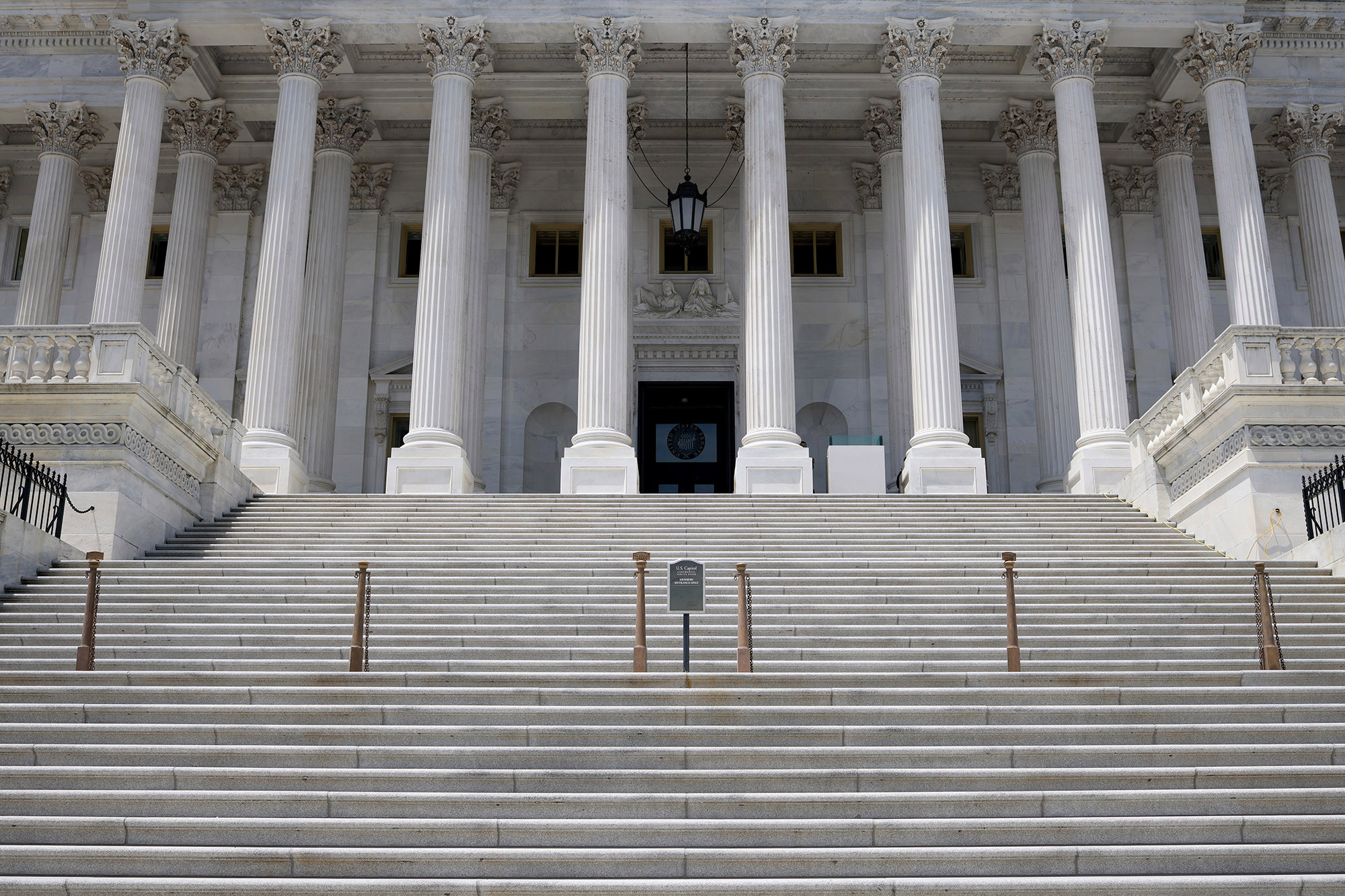

Congress looks to break up Big Tech with bold new antitrust bills

Congressional lawmakers are targeting tech giants over antitrust concerns — and the proposed legislation could force them to overhaul or even break up their increasingly dominant business empires.

The package of five antitrust bills introduced by a bipartisan group in Congress on Friday — aimed at Amazon, Apple, Facebook and Google’s parent Alphabet — would make it harder for the biggest tech platforms to complete mergers and keep them from owning businesses that create conflicts of interest.

Two of the new bills could be particularly tricky for Amazon and Apple to navigate as they both run marketplaces that include their own products or apps that compete with outside sellers that rely on their services.

Called the “Ending Platform Monopolies Act,” sponsored by Rep. Pramila Jayapal (D-Wash) and the “The American Innovation and Choice Online Act” sponsored by House Judiciary subcommittee on antitrust Rep. David Cicilline (D-RI), the reforms could potentially break up the tech behemoths by cracking down on conflicts of interest between their different business lines.

Rep. David Cicilline (D-RI).Mandel Ngan/Pool via REUTERS

The second bill introduced by Rep. Cicilline would reduce the ability of big tech companies to use their platforms to promote their own goods ahead of those of competitors — a rule that could slam Apple and Google’s Android software over their app-store policies, and Amazon over its massive third-party marketplace. 

“Unregulated tech monopolies have too much power over our economy,” said Cicilline. “They are in a unique position to pick winners and losers, destroy small businesses, raise prices on consumers, and put folks out of work. Our agenda will level the playing field.”

Rep. Ken Buck (R.–Colo.), the top Republican on the antitrust panel, the legislation “breaks up Big Tech’s monopoly power to control what Americans see and say online, and fosters an online market that encourages innovation.”

The other three bills are aimed at curbing mergers that Silicon Valley giants have used to grow and neutralize competition. “The Platform Competition and Opportunity Act” led by Rep. Hakeem Jeffries (D-NY), would ban major online players from buying competitive threats, while “The Merger Filing Fee Modernization Act” led by Rep. Joe Neguse (D-Co) would give enforcement agencies power and resources by requiring higher fees for mergers valued at $1 billion and more.

Meanwhile, “The Augmenting Compatibility and Competition by Enabling Service Switching Act” led by Rep. Mary Gay Scanlon (D-Pa) is meant to increase competition by forcing companies to give consumers the ability to switch data between platforms.

The Judiciary Committee will need to vote on the bills before they make their way to the House for approval and then the Senate. Only then can the bills be signed into law by the president.

The bipartisan support for the package is bad news for the tech titans, which are believed to wield too much power over the industry.

The bills are aimed at tech giants Google, Amazon, Facebook and Apple.Alamy Stock Photo

The tech giants did not immediately respond to requests for comment on Friday, but reports that the bills were coming had already spurred pushback.

“Adopting the European regulatory model would make it harder for American tech companies to innovate and compete both here and globally,” Geoffrey Manne, president and founder of the International Center for Law & Economics told CNBC, which added that the group has received funding from Google in the past. 

In a Medium post published earlier this week, Adam Kovacevich, chief executive of Chamber of Progress, an advocacy group backed by the five tech giants, argued that consumers would miss out on “conveniences” such as Amazon Prime free shipping and cross posting between Facebook and Instagram, under those proposals.

“With all the challenges facing our country — pandemic recovery, crumbling infrastructure, racial equity, and climate change — it’s a bit strange that some policymakers think our biggest problem worth fixing is…Amazon Basics batteries,” Kovacevich wrote.

Rep. Pramila Jayapal (D-WA).Drew Angerer/Getty Images

The antitrust reforms follow a 16-month long investigation by the House Judiciary subcommittee on anticompetitive issues into the four tech giants that was completed last year.

At the time, the investigation’s 450-page report found that Amazon, Apple, Facebook and Google hold monopoly power and that antitrust laws should be revised to better deal with today’s digital media landscape. The report said that major changes for big tech companies may have to spin off or separate parts of their businesses or make them harder to buy smaller companies.

While Democrats and Republicans have disagreed on some of the solutions, they have found common ground on the alleged antitrust issues and agreed that reform was necessary to spark competition.

Amazon has caught flak from lawmakers for allegedly using data from third-party businesses to develop and promote Amazon-label products like “Amazon Basics.”

Amazon’s private label represents a substantial section of the tech giant’s business, boasting 158,000 products from dozens of different brands, according to the report. 

The company also has substantial business lines in everything from streaming entertainment through Prime Video and e-readers via Kindle to voice-activated assistants through Echo and doorbell cameras via Ring. Untangling its various subsidiaries would likely be a long and costly process.   

The Ending Platform Monopolies Act is being floated as a tech-world equivalent of the landmark 1933 Glass-Steagall Act, which separated commercial and investment banking, according to the Journal. 

The potential legislative battle comes less than a month before Jeff Bezos is set to step down as CEO of Amazon in July, handing the reins to web services chief Andy Jassy and then blasting himself into space on a Blue Origin rocket shortly thereafter. 

Amazon, which employs 1.3 million people, could be forced to split itself up under new legislation being considered in Congress.Getty Images

The US is not the only country where Jassy is expected to tussle with regulators. 

On Thursday, the Journal reported that a European Union privacy overseer has proposed a $425 million fine over Amazon’s data collection practices. The fine would be the biggest to date under a strict data-privacy law the EU enacted in 2018. 

The Week In Cannabis: Federal Research Bill, George Lopez, Brazil, Morocco, Columbia Care And More

As we near the end of the first half of 2021, we can see cannabis stocks traded mostly up by double digits, with the Amplify Seymour Cannabis ETF (NYSE:CNBS) delivering gains of more than 50% year-to-date.

This week, however, stocks posted mixed performances.

Over the five trading days of this week:

The ETFMG Alternative Harvest ETF (NYSE:MJ): gained 2.5%.
The AdvisorShares Pure Cannabis ETF (NYSE:YOLO): advanced 0.66%.
The AdvisorShares Pure US Cannabis ETF (NYSE:MSOS): dropped 1.9%.
The Cannabis ETF (NYSE:THCX): was up 0.5%.
The Amplify Seymour Cannabis ETF (NYSE:CNBS): gained 2.5%.
The SPDR S&P 500 ETF Trust (NYSE:SPY) closed the week up 0.39%.

On the policy front, a U.S. House Committee passed a bill that would enable researchers to analyze cannabis products from legal dispensaries. This new provision is part of a large transit bill, which has now passed the House Transportation and Infrastructure Committee, advancing to the full chamber for consideration.

Under the current law, scientists are allowed to use only limited amounts of cannabis formations that come from the only federally authorized source, the University of Mississippi. 

On the road to capturing the Latino market George Sadler, CEO of Platinum Vape, announced on Thursday’s Benzinga Cannabis Hour show that his company is partnering with comedian George Lopez to launch his cannabis brand Chingón.  

“George Lopez had called us about some of our products and about doing a brand,” said Sadler who naturally jumped at the chance. “So look for Lopez’s brand, Chingón, which is going to be coming out really soon.”

A special committee of the Brazilian Chamber of Deputies passed a bill that would enable cannabis cultivation for medicinal and industrial purposes.

After being postponed on several occasions, the passing of this project meant a defeat for the conservative pro-Bolsonaro ruling party, which, according to O Globo, was firmly opposed to the bill and acted accordingly. Indeed, the battle was a close one: with 17 votes in favor and 17 against, the tie had to be broken by the chairman of the special committee, deputy Paulo Teixeira (PT-SP).

Benzinga Cannabis’ content is now available in Spanish on El Planteo.

In Morocco, the upper house of Parliament approved a bill to legalize the cultivation and commercialization of cannabis for medicinal and industrial uses.

With 41 votes in favor and 11 against, the upper house approved the bill, less than two weeks after the initiative was voted in the lower house.

However, the Moroccan Minister of the Interior, Abdeluafi Laftit, recalled that “the illegal use and consumption of marijuana is still prohibited in the country.”

Private equity firm Viridescent Capital Partners and its affiliate Viridescent Management LLC announced the closing of more than $125 million on its mREIT, Viridescent Realty Trust (VRT).

Acreage Holdings Inc. (OTC:ACRDF)’s founder, Kevin Murphy, launched Viridescent Capital Partners in 2020. He serves as the company’s founder and chief investment officer.

CBD wellness brand Vybes teamed up with popular hip-hop artist Matthew Tyler Mustok, better known as Blackbear, as it launches its newest beverage in honor of the musician – Blackbear Hibiscus.

Curaleaf Holdings, Inc. (CSE:CURA) (OTCQX:CURLF) announced a strategic partnership between its Select brand and Rolling Stone. 

The partnership will leverage Select’s resources and experience creating progressive, industry-leading cannabis products alongside Rolling Stone, which has a legacy of celebrating this connection and a long history of reporting on the fight to legalize cannabis.

Aurora Cannabis Inc. (NASDAQ: ACB) (TSX:ACB) will roll out three new proprietary cultivars under its adult-use cannabis brand San Rafael ’71. The three cultivars are dubbed Stonefruit Sunset, Lemon Rocket and Driftwood Diesel.

Policy, Science And Data

The Connecticut Senate passed a bill to legalize marijuana early Tuesday morning after a marathon debate that finally ended in a 19-17 vote. 

The legislation that will regulate and tax marijuana for adults 21 and older is now headed to the House of Representatives for final approval.

The New Jersey Senate Health Committee passed a medical cannabis-related bill (S3799) on Thursday to provide financial support programs for children, seniors, and crime victims in need of medical cannabis treatment.

Two-thirds of Americans now support all-drug decriminalization, according to a new survey from the Drug Policy Alliance and the ACLU.

The survey shows that 66% of Americans would support eliminating all criminal penalties for drug possession and redirecting resources toward a public health approach. Moreover, 83% of respondents said they think the “War on Drugs” has failed.

The United States Cannabis Council (USCC) released the results of a poll that demonstrates a promising shift in opinion on federal cannabis reform. 

The survey, conducted by Change Research, found that nearly 70% of registered voters in Arizona, Utah and West Virginia support federal cannabis legalization and want their Senators to vote in favor of federal reform this year.

The survey also found all three states polled an average of over 50% in favor of expunging records for non-violent cannabis offenses and allowing medical cannabis to be prescribed to veterans.

Zelira Therapeutics (ASX: ZLD) (OTCQB:ZLDAF) is set to begin a cannabinoid-based clinical trial on chronic pain in retired professional and amateur athletes.

The Washington State University Faculty Senate and Board of Regents have formed a Center for Cannabis Policy, Research and Outreach (CCRPO) with the idea of overseeing the schools’ comprehensive cannabis research.

Financings And M&A

Columbia Care Inc. (NEO: CCHW) (OTCQX: CCHWF) finalized its purchase of Green Leaf Medical, LLC, for $240 million in stock and cash.

Ayr Wellness Inc. (CSE:AYR) (OTCQX:AYRWF) announced the expiration of the waiting period under the Hart-Scott-Rodino Antitrust Improvements Act with respect to its proposed acquisition of GSD NJ LLC in New Jersey. As the waiting period expired without a second request for information, the $101 million transaction is expected to close in July 2021 subject to certain closing conditions, including final approval from the New Jersey Cannabis Regulatory Commission. Adult-use sales are anticipated to begin Q1 2022

Ayr announced in December 2020, that it planned to acquire Garden State Dispensary (GSD), which is one of the 12 existing vertical permit holders in New Jersey and one of the state’s original six alternative treatment centers. Adult-use cannabis was legalized in New Jersey in Nov. 2020.

Red White & Bloom Brands Inc. (CSE:RWB) (OTCQX:RWBYF) secured roughly $44.5 million in financing.

22nd Century Group, Inc. (AMEX:XXII) raised $40 million through a previously announced registered direct offering of its 10 million common shares at $4.00 per share.

The Green Organic Dutchman Holdings Ltd. (TSX:TGOD) (OTC:TGODF) is selling its Valleyfield, Quebec-based facility to Cannara Biotech Inc. (TSXV:LOVE) for a total of $32.7 million.

Aleafia Health Inc. (TSX:AH) (OTCQX:ALEAF) is poised to raise up to $30 million through the newly established at-the-market equity program.

Curio closed on a $26 million mortgage with Severn Bank acting as the main finance partner. The news comes on the heels of the Maryland-based company’s $22 million capital raise with new and existing investors.

Flora Growth Corp. (NASDAQ:FLGC) made a strategic investment of 2 million Euros ($2.42 million) in Hoshicap Portugal Unipessoal Lda, a subsidiary of Hoshi International. The investment will solidify Flora’s position as a preferred strategic supplier to Hoshi’s EU processing facilities in Malta and Portugal, and provide Flora with a port for the importation of compliant, high-quality Colombian outdoor cannabis flower and derivatives to the European Union (EU). 

California-based cannabis supply chain solutions company HERBL has acquired Blackbird, a Nevada-based cannabis distributor and direct-to-consumer software solutions company, will integrate its e-commerce platform with HERBL’s retail services in Nevada and California.

Terra Tech Corp. (OTCQX:TRTC) is acquiring SilverStreak Solutions Inc.

Golden Triangle Ventures Inc. (OTC:GTVH) announced the acquisition of Sonder Fulfillment, LLC.

Trulieve Cannabis Corp. (CSE:TRUL) (OTCQX:TCNNF) finalized its purchase of Solevo Wellness West Virginia LLC and its three West Virginia dispensary licenses. The $650,000 acquisition was previously announced in April.

Earnings Reports

Acreage Holdings, Inc. (CSE:ACRG) (OTC:ACRGF) saw consolidated revenue climb to $38.4 million in the first quarter of 2021, marking a 58% spike compared to what the New York-based company reported for the same period of 2020.

Retail revenue grew sequentially by 3% and 47% year-over-year to $25.8 million.

Planet 13 Holdings Inc. (CSE: PLTH) (OTCQX: PLNHF), home of the world’s largest dispensary SuperStore near the Las Vegas Strip, is seeing a rapid rebound in tourist traffic.

The surge in tourism is reflected in the company’s latest numbers with $11.2 million in sales in May and gross margins above 50%.

Jushi Holdings Inc. (CSE:JUSH) (OTC:JUSHF) reported a significant boost in revenue in 2020. Revenue jumped 689.6% year-over-year to $80.8 million over the last year, according to the Boca Raton, Florida-based cannabis company’s earnings report Wednesday.

Find all the details on these and other earnings reports on Benzinga Cannabis’ Earnings Center.

Other News

The Bob Marley Museum, in Kingston, Jamaica, is finally getting the one thing it was missing: ganja.

According to information procured exclusively ahead of an official announcement, the Marley family and Docklight Brands will open a Marley Natural-branded dispensary at Bob Marley’s former home and recording studio. The Marley Natural product lineup, including THC and CBD products as well as accessories, will be sold there.

Tilray, Inc. (NASDAQ:TLRY) (TSX:TLRY) announced the launch of a new brand dubbed Symbios.

The company simultaneously launched new medical cannabis topicals under the Aphria brand.

The Flowr Corporation (OTCQX:FLWPF) will export up to 500 kilos of premium dry cannabis flower in bulk into Israel.

Creo announced collaborations with Fifth & Root and Joiya to introduce new CBG skincare products using Creo’s proprietary CBG. Recent studies show that CBG can act as a natural multi-functional antioxidant to help skin heal, hydrate and delay aging.

Creo has also unveiled its first annual Creovate event, which will bring together experts to discuss the cannabinoid ingredients revolution. The event will be held virtually on June 22, 2021. Actor and director Jaime King will be the featured celebrity keynote speaker.

Body and Mind Inc. (CSE:BAMM) (OTCQB: BMMJ) obtained license approval for its Ohio production facility as well as local approval for its manufacturing facility in California.

CURE Pharmaceutical (OTC:CURR) has signed an agreement with Biopharmaceutical Research Company (BRC) to produce federally compliant medical cannabis, CBD and THC products.

Executive Moves

Find out all about the latest executive moves at:

ManifestSeven, Flora Growth, Fire & Flower, Charlotte’s Web, MediPharm Labs, Village Farms, PharmaCielo
Revolution Global, Hempz, APG Cash Management Solutions, Jage Media, Cansortium
Union Cannabis Group, Common Citizen, Neptune, The Arcview Group, Santa Fe Farms, Avicanna, Field Trip Health

Top Stories Of The Week

Check out the top stories on Benzinga Cannabis this week:

Eric Adams, Andrew Yang Express Cannabis Concerns During NYC’s Mayoral Debate Before Early Voting Begins
The Emergence Of Cannabis As Luxury
Psychedelic Compound 5-MeO-DMT Could Make Therapy Short And Effective: Beckley Psytech Is ‘All In’
Video: Benzinga Cannabis Insider 6/10 Ft. Platinum Vape And Glass House Group
Video: Benzinga Cannabis Insider 6/8 Ft. Scott Berman President Of The Panther Group
Get A COVID-19 Vaccination And Choose From Cannabis Pre-Rolls, Dinner With The Governor, Selfie With A Blue Whale
EXCLUSIVE: Tilray CEO Talks Symbios, Aphria, Market Opportunities On ‘Power Hour’
Want To Experience The Cannabis Harvest In California’s Humboldt County? This Company Will Take You For Free
Oregon’s Cannabis Market: What Investors And Entrepreneurs Need To Know

Top Spanish stories:

El Secreto de Concha Podcast: una Charla sobre Marihuana, Comunidad y Sexo
Exclusiva: CEO de Tilray Habla de Symbios, Aphria y Oportunidades en Sector del Cannabis
Empresas de Cannabis con un Potencial Alcista Oculto
¿Puedo Consumir Cannabis si Estoy Tomando Antibióticos?
Cómo Comprar CumRocket Crypto (CUMMIES)
Aviones, Cannabis y Leyes: ¿Podemos Viajar con Marihuana?
Exclusiva: CEO de Sundial Growers Afirma que ‘el Apoyo de los Inversores Minoristas es Clave para un Cambio de Rumbo’
Cómo Invertir en Acciones de Psicodélicos
Cómo Comprar HODL Token
¿La Marihuana te Da Tos? Esto Es lo que Debes Hacer

Lead image by Ilona Szentivanyi. Copyright: Benzinga.

ViewRay Announces Election of Karen N. Prange to its Board of Directors

CLEVELAND, June 11, 2021 /PRNewswire/ — ViewRay, Inc. (Nasdaq: VRAY) announced the election of Karen N. Prange to its Board of Directors by ViewRay’s stockholders at its 2021 Annual Meeting, effective today.Ms. Prange is a veteran healthcare executive and strategist with over 25 years of leadership experience. Ms. Prange has served as a member of the board of directors of Atricure, a medical device company, since December 2019. She has served as a member of the board of directors of Nevro, a medical device company, since December 2019. Ms. Prange has served as a member of the board of directors of WS Audiology since March 2020. She has served as Strategic Advisor to Nuvo Group, LLC, a medical device company, since September of 2019 and Industrial Advisor to EQT Group, a global investment organization, since March 2020. She served as a member of the board of directors of Cantel Medical, a medical equipment company, from October 2019 until June 2021. From May 2016 to April 2018, Ms. Prange was Executive Vice President and Chief Executive Officer for the Global Animal Health, Medical and Dental Surgical Group at Henry Schein as well as a member of the Executive Committee. She served as Senior Vice President of Boston Scientific, and President of its Urology and Pelvic Health business from 2012 to 2016. From 1995 to 2012, Ms. Prange held various roles of increasing leadership at Johnson & Johnson Company, most recently as General Manager of the Micrus Endovascular and Codman Neurovascular businesses. She holds a B.S. in Business Administration from the University of Florida. We believe that Ms. Prange is qualified to serve on our Board due to her extensive healthcare leadership in the global medical device industry. “I am thrilled to join the board of directors at ViewRay to help advance its next-generation of cancer therapy, I have been deeply motivated and inspired by the company’s mission,” stated Karen N. Prange. “I look forward to working alongside my fellow board members and company management to advance truly innovative technology, and I am extremely proud to support the ViewRay team as they redefine the current standard of care for cancer patients around the world.”

“Karen Prange has made a broad impact across the healthcare industry and is a practiced and experienced board member,” said Dan Moore, chairman of the board, ViewRay. “Her experience leading healthcare organizations and ability to successfully navigate evolving commercial and regulatory policy changes over time will provide the board with valuable perspective and insights—we are glad to have her join us to help guide ViewRay to conquer cancer by re-envisioning radiation therapy.”ViewRay also announced that Scott Huennekens’ term as a director expired today at ViewRay’s Annual Meeting. Mr. Huennekens commented, “It’s been a privilege to serve on the ViewRay board over the last three years, joining arms with a dedicated leadership team to build a solid foundation of organic growth from innovation, global sales distribution, and access to key markets. These capabilities have been a hallmark of the company and will no doubt continue well into the future.””Scott has played an instrumental role on our board of directors and has helped guide our transformation into the company we are today. Scott’s leadership and collaboration on the board will be greatly missed, and I am grateful for the significant contributions he has made,” said Dan Moore, Chairman of the Board of ViewRay.   About ViewRayViewRay, Inc. (Nasdaq: VRAY), designs, manufactures, and markets the MRIdian® MRI-Guided Radiation Therapy System. MRIdian is built upon a proprietary high-definition MR imaging system designed from the ground up to address the unique challenges and clinical workflow for advanced radiation oncology. Unlike MR systems used in diagnostic radiology, MRIdian’s high-definition MR was purpose-built to address specific challenges, including beam distortion, skin toxicity, and other concerns that potentially may arise when high magnetic fields interact with radiation beams. ViewRay and MRIdian are registered trademarks of ViewRay, Inc.

Forward-Looking StatementsThis press release contains forward-looking statements within the meaning of Section 27A of the Private Securities Litigation Reform Act. Statements in this press release that are not purely historical are forward-looking statements. Such forward-looking statements include, among other things, anticipated future orders, and ViewRay’s anticipated future operating and financial performance, treatment results and the performance of the MRIdian systems. Actual results could differ from those projected in any forward-looking statements due to numerous factors. Such factors include, among others, the ability to commercialize MRIdian Linac System, demand for ViewRay’s products, the ability to convert backlog into revenue, the timing of delivery of ViewRay’s products, the timing, length, and severity of the recent COVID-19 (coronavirus) pandemic, including its impacts across our businesses on demand, operations and our global supply chains, the results and other uncertainties associated with clinical trials, the ability to raise the additional funding needed to continue to pursue ViewRay’s business and product development plans, the inherent uncertainties associated with developing new products or technologies, competition in the industry in which ViewRay operates, and overall market conditions. For a further description of the risks and uncertainties that could cause actual results to differ from those expressed in these forward-looking statements, as well as risks relating to ViewRay’s business in general, see ViewRay’s current and future reports filed with the Securities and Exchange Commission, including its Annual Report on Form 10-K for the fiscal year ended December 31, 2020 and its Quarterly Reports on Form 10-Q, as updated periodically with the Company’s other filings with the SEC. These forward-looking statements are made as of the date of this press release, and ViewRay assumes no obligation to update the forward-looking statements, or to update the reasons why actual results could differ from those projected in the forward-looking statements, except as required by law. View original content to download multimedia:https://www.prnewswire.com/news-releases/viewray-announces-election-of-karen-n-prange-to-its-board-of-directors-301311079.htmlSOURCE ViewRay, Inc.

The hacker group that went after one of Apple's suppliers found a new victim

Zoom In IconArrows pointing outwardsThe hacker group REvil has become a headache for a new victim: a 50-person firm based in Albuquerque that consults with the federal government on security-related projects.Sol Oriens, which consults for the U.S. Department of Energy’s National Nuclear Safety Administration, confirmed to CNBC that it became aware of the “cybersecurity incident” in May, its investigation is ongoing and law enforcement has been notified.In a statement, the company said it “recently determined that an unauthorized individual acquired certain documents from our systems. Those documents are currently under review, and we are working with a third-party technological forensic firm to determine the scope of potential data that may have been involved.”Sol Oriens did not name the attacker or confirm that it was ransomware, but CNBC has learned that the well-known hacker group REvil was responsible for the attack, according to cybersecurity sources. One cybersecurity firm, which has seen documents posted on the dark web, told CNBC that they include invoices for NNSA contracts, descriptions of research and development projects managed by defense and energy contractors dated as recently as 2021 and wage sheets containing full names and social security numbers of Sol Oriens employees. Sol Oriens said that it has “no current indication that this incident involves client classified or critical security-related information.” The company declined to say if it paid a ransom to the attackers.Sol Oriens, describes itself as a technology research and development firm. A recent job posting on GlassDoor, for example, said the firm was looking for a program analyst who could assist the NNSA with a “complex nuclear weapon sustainment program.”The NNSA, an agency within the Department of Energy, is responsible for maintaining the safety, security and effectiveness of the U.S. nuclear weapons stockpile. It also works with the U.S. Navy on nuclear propulsion, and it responds to radiological emergencies in the U.S.A spokesperson for the Department of Energy declined to comment. A spokesperson for the NSC declined to comment.REvil was most recently responsible for a ransomware attack on JBS, the world’s largest meatpacker, which fetched a ransom of $11 million. In April, REvil stole and published blueprints from Apple supplier Quanta Computer. That attack reportedly claimed a $50 million ransom. “In some ways, Sol Oriens, LLC is just one name among many,” cybersecurity firm Intel471 said. “There’s no indication yet that the company was targeted because of the work it does, rather than just being another potential pay day for hackers.” According to screenshots seen by CNBC, REvil threatened to reveal Sol Oriens’ data and documentation on its blog. 

Apple envisions a smart home where users can unlock the front door with their iPhone

In this articleAAPLTim CookSource: AppleApple introduced several new features for its smart home initiative at its annual WWDC conference, including a way to unlock your front door with an iPhone through a digital key in the Wallet App.But Apple is taking a different tack with its smart home strategy than it does its main platforms, like iOS or MacOS, where the company both builds the hardware and controls the software.Instead, Apple’s smart home strategy relies heavily on encouraging third-party hardware makers to adopt Apple’s platform, HomeKit, which aims to simplify the process of getting gadgets from various companies to work together seamlessly.For example, Apple didn’t release an Apple-branded smart lock, but it did promote a smart lock that uses Apple’s software and integrates tightly with the iPhone’s Home and Wallet apps. Other HomeKit-enabled gadgets include air conditioners, video cameras, motion sensors, doorbells, and lights.For Apple, this strategy aims to position iPhone and Apple Watch as controllers for a wide variety of in-home functions, making them more valuable to current customers and discouraging them from switching to an Android phone when it is time to upgrade. Apple’s smart home strategy could also boost Apple TV or HomePod sales, as these devices can be used as the smart home’s hub.’Hey Siri’ comes homePerhaps the biggest smart home announcement at WWDC for iOS 15, which will be released this fall, is that Apple said it planned to open up Siri, its voice assistant, to work with third-party smart home gadgets like Ecobee’s Smart Thermostat later this year. Soon, users will be able to say “Hey Siri” to non-Apple gadgets — matching an ability that Google’s Assistant and Amazon Alexa were already capable of.”While we don’t believe that Siri is a major reason why people buy Apple products, we do believe that the expansion of Siri into third-party devices could help drive the use of Siri and help support Apple’s push into the smart home market,” Deutsche Bank analyst Sidney Ho wrote in a note this week.Through a supported third-party device like the Smart Thermostat, users will be able to call Siri and send messages, add reminders, and even use family members’ iPhones, Apple Watches, and HomePods as an intercom. There is one catch though — the feature requires a HomePod or HomePod mini. Essentially, the third-party Siri gadget passes messages to the HomePod for processing.Apple’s Home Key feature in the Wallet app.AppleApple will also allow users to unlock their front door or garage with their iPhone – if the user has a compatible smart lock installed. While Apple didn’t announce any devices this week, it did display a slide that said that top lock vendors such as Schlage and Aqara will support the feature.There were also smaller, more incremental updates that users will appreciate. HomeKit can use Siri to schedule events like turning on smart lights every day at 7 A.M. Cameras can identify when a package has been delivered. Users can monitor HomeKit cameras on an Apple TV in fullscreen mode and easily turn on lights or activate other gadgets in the scene.Most intriguingly, Apple has started to bundle one of the key smart home features as a paid service. Cameras are one of the most important smart home gadgets, and Apple is relying heavily on its privacy pitch to stand out against competitors like Amazon’s Ring, noting that it stores the raw footage in an encrypted, private way on iCloud called HomeKit Secure Video.To get the most out of this feature, users will be required to subscribe to the upper-end iCloud service, which costs $9.99 per month for 2TB of storage. And, unlike Amazon, Apple does not make its own smart cameras, but relies on partners like Logitech.For the 50 third-party hardware makers who support these features, HomeKit allows them reach a generally wealthy group of consumers without having to do a lot of the hard technical legwork to enable basic functionality. But it also means that they have to participate in Apple’s MFi accessory program, which means that Apple can exercise some control over what they launch through the program contract.Apple said this week that it is backing Matter, a standard that is designed to allow smart home gadgets to work together, and Apple said it contributed some open-source HomeKit code. Amazon, Google, and Samsung are also participating in the standard.In a video session on Thursday, Apple engineers said the goal for Matter was to ensure that smart home devices remain compatible for years to come and make it easier to develop new gadgets and apps. For developers, HomeKit code will work with Matter without any changes required, Apple said.

Lawmakers unveil major bipartisan antitrust reforms that could reshape Amazon, Apple, Facebook and Google

In this articleGOOGLFBAMZNAAPLAmazon, Apple, Facebook and Google could be forced to overhaul their business practices under a new expansive set of antitrust reforms introduced by a bipartisan group of House lawmakers on Friday.The package of five bills, earlier reported by CNBC and other outlets, would make it harder for dominant platforms to complete mergers and prohibit them from owning businesses that present clear conflicts of interest. The legislation represents the most comprehensive effort to reform century-old antitrust laws in decades.The bills will need to be voted favorably by the Judiciary Committee before making their way to the full House. They would also need to be approved by the Senate before they could be signed into law by the president.The measures come in the wake of a lengthy investigation by the House Judiciary subcommittee on antitrust into the four companies that was completed last year.The panel found at the time that Amazon, Apple, Facebook and Google hold monopoly power and that antitrust laws should be revised to better deal with the unique challenges of competition in digital markets.While Democrats and Republicans diverged on some of the solutions, they mostly agreed on the alleged competitive harm and that reform was necessary to reinvigorate the markets.Two of the new bills introduced Friday could prove especially difficult for Amazon and Apple to navigate, given both operate marketplaces that include their own products or apps that compete with those of other sellers or developers that rely on their services — a risky set-up under the new legislation. Those bills comprise the Platform Anti-Monopoly Act (which seems to be renamed to the American Choice and Innovation Online Act), sponsored by House Judiciary subcommittee on antitrust David Cicilline, D-R.I. and the Ending Platform Monopolies Act, sponsored by Vice Chair Pramila Jayapal, D-Wash.The bills, in their draft form, already inspired pushback from tech-funded groups.”Adopting the European regulatory model would make it harder for American tech companies to innovate and compete both here and globally,” Geoffrey Manne, president and founder of the International Center for Law & Economics, said in a statement. The group has received funding from Google in the past. Adam Kovacevich, CEO of center-left advocacy group Chamber of Progress, backed by Amazon, Facebook and Google, among others, published a Medium post earlier this week arguing that consumers would lose out on more than a dozen popular features should those two bills pass.Under those proposals, Kovacevich argued, Amazon would not be able to offer Prime free shipping for some products and Google could not serve users the most popular results for businesses in their areas because of rules against discriminating on their platforms. He also wrote that Apple would not be allowed to pre-install its own “Find My” apps on its devices to help users locate lost items and Facebook couldn’t allow for easy cross-posting to Instagram, also due to the conflict of interest and non-discrimination provisions.Despite tech pushback, the bipartisan support for the bill is a formidable signal to the industry. The sector has inspired rare collaboration between Democrats and Republicans, who both believe tech companies have come to hold too much power and worry about stagnating innovation.Some tech companies who have been critical of the tech giants in the past applauded some of the bills.Spotify Chief Legal Officer Horacio Gutierrez called the American Choice and Innovation Online Act “an important step in addressing anti-competitive conduct in the App Store ecosystem, and a clear sign that momentum has shifted as the world is waking up to the need to demand fair competition in the App economy.””Roku applauds Reps. David Cicilline and Ken Buck for taking a crucial step toward curbing the predatory and anticompetitive behaviors of some of the country’s most powerful companies,” the company said in a statement. “Roku has firsthand experience competing against and interacting with these monopolists, and we’ve seen how they flagrantly ignore antitrust laws and harm consumers by leveraging their dominance in one line of business to stifle competition in another. An aggressive set of reforms is needed to prevent a future where these monopolists further abuse consumer choice and hamper access to innovative and independent products.”Here’s an overview of the five bills announced on Friday:Ending Platform Monopolies Act: Sponsored by Jayapal, whose district includes Amazon’s headquarters of Seattle, and co-sponsored by Rep. Lance Gooden, R-Tex., this bill would make it unlawful for a platform with at least 50 million monthly active U.S. users and a market cap over $600 billion to own or operate a business that presents a clear conflict of interest. Unlawful conflicts would include anything that incentivizes a business to favor its own services over those of a competitors’ or disadvantage potential competitors that use the platform. Lawmakers have previously expressed concern that both Amazon and Apple, which run their own platforms for sellers and developers, respectively, could undermine competition due to a conflict of interest for their own competing products or apps.American Choice and Innovation Online Act: This bill, proposed by Cicilline and co-sponsored by Gooden, would prohibit dominant platforms from giving their own products and services advantages over those of competitors on the platform. It would also prohibit other types of discriminatory behavior by dominant platforms, like cutting off a competitor that uses the platform from services offered by the platform itself, and ban dominant platforms from using data collected on their services that isn’t public to others to fuel their own competing products, among several other prohibitions.Platform Competition and Opportunity Act: This proposal from Rep. Hakeem Jeffries, D-N.Y., co-sponsored by subcommittee Ranking Member Ken Buck, R-Colo., would shift the burden of proof in merger cases to dominant platforms (defined with the same criteria as the previous bill) to prove that their acquisitions are in fact lawful, rather than the government having to prove they will lessen competition. The measure would likely substantially slow down acquisitions by dominant tech firms.Augmenting Compatibility and Competition by Enabling Service Switching (ACCESS) Act: This proposed bill from Rep. Mary Gay Scanlon, D-Pa., and co-sponsored by Rep. Burgess Owens, R-Utah, would mandate dominant platforms maintain certain standards of data portability and interoperability, making it easier for consumers to take their data with them to other platforms.Merger Filing Fee Modernization Act: This bill, introduced by Rep. Joe Neguse, D-Colo., and co-sponsored by Rep. Victoria Spartz, R-Ind., appears to be companion legislation to the bipartisan bill of the same name in the Senate. The Senate version passed in that chamber on Tuesday as part of a larger $250 billion tech and manufacturing bill. The bill would raise the fees companies pay to notify the Federal Trade Commission and Department of Justice Antitrust Division of large mergers with the goal of raising money for those agencies.This story is developing. Check back for updates.Subscribe to CNBC on YouTube.WATCH: How US antitrust law works, and what it means for Big Tech

Windows 10 was supposed to be the last version of the operating system — here's why Microsoft might have changed its mind

Satya Nadella, chief executive officer of Microsoft Corp., speaks during an event in San Francisco, California, U.S., on Thursday, March 27, 2014. Nadella unveiled Office software for Apple Inc.’s iPad, laying out how he plans to more aggressively push the companys programs onto rival platforms after Windows for mobile devices failed to catch on.David Paul Morris | Bloomberg | Getty ImagesIn 2015, as Microsoft was preparing to release its Windows 10 operating system, a developer evangelist speaking at a technical session during a company event dropped an eyebrow-raising statement. “Windows 10 is the last version of Windows,” he said. But last week, Microsoft announced an online event to reveal “the next generation of Windows.”Six years after the remarks, the world’s second-most valuable public company has good reason to change direction. While Microsoft has diversified its business in the past three decades, Windows definitely still matters to the company’s identity and its finances. The corporate logo is still a window.Here are nine possible justifications for Microsoft’s decision to roll out a major update, which some suspect could be called Windows 11, instead of just another twice-per-year enhancement to Windows 10:It’s good for business. Shipping new versions of big products such as Windows has in the past led to increases in Microsoft’s revenue growth rate, the company has said. That has come about in part as a result of people buying PCs with Microsoft software pre-installed by manufacturers. Historically, Windows has had a higher operating margin than the whole of Microsoft, and keeping Windows growing can make the company more profitable.Tough comps. The coronavirus benefited PC makers including Microsoft as people rushed to buy computers to work and take classes at home. Technology industry research company Gartner estimated that PC shipments in 2020 grew faster than they had in a decade. That lifted growth rates for Windows license revenue tied to consumer PCs. As a result, Microsoft could release Windows updates that entice people to buy new machines, so that comparing results against the pandemic computer crush doesn’t make for weak presentations to investors.The Google threat. The threat from Google’s Chrome OS has arguably never been bigger, as people sprang for low-cost Chromebook laptops running the Google operating system instead of more traditional Windows or Apple macOS computers. According to Gartner, computer makers shipped 11.7 million Chromebooks in 2020. That’s still small compared with the 79.4 million shipments of PCs, but Chromebooks grew 200% while PCs grew about 11%. The challenge facing Microsoft is to entice people to return.The Apple threat. Apple has posed a threat to the Windows ecosystem by introducing Mac computers that run its own Arm-based M1 chips, which boast more impressive battery life than Intel-based PCs. Microsoft and other PC makers have come out with Arm-based Windows 10 computers, but software compatibility issues have made the machines hard for reviewers to recommend. Microsoft could improve that situation. “If Microsoft and the PC OEM ecosystem is able to offer a nearly-identical user experience across Windows on x86 and Windows on Arm for the fat tail of productivity applications that really matter for users, plus longer battery life, performance per watt, and 5G (via Qualcomm) approaching that of the M1, we think it would be a big winner for Windows,” Rosenblatt Securities analyst John McPeake, who has a buy rating on Microsoft stock, wrote in a note distributed to analysts on Thursday.Boosting Surface. It’s not nearly as big as Windows or other Microsoft franchises such as Azure and Office, but Microsoft still sells its own line of Surface PCs that could be made more intriguing on shelves. Surface revenue grew more than 30% in the second and third quarters of 2020, but that’s still far from Chromebook-style growth. A reinvigorated Windows might make consumers take a second look at the Surface Pro convertible tablet, whose basic hardware design hasn’t changed all that much since its 2012 debut.Getting older. By pumping out two Windows 10 updates per year, Microsoft is making sure the operating system is staying fresh. It’s still almost 6 years old, which means it’s been around longer than any of its predecessors.Enhancing the brand. A fresh new Windows could help with the company’s overall perception. Windows 10 is the world’s most popular operating system, with over 1.3 billion devices using it. If the company can persuade users that the operating system is evolving, they might feel that innovation at the company is alive and well, and that might make them more willing to pay for other Microsoft products, such as Office productivity software subscriptions.Developers. If Windows gets revamped, software developers might want to bring their software to the operating system to capitalize on renewed public attention. “Windows, of course, succeeded in large part because developers chose to build their applications for Windows,” Chris Capossela, Microsoft’s chief marketing officer, said during a conversation with Evercore analyst Kirk Materne on Monday. The company could benefit by getting more hot properties into its app store for Windows. If people spend more time in the store, they might also spend more money in the store.The pursuit of perfection. There is still room to improve parts of Windows 10, which annoys some users with product promotions and alerts about software updates. “Our aspiration with Windows 10 is to move people from needing to choosing to loving Windows,” Microsoft CEO Satya Nadella told analysts on a conference call days before the company released the operating system in 2015. A documentation page on Microsoft’s website says that “Windows 10 has a much higher Net Promoter score than Windows 7.” That means users are more likely to recommend Windows 10 to friends or colleagues. It’s a positive development, but it doesn’t mean that Microsoft has achieved Nadella’s Windows nirvana.WATCH: Microsoft developing Netflix-like hardware for games

Cruise lines say no change in sailing plans despite new COVID cases

Royal Caribbean and Carnival will push ahead with a return to cruises this summer despite two guests testing positive for COVID-19 onboard a test run for Royal Caribbean’s Celebrity Millennium ship.

A year after several cruise ships were host to major coronavirus outbreaks and with large numbers of Americans now vaccinated, cruise lines have been striving to get business going.

Shares in Royal Caribbean, Carnival and Norwegian Cruise Line Holdings, which all booked massive losses last year as restrictions brought the industry to a standstill, fell between 1% and 2% in response to the positive tests.

Asked by Reuters on Friday, Royal Caribbean declined to give more details on the guests who had tested positive or the circumstances of their infection.

Celebrity Cruises later said it was paying to fly both guests home privately on Saturday and planning to disembark the remaining passengers on time after being tested.

A source close to Carnival who declined to be named said the company was also pressing ahead with its summer cruises as planned.

Carnival also is said to be moving ahead with its summer cruises as planned.Paul Hennessy/NurPhoto/Shutterstock

Royal Caribbean’s Celebrity Millennium cruise is due to end on the island of St. Maarten on Saturday.

All guests on board were required to show proof of vaccination as well as a negative COVID-19 test before sailing from St. Maarten a week ago.

The operator, one of the first in North America to restart operations on a trial basis, said on Thursday the individuals were asymptomatic, in isolation and being monitored by medics. Celebrity was also conducting contact tracing and expediting testing for all close contacts, it added.

Cruise industry blogger Ashley Kosciolek wrote in her live blog that she was told on Thursday evening that the infected passengers had been on her onshore excursion on Barbados two days earlier. She was asked to stay in her room for about four hours, until her results showed negative.

Kosciolek’s posts showed the cruise had also stopped in Aruba and Curacao.

Cruise lines are in discussions with Florida, from where some trips will sail, after the state’s governor pushed against people having to show proof of vaccine. Trips are scheduled to start in June and early July, sailing to the Caribbean, Mexican Riviera and Alaska.

Cruise expert Stewart Chiron, who is on board the Celebrity Millennium ship, told Reuters that life onboard Thursday night had gone on as planned, with dinners, shows, and evening entertainment. He said no one on board was wearing masks.