TokyoTokyo Mon - Fri 10:00-18:00 +81 (366) 701-751
info@mountequitygroup.com

Blog

iRely Partners with SIGMA: America's Leading Fuel Marketers

FORT WAYNE, Ind., June 10, 2021 /PRNewswire/ — iRely, LLC, an innovative partner providing enterprise software for petroleum distributors and convenience stores, has joined SIGMA: America’s Leading Fuel Marketers.SIGMA’s over 200 members command more than 50 percent of the petroleum retail market and are widely recognized as leaders in the industry. With more than 60 years of leadership, SIGMA is the national trade association representing the most successful, progressive, and innovative fuel marketers and chain retailers in the United States and Canada.”We are thrilled to have iRely join SIGMA as a Silver Partner,” said Ryan McNutt, CEO of SIGMA. “iRely brings even more thought leadership into the fuel marketing and chain retailer marketplace. As our industry faces unprecedented change, we are proud to partner with an innovative company looking to engage with the fuel industry, support SIGMA’s strategic direction and expand optionality for our members.””We are eager to hit the ground running with our SIGMA partnership,” stated George Olney, President of iRely. “With this collaboration and partnership, we can provide more proactive insights, thought leadership, and further our industry integration. We look forward to attending all upcoming SIGMA conferences and connecting with SIGMA’s large and diverse community.”

SIGMA is one of several trade associations and industry partnerships added to the growing iRely partner and integration program.About iRelyiRely is an innovative global provider of enterprise software for petroleum distribution, C-store and propane organizations. Our solutions help companies simplify core business processes within a single, easy-to-use system customized to their requirements. Software highlights include streamlined accounting processes, forecasting, risk exposure, fuel delivery mapping, e-document and inventory management systems. iRely has over 35 years of experience in the petroleum industry. It is a privately-owned company with a long-term ownership plan, and it will be here for decades to come.iRely Contact:David FosterPhone: +1-800-433-5724Email: david.foster@irely.comWeb: irely.com

View original content to download multimedia:https://www.prnewswire.com/news-releases/irely-partners-with-sigma-americas-leading-fuel-marketers-301310493.htmlSOURCE iRely, LLC

Zoom and Salesforce make quick $23 million profit after IPO of Israeli software vendor Monday.com

Monday.com celebrates its IPO at the Nasdaq, June 10, 2021.Source: NasdaqIn Zoom’s IPO two years ago, Salesforce made a bundle by investing $100 million at the offer price and watching the stock soar out of the gate. Zoom learned a little something from that experience.Zoom and Salesforce each purchased $75 million worth of stock in Israeli software company Monday.com, which debuted on the Nasdaq on Thursday. Monday.com, which provides cloud-based collaboration tools, didn’t have a Zoom-level pop, but the stock did jump 15% — rising from $155 to $178.87 — giving both investors a quick paper profit.By the close of trading, Zoom and Salesforce’s stake had blossomed to $86.55 million, giving each a one-day gain of $11.55 million. Like Monday.com’s insiders, Zoom and Salesforce are subject to lock-up restrictions and can’t sell for 180 days.For Salesforce, purchasing IPO shares has become another way for its venture arm to generate returns beyond traditional investments in start-ups and later-stage tech companies. In addition to investing in the offerings from Zoom and Monday.com, Salesforce put $250 million last year into Snowflake’s IPO, a stake that more than doubled in valued to $529 million on the database company’s first day of trading.In 2020, Salesforce reported a $2.17 billion annual gain from its investments, primarily from Snowflake and software vendor nCino, a company that Salesforce backed long before its IPO last year. In prior years, Salesforce Ventures invested in the IPOs of Dropbox and SurveyMonkey.At Zoom, investments are a new business. In April, the video-chat company launched a $100 million fund to back start-ups that would be building features and functions on top of Zoom. However, those deals will be much smaller, given that Zoom’s investment in Monday.com is equal to 75% of that whole fund. According to PitchBook, this is Zoom’s first known investment of any size.While a 15% one-day jump is certainly attractive, it’s significantly below the kinds of pops the market has seen in recent years and that Salesforce has enjoyed. IPO pricing overall has tightened this year after massive first-day gains in 2020 in Snowflake, DoorDash and Airbnb led to increased criticism that companies are leaving too much money on the table to hand over cheap stock to new investors.WATCH: Bill Gurley on the IPO market

Clover Health CEO made millions overcharging NJ hospital patients, critics say

The latest “meme stock” doesn’t sell video games or own a movie-theater chain — it’s a health insurance company whose founders have been accused of slapping hospital patients with exorbitant bills.

Clover Health appears to have become popular with traders on Reddit this month partly because it had been a target of short seller Hindenburg Research, which in February issued a highly critical report that accused the company of misleading shareholders by failing to disclose an active Department of Justice investigation into “kickbacks and undisclosed third-party deals.”

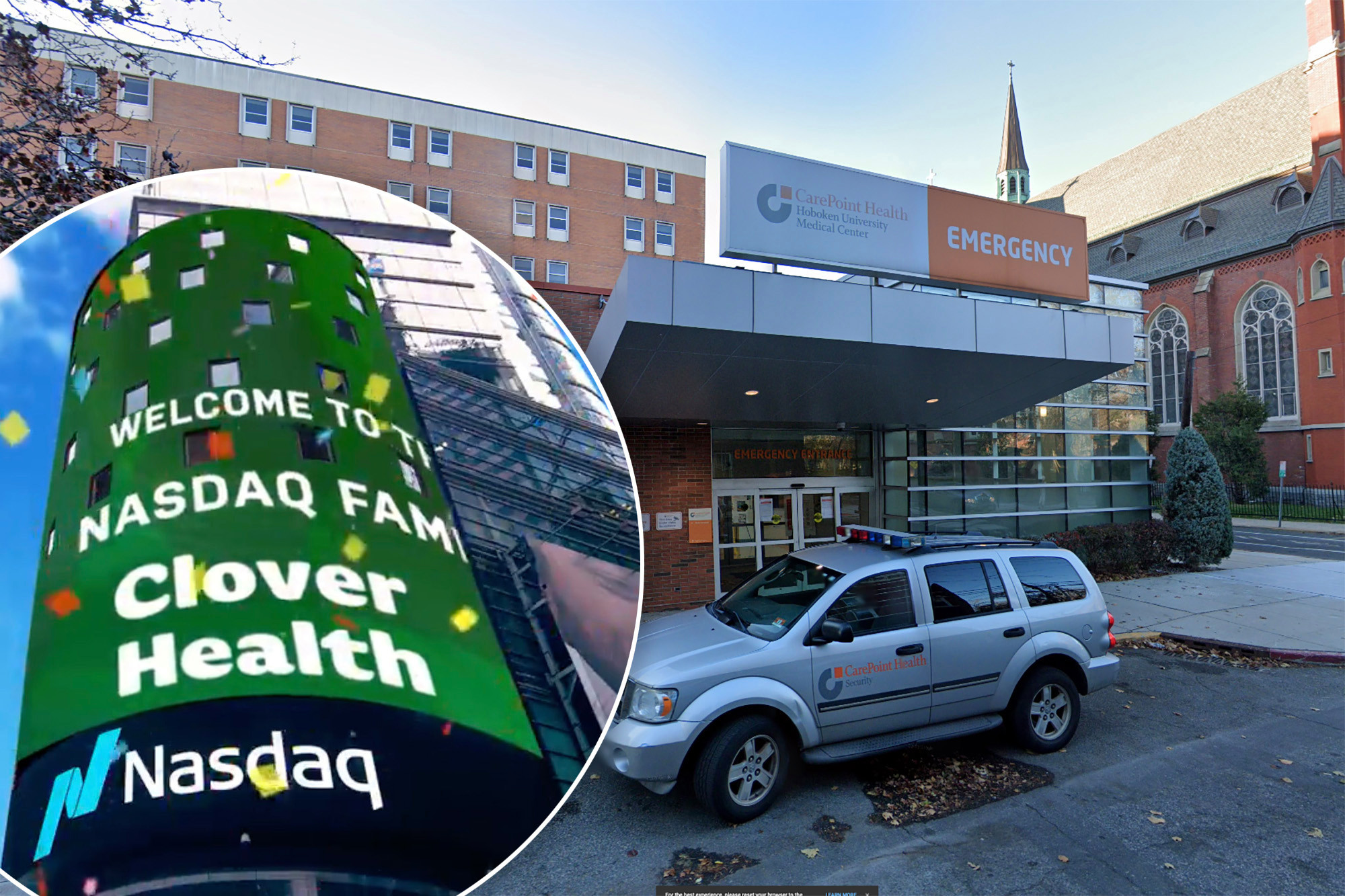
But what’s lesser known is that Clover Health Chief Executive Vivek Garipalli and his co-founder Jeffrey Mandler are also the owners of CarePoint, a New Jersey hospital chain that has been in the crosshairs of regulators and lawmakers for years for turning a midsized medical center in a blue-collar city into the most expensive hospital in America — reportedly billing a teacher nearly $9,000 for a single bandage. 

Clover CEO and CarePoint co-founder Vivek Garipalli purchased an $11 million Hamptons home while running some of the most expensive hospitals in New Jersey.Twitter

Before they created Clover in 2014, Garipalli and Mandler founded CarePoint by buying-out three bankrupt non-profit hospitals in Bayonne, Jersey City and Hoboken from 2008 to 2012, according to public records.

CarePoint then converted the medical centers to for-profit business models, eliminating contracts with large insurance companies so they could classify more emergency room patients as out-of-network, according to a 2016 report by POLITICO.

The men argued that such tactics were necessary to save the hospitals.

But after the overhaul, Bayonne Medical Center was ranked the most expensive hospital in the country, charging more for procedures than ritzy institutions like the Cleveland Clinic, Cedars-Sinai and the Mayo Clinic, according to a 2013 analysis of federal billing data by the Star-Ledger. 

One CarePoint hospital was named the most expensive in the United States. Google maps

In 2014 the hospital charged a teacher nearly $9,000 to bandage a cut that did not need stitches, NBC New York reported. The following year it billed a New Jersey man and his insurer more than $17,000 to treat a two-inch cut with five or six stitches, NBC said.

The hospital also charged notoriously high rates for more serious emergency procedures as well, NJ.com reported, citing a 2011 heart attack with complications at Bayonne that cost $137,483 — compared to $29,940 at nearby Hunterdon Medical Center, $48,399 at Mountainside Hospital in Montclair and $54,562 at Hackensack University Medical Center.

Critics claim these practices helped enrich CarePoint’s owners, including Garipalli, who paid $11 million for Tory Burch’s former Southampton home in 2011, making him neighbors with Calvin Klein, Rachael Ray and David Koch.  

Garipalli, who has been accused of price-gouging sick New Jersey residents, paid $11 million for Tory Burch’s former Southampton home in 2011.Google Maps

In March of 2019, the New Jersey Commission of Investigation published an eyebrow-raising report showing that CarePoint paid $157 million in “management fees” to several holding companies owned by Garipalli, Mandler and Lawler through a web of businesses from 2013 to 2016.

“These related-party management entities have no employees and only limited operating expenses which, in combination with other information, raises questions about the nature of their operations,” the watchdog said. 

At the same time, the company’s hospitals had been laying off workers and avoiding repairing buildings in need of renovations, a spokesperson for union workers at two CarePoint medical centers told the Jersey Journal in 2019. 

The Garden State’s dissatisfaction with CarePoint has continued up until recently.

Jeffrey Mandler co-founded both Clover Health and CarePoint. Linkedin

In February 2020, a group of legislators representing Hudson county called on Governor Phil Murphy to investigate CarePoint, saying “the near bankruptcy of the CarePoint hospitals is directly related to the decision by ownership to withdraw unreasonably large sums from their operations for personal profit at the detriment to services and the health care available to Hudson County residents.” 

The legislators who signed the letter ended up dialing-back their criticisms when the coronavirus pandemic hit due to a need for cooperation between lawmakers and hospitals, according to a source with knowledge of the situation. Murphy’s office did not immediately reply to a request for comment.

In 2015, a CarePoint hospital billed a New Jersey man and his insurer more than $17,000 to treat a two-inch cut with five or six stitches. And in 2014, the hospital charged a teacher nearly $9,000 to bandage a cut that did not need stitches.Google maps

But by June of 2020, the Jersey Journal piled on with a scathing editorial about CarePoint, saying the operation “smacks more of investment strategy and greed than of concern for the sick people who need hospital services.”

A spokesperson for Clover Health, Andy Robinson, said via email, “Clover is a completely separate entity to Carepint [sic] and I have zero mandate to talk about this.”

“It’s such terrifically old news sorry. There is nothing left to talk about,” Robinson insisted in a follow-up email.

Clover Health and ClearPoint spokespeople did not make Garipalli or Mandler available for an interview.

CarePoint announced in December that it had signed a letter of intent to sell its Hoboken and Jersey City hospitals to California-based investment group KPC Global Management.

One month later, Garipalli and Mandler took Clover Health public with the help of “SPAC King” Chamath Palihapitiya at a valuation of $3.7 billion, pushing Garipalli’s net worth north of $1 billion, according to Forbes estimates. 

In January, Clover Health went public with the help of “SPAC King” Chamath Palihapitiya at a valuation of $3.7 billion.@Clover_Health

Hindenburg’s report mentioned accusations against CarePoint, but placed more emphasis on alleged management issues at Garipalli and Mandler’s new company, including that Clover’s impressive sales statistics were inflated due to a major undisclosed “a major undisclosed related party deal and misleading marketing targeting the elderly.”

The short-seller said that Clover operated a thinly-veiled subsidiary “Seek Insurance” that claimed to offer unbiased information on seeking Medicare plans without disclosing its relationship with Clover.

Clover, which boasts Google parent company Alphabet among its backers and Chelsea Clinton among its board members, has disputed Hindenburg’s claims.

But the stock fell from $14 in early February to less than $7 at some points in May as Hindenburg’s allegations sunk in.

But that all changed last week with the help of Reddit day traders looking to squeeze Wall Street short sellers. Clover shares soared as high as $28 before receding to about $15.20 mid-day on Thursday.

CarePoint spokespeople Eric Bloom and Jennifer Dobin did not reply to a request for updates on the deal.

First-of-its-Kind Student Loan Guarantee Will Cover Up to 6 Months of Payments After College

BOSTON, June 10, 2021 /PRNewswire/ — Edmit, now used by millions of students and families to demystify the financial aid process and make better-informed decisions about college, today announced the launch of a guarantee designed to give private loan borrowers increased peace of mind. “Although federal grants and loans, which include strong protections for borrowers, are always the best option, some students need private loans to bridge the gap when it comes to paying for high-ROI colleges,” said Sabrina Manville, Co-Founder of Edmit. “The Edmit Guarantee is about extending basic protections to ensure that graduates who are truly struggling get the support they need while they search for their first job out of college.” According to a recent study, eighty percent of college students say they are concerned about “getting any type of job once [they] graduate.” In addition, research suggests that fear of high tuition costs can often lead students to “undermatch” to lower-ROI institutions – which can have significant long-term impacts on their career prospects and lifetime earnings.The Edmit Guarantee, designed in partnership with Vemo Education, is designed to prevent students from borrowing too much and to reduce the risk of unnecessary debt, which often suppresses college-going aspiration, or encourages students to choose lower-cost colleges that might actually lead to a lower return on investment. Under the terms of the Guarantee, students who graduate from an Edmit-approved program but fail to earn more than the annual equivalent of $20,000 will receive up to six months of loan payments with participating loan partners.

“Optimizing for the lowest price isn’t always the best choice for students. Without the right information and support, students too often opt into lower-cost options that are a poor fit — which can cost them more in the end,” said Kate Cody, VP of Strategy at Vemo Education. “The Edmit Guarantee proves that it’s possible to provide all students with downside risk protection, as long as they make an informed college choice. When they follow Edmit’s recommendations and take advantage of the Edmit Guarantee, overborrowing and undermatching become a lot less likely.”Since 2017, Edmit has created hundreds of guides and financial literacy resources, and helped students and families who use Edmit’s financial aid appeal save an average of $5,000 on college tuition. The company recently joined forces with Vemo Education to help quantify the return-on-investment of a college degree for students and colleges alike. About EdmitEdmit helps families make smarter college financial decisions so that they’re better off after college. Designed by former university leaders, Edmit’s tools and resources for saving, planning, and paying for college have saved families millions of dollars on tuition and loan payments. Edmit’s software provides families with personalized reports on how to afford college, including cost estimates, and financial fit scores based on projected ability to repay student debt. Edmit’s book, Better Off After College, was a #1 best-seller on Amazon. In 2021, Edmit became an independent subsidiary of Vemo Education, Inc., whose unique  pay-for-success programs help align college costs with job outcomes at Purdue University, the University of Utah, and more than 70 other institutions across the country. For more information about Edmit, visit www.edmit.me. 

View original content to download multimedia:https://www.prnewswire.com/news-releases/first-of-its-kind-student-loan-guarantee-will-cover-up-to-6-months-of-payments-after-college-301310310.htmlSOURCE Edmit

When ransomware strikes, this company helps victims make bitcoin payments

A business will fall victim to a ransomware attack every 11 seconds this year, according to research firm Cybersecurity Ventures. Some of them, like Colonial Pipeline, have admitted they don’t have a plan for when that happens.Several businesses have never even dealt in bitcoin, which is the currency of choice for virtually all ransom payments.”A lot of these companies, especially if they haven’t prepared for an extortion attempt, have no clue what they need to do,” said Rick Holland, chief information security officer at Digital Shadows, a cyberthreat intelligence company.”Insurance companies will sometimes give them guidance on how to pay and recommend firms to work with on it,” Holland said. “The extortionists will give instructions on how to set up bitcoin wallets and where to go to procure bitcoin.”There are also companies that swoop in at the last minute to handle the logistics. One example is DigitalMint, a full-service, final-mile crypto broker.”We’re at the end of the process,” said Marc Grens, co-founder and president of DigitalMint. “We’re the hired specialists, after the forensic consultants, the company, and stakeholders have all made the determination they’ve exhausted all their options and that paying the ransom from an economics perspective is the best way to move forward. That’s when they come to companies like us in order to help them acquire crypto at any time of day or night,” Grens told CNBC.In the space of 30 to 60 minutes from initial contact, DigitalMint is able to make the ransom payment for the victim. This includes vetting the hacker to make sure they aren’t tied to a U.S.-sanctioned country and going on the open market, order books and exchanges to acquire the cryptocurrency needed to pay the ransom.The company says that 90% to 95% of ransoms are paid in bitcoin, but monero is an increasingly popular option. Monero is considered more of a privacy token and allows cybercriminals greater freedom from some of the tracking tools and mechanisms that the bitcoin blockchain brings.Since January 2020, DigitalMint says it has facilitated more than $100 million in ransomware settlements with a median payment of $800,000.Last year, crypto ransomware payments overall more than quadrupled from 2019 levels to $350 million, according to Chainalysis, but DigitalMint told CNBC that figure is likely understated. Grens believes the true number is closer to $1 billion.In April, a task force including Amazon Web Services, Microsoft, the FBI and the Secret Service, among others, delivered recommendations to the White House on how to fight the ransomware threat. On the question of whether to ban payments to attackers, the group of more than 60 members was split.Part of the problem is that the threat actors are getting savvier at pricing their ransom demands. “If they ask for too much, forensics goes through their feasibility studies and says, ‘Well, that’s too much. Let’s just rebuild our systems, take a risk, and not pay for it,'” Grens said. At a certain point, it is more economically viable to just pay the ransom rather than hemorrhaging cash due to paralyzed operations.

Infrastructure Canada and Community Foundations of Canada announce support for Vancouver communities under the Canada Healthy Communities Initiative

OTTAWA, ON, June 10, 2021 /CNW/ – As Canada makes progress in the fight against COVID-19, Canadians are eager to return to the activities that they enjoy and access the services they need. To keep residents safe and healthy, support economic recovery, create jobs and build vibrant, resilient communities, local governments and community partners across the country are implementing creative ways to improve people’s quality of life now and following the pandemic.Today, the Honourable Catherine McKenna, Minister of Infrastructure and Communities, joined Hedy Fry, Member of Parliament for Vancouver Centre and Christine Buttkus, Executive Director at Surrey Cares Community Foundation to announce funding for projects under the Canada Healthy Communities Initiative that will benefit residents of Metro Vancouver. Also in attendance were Sophia Suderman, Executive Director of Pedal Foundation, Teka Everstz, National Coordinator at DUDES Club Society, and Karen Lee-Morgan, Artistic Director, Health Arts Society. The projects being announced today are among the more than 250 projects receiving funding following the first round of applications.Safe and Vibrant Public SpacesWith almost $75,000 in federal funding, Burnaby’s Nikkei Garden will set up a local farmer’s market open to the public that will offer fresh, local, and culturally-appropriate food options in a safe outdoor setting that respects public health guidelines. Funds will also support safety upgrades and restorations so that the garden and market can be enjoyed by everyone.Improved Mobility Options

Federal funding of $66,000 will support the Pedal Foundation’s Oppenheimer Park Bicycle Repair Clinics project, which will offer bicycle repair clinics in Oppenheimer Park to help ensure that people who live in Vancouver’s downtown east side can keep their bikes tuned and remain active as well as get to work and access social networks and support services.Digital SolutionsWith federal funding of $95,000, the DUDES Club Society will expand and adapt their virtual platforms so that it can create opportunities for men in over 200 locations, including 10 men’s correctional centres, to connect and support each other’s wellness through online communities. In particular, this project will help the marginalized men disproportionately impacted by COVID-19 continue to meet in peer-based spaces that promote Indigenous men’s physical and mental wellness.  More than $64,000 in federal funding will help support BC Hospice and Palliative Care Association’s grief and bereavement programming by allowing them to host their symposium and perform outreach virtually. Grief and bereavement struggles have been exacerbated by COVID-19 making projects like this one all the more important. Funds will also support the development of a web page dedicated to grief and bereavement resources to support those experiencing loss.Federal funding of $43,000 will support the Farm-to-Plate project by the Canadian Society Promoting Environmental Conservation. The free online platform will act as a virtual farmer’s market that consolidates orders for locally farmed goods and offers “pay what you can” and “pay it forward” options. This project benefits both marginalized individuals that struggle to access fresh food and farmers who have been negatively affected by restaurant closures.

With federal funding of $50,000, the Health Arts Society will to develop a new online portal from where seniors living in retirement communities can access Concerts in Care – weekly video-recorded concerts by local musicians and artists to replace in-person shows. Going digital will enable seniors in Vancouver and neighboring rural communities to access and enjoy music from home both during the pandemic and once public health restrictions have been lifted. The Canada Healthy Communities Initiative is a $31-million investment to build safer spaces and ensure a higher quality of life for people across the country, by helping communities adapt to the challenges presented by COVID-19.A second call for applications for funding under the Canada Healthy Communities Initiative is open until close on June 25, 2021, at 5:00 p.m. PST. Applicants can apply for funding ranging from $5,000 to $250,000 for eligible projects. Quotes”The pandemic has affected the ability of people of all ages to connect with each other and communities across the country have found innovative solutions to support the well-being of residents. Federal funding is supporting great initiatives across Vancouver, from a bicycle repair clinic in Oppenheimer Park to help residents stay active outdoors, to video-recorded concerts for seniors living in retirement to safely enjoy. The Canada Healthy Communities Initiative is supporting projects across the country that build more inclusive communities and ensure a higher quality of life for Canadians.”

The Honourable Catherine McKenna, Minister of Infrastructure and Communities”The COVID-19 pandemic has highlighted the important role public spaces play in connecting our communities. After over a year of public distancing, our communities need new, innovative public spaces that respond to the realities of pandemic times. I am thrilled to see these projects move forward and witness first-hand their role in building more vibrant, resilient, and safer communities.”Hedy Fry, Member of Parliament for Vancouver Centre”The Oppenheimer Bicycle Repair Clinic project will benefit members of the downtown eastside by ensuring their bikes are in safe riding condition. For people in vulnerable situations, access to transportation can mean the difference between them being able to earn an income, access their support networks, social services, and live an active lifestyle.”Sophia Suderman, Executive Director of Pedal Foundation

“Public spaces are the glue to our communities: they enable a feeling of belonging and of social cohesion. They are a big part of what makes communities safe, vibrant and connected. As the southern BC regions face increased isolation due to COVID-19, these projects from the Canada Healthy Communities Initiative will help our community to connect safely and will benefit the mental and physical well-being of our residents.”Christine Buttkus, Executive Director at Surrey Cares Community Foundation”Health Arts Society’s ‘Concerts in Care’ program acts as a conduit between the professional music community and elder audiences in long-term care, retirement communities and other facilities. Our audience represents the demographic hardest hit by COVID-19, and in this time of isolation, we are reaching out with ‘Concerts in Care Online’, weekly virtual concerts on our dedicated platform. The recent grant from the Canada Healthy Communities Initiative has been invaluable in helping us stay connected with our audiences. We are extremely grateful to SurreyCares Community Foundation, the Government of Canada and Minister McKenna for this generous contribution. Thank you!”Raymond Aucoin, Managing Director, Health Arts Society”With the funding from the Canada Healthy Communities Initiative, DUDES Club will continue to grow and build relationships with community organizations, Indigenous nations, and regional Health Authorities. We are a proud and diverse mix of men, male, masculine-identified, queer, and gender-nonconforming individuals. All of whom continue to build access to both western and Indigenous wellness approaches, reconcile and heal from intergenerational impacts of colonial systems, and navigate themselves toward a healthier lifestyle while strengthening community and have a good time doing it.”

Teka Everstz, National Coordinator, DUDES Club Society”The Healthy Communities Initiative is supporting organizations in British Columbia to bring people together in our communities both in-person and digitally, while respecting public health measures. These projects show us the creativity and resourcefulness of communities as they create temporary and longer-lasting solutions that enable people to connect and access public spaces safely.”Andrea Dicks, President of Community Foundations of CanadaQuick factsThe Canada Healthy Communities Initiative was created to help communities adapt to the COVID-19 pandemic and create safe ways for residents to access services and enjoy the outdoors. The Initiative is designed to fund eligible projects between $5,000 and $250,000 that fall under three main themes: creating safe and vibrant public spaces, improving mobility options, and digital solutions. Community Foundations of Canada was selected through an open call for applications to implement this national project. Together with its partners, including the Canadian Urban Institute, it is working with pan-Canadian networks to manage the funding process and serve the distinct needs of communities across Canada, including equity-seeking groups interested in applying. The first intake for projects was launched on February 9, 2021, and closed on March 9, 2021. The second intake is now open until June 25, 2021. Applicants wishing to apply for the second round can access further details on the Community Foundations of Canadawebsite. Local governments and a variety of community-led organizations are eligible to apply, including charities, Indigenous communities, and registered non-profit organizations. Under the Investing in Canada Plan, Infrastructure Canada has approved more than $4.3B for 551 projects in British Columbia.Associated links

Canada Healthy Communities Initiative – Application Portal: healthycommunitiesinitiative.caInfrastructure Canada: Canada Healthy Communities Initiative: https://www.infrastructure.gc.ca/chci-iccs/index-eng.htmlFollow us on Twitter, Facebook and InstagramWeb: Infrastructure CanadaSOURCE Infrastructure Canada

Amazon relaxes return-to-work plans, will let employees work remotely two days a week

The exterior of The Spheres are seen at the Amazon.com Inc. headquarters on May 20, 2021 in Seattle, Washington. Five women employees sued Amazon this week, alleging discrimination and retaliation.David Ryder | Getty ImagesAmazon is giving its corporate employees greater flexibility to work remotely, the company said Thursday, in a significant U-turn from its earlier return-to-work guidance.In an internal memo sent to employees, Amazon said it expects employees to work out of the office three days a week, leaving them the option to work remotely up to two days a week. Leadership teams will determine what days employees will be required to work from the office, the company said.Geekwire previously reported on Amazon’s memo on the company’s return to work plans.Corporate employees who don’t want to work in the office three days per week will be able to apply for an exception. Additionally, some employees will have the option to work fully remotely up to four weeks out of the year.Amazon had previously taken a more strict approach to its return to work plans. In March, Amazon emphasized that its goal was to “return to an office-centric culture as our baseline.” At the time, the company said it expects some employees to return to the office this summer, with most of its staff back at the office by the fall.Amazon said in the memo that it’s “learning and evolving as we go” and would “continue to evolve” as it receives feedback from employees on the updated guidance.”Like all companies and organizations around the world, we’re managing every stage of this pandemic for the first time, learning and evolving as we go,” Amazon said in the memo. “We’ve been thinking about how to balance our desire to provide flexibility to work from home with our belief that we invent best for customers when we are together in the office.”Other tech companies have taken a similar approach in their return-to-work plans. Last week, Apple said employees will return to the office three days a week beginning in early September. In May, Google said it expects 20% of its employees to work from home after its offices reopen later this year.

Sen. Warner teases bipartisan bill requiring some companies to report cyberattacks

U.S. Senator Mark Warner, Democrat of Virginia and Chairman of the Senate Select Committee on Intelligence, holds a hearing about worldwide threats, on Capitol Hill in Washington, DC, April 14, 2021.Saul Loeb | Pool | ReutersSen. Mark Warner, D-Va., is readying a bipartisan bill that would require some businesses to report cyber incidents to the government so law enforcement can quickly get involved.Warner previewed the bill during an Axios event about cybersecurity, saying he expects it to be introduced in the next couple of weeks and thinks the broad support can help it pass quickly. Recent cyberattacks against Colonial Pipeline, SolarWinds and meat supplier JBS have added a sense of urgency in dealing with such threats, which seem to be connected to people in adversarial countries like China and Russia.The bill would require critical infrastructure businesses, federal contractors and agencies to report cyber incidents to the government, Warner said, giving law enforcement and private sector partners the chance to get involved as soon as possible during an attack.Warner expects the business community to be receptive to the legislation.”When we had this debate six or seven years ago, the business community did not want any additional mandatory reporting,” he said. “I think they now realize that they themselves are put in jeopardy if they don’t have mandatory reporting.”That threat was clear in the SolarWinds attack, which was brought to the public’s attention after cybersecurity firm FireEye voluntarily disclosed a hack by what it believed to be a state-sponsored actor. Soon after, Reuters reported that hackers had accessed government agency systems through SolarWinds software updates, saying it was related to the FireEye incident. SolarWinds later disclosed 18,000 customers were impacted by the hack.Warner said his bill would include limited immunity for businesses in connection with the reports, which would be kept confidential between the government and private sector partners.In addition to the legislation, Warner said the U.S. needs to reset international norms by showing that adversaries who commit cyberattacks, even when the attackers aren’t government actors themselves, will pay a price.He also said there needs to be a discussion about how ransomware, or efforts to hack and hamper systems until a ransom is paid, should be handled. As it stands, companies and other entities that are victims of such hacks often pay ransoms to get their systems back online quickly, which Warner noted could at times amount to payments to sanctioned countries. At the very least, he said, companies should perhaps be made to disclose when they do pay such ransoms.Warner noted that some of the recent attacks could have been even worse if the attackers decided to shut down systems entirely.”What I’ve urged people to think about is if when the Russians went in in the SolarWinds attack and got 18,000 companies they penetrated, if instead of simply exfiltrating information, they had decided to shut down all those systems,” Warner said. “That, to me, would be close to an act of war and it would have completely crippled our economy. And my fear is cyber is moving from more and more sophistication, it’s moving from simply exfiltrating information to potentially extraordinarily destructive actions and we need to up our game.”Subscribe to CNBC on YouTube.WATCH: How the massive SolarWinds hack went down

From milk to cars, here’s where inflation is hitting America’s wallets

Americans hungry to return to their pre-pandemic habits better be prepared to pay top dollar.

Across the board, Americans can expect to shell out 5 percent more for goods and services than they would have a year ago, the fastest rise of prices the US has seen since the summer of 2008. And there’s no sign of inflation slowing down, with prices rising 0.8 percent just from April to May.

The white-hot inflation is coming right as people and businesses across the country are emerging from the pandemic, ready to spend and return to their old habits.

Some of the rapid rise in costs seen now is being driven by wonky comparisons to the same time a year ago, when the pandemic gutted the economy and sent prices to the floor.

But other factors, including supply-chain constraints, shortages and a labor crunch, are all creating the perfect storm for higher prices. Here’s where it’s hitting Americans’ wallets the most:

Groceries

The prices of fruits and vegetables have soared, compared to prices a year ago.Noam Galai/Getty Images

Food prices rose 0.4 percent from the prior month and are now up 2.2 percent compared with the same month a year ago, according to the Bureau of Labor Statistics’ report.

Bacon was among the main culprits, with prices up 1.7 percent compared to the month prior and up a whopping 12 percent compared with a year ago. Americans, on average, can expect to shell out $6.35 for a pound of sliced bacon now, up a whole dollar compared to a year ago.

Milk prices also climbed higher in May, up 1.7 percent from April and 4.6 percent from a year ago. A gallon of whole milk will cost shoppers about $3.50, according to the Labor Department, up from $3.21 a year ago.

The price of bacon has risen 1.7 percent when compared to prices last month.

Prices for fruits and vegetables rose 0.2 percent from a month ago, and 2.9 percent over the prior 12 months. Citrus fruits, specifically, are hurting wallets, 2.8 percent more expensive in May than they were in April.

A pound of oranges, for example, cost American shoppers $1.32 in May, up from $1.20 a year prior.

Utilities

Fuel is where the country saw some of the biggest increases in prices.

The price of gas rose 4.2 percent from April to May, and it’s now up 56.2 percent from a year ago.

A gallon of unleaded regular gasoline will run Americans $2.97, up from $1.88 a year ago. That’s the highest since 2014, according to the Labor Department’s data.

Americans can expect to pay $1.88 more for gasoline than they had to a year ago.Ron Adar/SOPA Images/LightRocket via Getty Images

The average costs of propane and kerosene edged 1.8 percent lower from April to May, but remain 16.6 percent higher from a year ago.

Electricity costs ticked up, too. Americans can expect bills to be more than 4 percent higher than they were a year ago, the data shows.

Cars

The price increase of cars and rentals was among the main drivers of the overall surge in prices last month, the data shows. The price of new vehicles ticked just 1.5 percent higher from a month prior, and now stands 3.3 percent higher than it did a year ago.

The inflation comes as people and businesses across the country are emerging from the pandemic.

Used cars and trucks saw the real price hikes, up 6.5 percent from April and a striking 29.7 percent from a year ago.

Car and truck rentals weren’t spared, either. Prices are up 10 percent compared with April, and are more than twice as expensive as they were a year ago, according to the data.

Sinclair raising $250M for new sports streaming service, sources say

Sinclair Broadcast Group is quietly raising money for a new service to stream Major League Baseball, National Basketball Association and National Hockey League games to fans over the Internet, The Post has learned.

The publicly traded media company — which owns exclusive rights to broadcast games for teams like the St. Louis Cardinals and the Dallas Mavericks — is working with investment bank LionTree to raise more than $250 million for the venture, according to two sources with knowledge of the plans.

Sinclair has been telling hedge funds and other potential investors that it aims to charge $23 a month to fans who want to stream games in markets where it owns sports broadcasting rights, sources said.

Fans who live outside of Sinclair’s 21 territories, where it owns broadcasting rights tied to 42 teams, would likely be out of luck.

The service, which Sinclair hopes to launch at the start of the baseball season next year, stands to be a game-changer for fans — and a major nuisance for the cable industry.

“This is a major, major development,” a director for a non-Sinclair RSN told The Post. “And if Sinclair is successful it will change the industry more quickly than I imagined.”

Sinclair declined to comment.

Sinclair in 2019 paid $9.6 billion for 21 regional sports networks owned by Fox, giving it exclusive rights to dozens of teams, including the NHL’s Detroit Red Wings and Columbus Blue Jackets.NHLI via Getty Images

While the NBA offers League Pass for out-of-town fans, there are limited streaming options for hometown fans to watch their local sports teams besides cable. That is because sports teams for decades have sold rights to air their games to broadcasters like Fox and Sinclair, which then charge cable and satellite TV operators to distribute the games to their customers.

Sinclair in 2019 paid a whopping $9.6 billion for 21 regional sports networks owned by Fox, giving it exclusive rights to 14 MLB teams, 16 NBA teams, and 12 NHL teams.

At the time, news of the deal sent Sinclair’s shares up 35 percent. But the investment has since run into trouble as cable operators suffering from cord cutting seek to lower the amount they pay to air those games.

It’s unclear if Sinclair’s streaming service would include YES as it’s controlled by the Yankees.Corbis/Icon Sportswire via Getty Images

Tensions between cable operators and broadcasters have gotten so heated in recent years that satellite TV operator Dish in July 2019 stopped paying for rights to Sinclair’s games altogether — correctly betting that its customers wouldn’t drop their Dish subscriptions any faster than they already were.

Even without sports streaming, eMarketer has forecasted that more than one-third of US homes by 2024 will not have cable or satellite service.

Sinclair also owns 20 percent of YES network, which airs Yankees and Brooklyn Nets games. It’s unclear if Sinclair’s streaming service would include YES as it’s controlled by the Yankees.

Satellite TV operator Dish stopped paying for rights to Sinclair’s games altogether in 2019, demonstrating the tensions between cable operators and broadcasters.LightRocket via Getty Images

This year the Yankees for the first time plan to stream 21 out of 162 Yankees games over Amazon Prime. Fans who want to watch those games only need to have a Prime subscription, not a cable subscription.

But that’s a rarity. Most sports fans are forced to subscribe to cable.

And while $23 a month is steep for streaming — costing as much as Disney+ and Netflix combined — it’s cheap compared to a monthly cable bill and is therefore likely to accelerate the trend of people giving up on cable.

Fans of the Cleveland Indians and Cavaliers, for example, currently have to pay AT&T $85 a month to get access to those games through Sinclair’s Bally Sports unit. At $23 a month, they would be reducing their costs by more than two-thirds.

Of course, Sinclair will need to negotiate with the NBA, MLB and NHL to secure the rights to stream the games, sources said. Those talks are not finalized. Indeed, sources say Sinclair is raising money now to show the leagues it has the funds to back its ambitious venture.

“I think there is a better than 50 percent chance this will happen,” one of the sources said, conceding there were a lot of moving parts.

Sinclair’s sports streaming service is expected to cost $23 a month — as much as Disney+ and Netflix combined.SOPA Images/LightRocket via Getty Images

If it succeeds, it’s projecting 4.4 million streaming customers by 2027, or more than YouTube TV or Sling have currently, a source said. The company is also projecting that its streaming subsidiary will break-even by 2024, the source added.

Sinclair is also expected to seek the rights to out-of-market games, although that could prove more difficult, the source said. If it gets those rights, it could charge a small additional fee for those games.

Sinclair at the end of 2020 had 52 million cable subscribers. But with the revenue it gets from cable operators declining, it needs to take the risk that it loses some of those customers to pay for its 2019 sports investment.

Sinclair’s posted annual earnings of $1.89 billion on an adjusted basis last year, below the $2.6 billion it had predicted it would earn when it bought Fox’s regional sports networks in 2019. Meanwhile, the $8 billion in loans it took out to support its acquisition is underwater, with the most junior debt trading at 60 cents on the dollar.

The plan is to strip out the streaming rights into a new subsidiary and use proceeds from the streaming service to help pay its creditors, a source said.

The question now is whether the leagues will OK the plan, and that could depend on how it will affect teams.

Greg Bouris, the Sports Management Program Director at Adelphi University and former communications director for the MLB Players Association, believes teams may take at least a short term loss if Sinclair proves to be successful since this will mean even less revenue from cable providers.

“I think the economics will go backwards and this could be very disruptive. If I was a team owner, I’d be a little nervous.”

But there’s no doubt it would be good for fans, he said.

“If you go a la carte, then less is more. I could see this really benefiting the consumer,” who no longer would need to have cable television to watch their local teams.