TokyoTokyo Mon - Fri 10:00-18:00 +81 (366) 701-751
info@mountequitygroup.com

Blog

Uber rival and Chinese ride-hailing giant Didi files for IPO

Didi Chuxing, China’s biggest ride-hailing firm, on Thursday made public its filing for a US stock market listing, setting the stage for what is expected to be the world’s biggest initial public offering this year.

The company – backed by Asia’s largest technology investment firms, SoftBank, Alibaba and Tencent – did not reveal the size of the offering, but sources familiar with the matter had previously told Reuters that the ride-hailing giant could raise around $10 billion and seek a valuation of close to $100 billion.

At that valuation, Didi’s stock market flotation would be the biggest Chinese share offering in the United States, since Alibaba raised $25 billion in its blockbuster IPO in 2014.

In its filing on Thursday, Didi revealed slower revenue growth in 2020 due to the impact of the COVID-19 pandemic, which grounded the global ride-hailing industry to a halt as lockdowns were enforced all over the globe.

For 2020, Didi reported revenue of 141.7 billion yuan ($22.17 billion), down from 154.8 billion yuan a year earlier. Net loss stood at 10.6 billion yuan in 2020, compared with 9.7 billion yuan a year earlier.

However, Didi started 2021 strongly, as businesses reopened in China. Revenue more than doubled to 42.2 billion yuan (US$6.4 billion) for the three months ended March 31 from 20.5 billion yuan a year earlier.

Didi reports its revenue has more than doubled in the first three months of 2021 as businesses have reopened in China.VCG via Getty Images

CHINESE IPO GOLD RUSH

Didi confidentially filed for its IPO in April. A source familiar with the matter on Thursday said Didi was aiming to go public in July.

The mega IPO highlights the lucrative business opportunity presented by Asian tech giants for Wall Street’s big investment banks.

Earlier this year, Singapore’s biggest ride-hailing firm, Grab, struck a $40 billion deal with a special purpose acquisition company, backed by investment firm Altimeter, to go public in the United States.

Last year, Chinese companies raised $12 billion from US listings, more than triple the fundraising amount in 2019, according to Refinitiv data. This year, the raise from Chinese floats on US exchanges is expected to comfortably surpass last year’s tally.

Didi, which merged with then main rival Kuaidi in 2015 to create a smartphone-based transport services giant, counts as its core business a mobile app, where users can hail taxis, privately owned cars, car-pool options and even buses in some cities.

Didi plans to list American Depositary Shares (ADSs) on either Nasdaq or the New York Stock Exchange under the symbol “DIDI,” the company said.

Didi Chief Executive Cheng Wei said last year the firm aims to have 800 million monthly active users globally and complete 100 million orders a day by 2022, including ride-sharing, bike and food delivery orders.

Goldman Sachs, Morgan Stanley and J.P.Morgan are the lead underwriters for the offering.

Torres Law Named Trade & Customs Law Firm of the Year

WASHINGTON and DALLAS, June 10, 2021 /PRNewswire/ — We are delighted to announce that the 2021 Global Law Experts Annual Awards named Torres Law, PLLC as its 2021 Trade & Customs Law Firm of the Year in the United States.Since 2010, the Global Law Experts annual awards have celebrated excellence, innovation, and performance in legal communities around the world. Global Law Experts selects winners through a vigorous process, soliciting votes, and researching firms, and collecting supporting evidence gathered by their own in-house research team. This comprehensive selection process ensures that award recipients – local, regional, and global firms – truly represent their markets and are at the cutting edge of the practice.Torres Law is a U.S. law firm that works with U.S. and global clients – from multinationals and Fortune 500 companies to medium-sized businesses and start-ups – to successfully import and export goods, technology, and services. The firm regularly helps clients seeking to navigate regulatory challenges posed by U.S. and foreign trade policies, including China tariffs, Iran sanctions, and the export of defense-related goods and controlled or emerging technologies.The firm has broad experience assisting clients with a wide range of foreign investment matters, including with review by the Committee on Foreign Investment in the United States. In addition, Torres Law guides clients across the full spectrum of trade and national security law issues, from U.S. export control and economic sanctions laws to trade policy, industrial security, the Defense Federal Acquisition Regulation Supplement, Foreign Corrupt Practices Act, anti-boycott laws, customs law, and trade strategy and policy.To assist clients with challenges across the world, Torres Law is a member of two widely recognized international associations: the International Lawyers Network, a global law firm network of more than 90 law firms in 67 countries; and Alliott Group, the world’s 6th largest multidisciplinary alliance of accounting and law firms. These associations allow the firm to combine local expertise with a global reach to provide clients effective cross-border solutions.

To assist with risk advisory, audits, and complex investigations, the law firm’s affiliate Torres Trade Advisory, LLC provides support by giving Torres Law access to experienced trade and national security advisors, including a network of former senior leadership in U.S. government regulatory agencies and security positions.Photo(s):https://www.prlog.org/12872610Press release distributed by PRLog View original content:https://www.prnewswire.com/news-releases/torres-law-named-trade–customs-law-firm-of-the-year-301310545.htmlSOURCE Torres Law

Vaccines key to revive real estate market in tourism provinces

Elderly residents filled up an indoor sports stadium in Phuket on Monday as thousands rushed to receive Covid-19 vaccines. (Photo by Achadtaya Chuenniran)

Economic and tourism recovery driven by vaccinations will help revive the sluggish property market in tourism-reliant provinces which have been hit hard since the spread of Covid-19.Vichai Viratkapan, acting director-general of the Real Estate Information Center (REIC), said the property market of provincial economies that rely on tourism felt a severe impact from the pandemic last year.
“Tourism destinations like Phuket, Hua Hin in Prachuap Khiri Khan and Cha-am in Phetchaburi saw a sharp contraction in the residential market in the second half of 2020 as the pandemic ravaged the tourism industry,” he said.
In Phuket, residential demand sharply declined with only 443 units sold in the second half of 2020, down from a peak of nearly 3,800 units in 2018 as people felt insecure about their jobs after the pandemic hit.
It was also a consecutive drop from 741 units in the first half of 2020, 1,118 units in the second half of 2019, 2,296 units in the first half of 2019, 3,140 units in the second half of 2018 and 3,788 units in the first half of 2018.
New residential supply in Phuket faced a similar downward trend with only 423 units launched in the second half of 2020, compared with a high of 3,900 units in the first half of 2018.
Phattanan Phisutvimol, president of the Phuket Real Estate Association, said residential sales in Phuket last year were also poor, particularly of townhouses, as incomes have disappeared with the pandemic.
“Most people in Phuket had lower incomes, while banks took a cautious approach to approving loans for mortgages,” he said. “This led to a phenomenon of a scramble for customers.”
Some agents used strong connections with banks to get the names and contact information of homebuyers who already had a mortgage loan with other residential projects and approached them with attractive deals in other residential projects instead.
Eventually, homebuyers changed their mind and went with the new offer.
“As there are fewer buyers getting approvals, many of them changed their minds due to these tactics. Some projects saw up to three customers switching,” Mr Phattanan said.
However, anticipation of economic recovery from Phuket’s sandbox model might not happen as expected because of two factors, he said.
The first is a possible trade-off for Thais who can visit now versus foreigners who will visit after reopening.
“When Phuket welcomes foreign tourists, we are not confident that Thai travellers will remain as everybody knows that vaccinated people can still get infected,” he said.
Moreover, Thailand is considered an at risk country due to a high number of infections, so demand from foreign tourists and international flights to Phuket remains uncertain.

Bitcoin conference attendees report testing positive for Covid after returning from Miami

Getty ImagesSome of the 12,000 attendees who flew into Miami last weekend for the biggest bitcoin event in history have started testing positive for Covid.Bitcoin 2021 drew crypto enthusiasts from around the world to the Mana Wynwood convention center in Miami’s arts and entertainment district. For three days, conference goers packed into crowded auditoriums, glad-handed and hugged. It was the first major conference since the pandemic started, and many attendees said they were relieved to be out among colleagues trading news and updates.There was no mask mandate and no proof of vaccination requirement to attend. Covid was only a talking point in the context of how thrilled everyone was to have arrived at the other side of the pandemic.That is, of course, until some conference participants took to Twitter to say they had tested positive for the coronavirus.In the spirit of full disclosure, I attended the show after receiving two doses of the Moderna vaccine this spring. A vaccination isn’t a 100% guarantee of immunity, but at the moment, I’m not presenting any symptoms. Many of my conversations with Uber and Lyft drivers started with a mutual discussion of having been vaccinated.Whether the conference is ultimately billed as a super spreader event remains to be seen.It is unclear how many people have been affected and whether the city of Miami had a contingency plan in place for this kind of outcome. The mayor’s office and conference organizers did not immediately respond to CNBC’s request for comment.On Tuesday, Florida said it will no longer report daily Covid cases and fatalities as vaccinations rise and it begins shifting to the “next phase” of the pandemic. Florida reported an average of eight new cases per 100,000 residents over the past week, according to data compiled by Johns Hopkins University, far below its pandemic high of 84 per 100,000. 

Goldman CEO David Solomon to drop single on eve of return-to-work plan

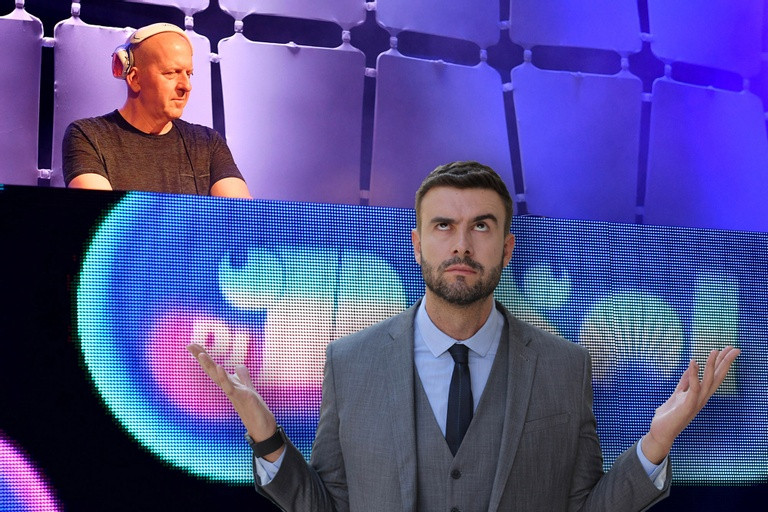
Goldman insiders have two things to groan about this weekend: Goldman Sachs CEO David Solomon’s back-to-work plan and his musical alter ego “DJ D-Sol.”

Solomon, who spins records as a DJ in addition to running the Wall Street behemoth, has announced plans to release a new single titled “Learn to Love Me” on Friday — the eve of his June 14 back-to-work plan for employees, according to his verified @davidsolomonmusic Instagram account.

Goldman insiders are predicting trouble as a result following a year of tensions that included junior analysts complaining about 100-hour work weeks in a PowerPoint presentation that got leaked on social media.

“He thinks it makes him look cool, but people resent it,” one Goldman source said. 

Indeed, Solomon has been called to the carpet for demanding employees give up their cushy work-from-home routines even as he’s made headlines for lavish getaways in the Bahamas and Barbuda using the company’s plane. All US staffers have been asked to return to their desks by Monday, June 14.

The new single only serves to amplify those strains. “It’s one thing if you’re going out with your family and another to be on Page Six,” one source said of his DJing, which has landed him high-profile gigs in the posh Hamptons.

Some sources suspect Solomon may be trying to send a covert message with the title of the song. But it’s already becoming the butt of jokes. “Nobody at GS loves DJ D-Sol, so he had to create a song about how to love him,” a source miffed.

Going behind the turntables as DJ D-Sol often lands Goldman Sachs chief David Solomon at high-profile gigs in the Hamptons, like at this fundraising concert in July 2020.Getty Images for Safe & Sound

A Goldman spokesperson said: “David enjoys producing music, and he is dedicated to giving back. All proceeds from his releases go to benefit charity, specifically those committed to the battle against addiction and those in need as a result of the COVID-19 pandemic.”

Got a tip for On the Money? Email us at biztips@nypost.com.

Amazon To Allow Employees To Work Remotely For Two Days A Week

(RTTNews) – Online retail giant Amazon.com Inc. (AMZN) Thursday said it will allow its corporate and tech employees an option to work two days remotely.

Amazon said it will now only require employees to work in office for three days a week, giving the employees the flexibility to work remotely up to two days a week. The specific days will be determined by leadership team.

Corporate employees who do not want to work in the office three days per week and are still able to commute into assigned office as needed, will be able to apply for an exception.

Further, some corporate employees will have the choice to work up to four weeks per year fully remote from a domestic location.

This new decision is a sharp turnabout from its earlier return-to-work guidelines. In March, Amazon had announced its plans to “return to an office-centric culture”. The company had said it would require some employees to return to the office this summer, with most of its staff back at the office by the fall.

“We’ve adjusted our guidance on our plans for returning to the office and added more clarity. Going forward, we’ve decided to offer Amazonians a mix of working between the office and home,” Amazon said in a blog. “Like all companies and organizations around the world, we’re managing every stage of this pandemic for the first time, learning and evolving as we go.”

Earlier today, Social networking giant Facebook Inc. (FB) said it will allow its full-time employees to work from home, with CEO Mark Zuckerberg revealing that he plans to work remotely for at least six months.

Last week, Apple said employees will return to the office three days a week beginning in early September. In May, Google said it expects 20% of its employees to work from home after its offices reopen later this year.

Apple announcements at WWDC show augmented reality is still its 'next big thing'

In this articleAAPLTim CookSource: AppleApple released several new augmented reality tools and technologies for software makers during its annual WWDC conference this week. These technologies could be vital if Apple in fact releases an augmented reality headset or glasses in coming years.Apple has never confirmed plans to release augmented reality hardware, but could reportedly announce a headset as soon as this year. Facebook, Snap, and Microsoft are also working on devices that can understand the world around them and display information in front of the user’s eyes.In order to succeed with an augmented reality device, Apple will have to come up with strong reasons for people to use it — and that comes down to useful software, just as apps like Maps, Mail, YouTube, and the mobile Safari browser helped spur adoption of the original iPhone. Getting developers on board to build augmented reality software now increases the chance of one or more “killer apps” being available at launch.Apple did not spend much time on augmented reality at its WWDC launch keynote on Monday, but announced several updates during the conference’s more technical parts shows that it remains an important long-term initiative for Apple. CEO Tim Cook has said AR is the “next big thing.””From a high level, this year, and maybe even next year’s WWDC event, will amount to a calm before an Apple innovation storm,” Loup Ventures founder and longtime Apple analyst Gene Munster wrote in an email this week. “Out of view today is Apple’s intense ongoing development related to new product categories around augmented reality wearables and transportation.”What Apple announcedDuring the week-long conference, Apple briefed its developers on its rapidly improving tools that can make 3D models, use a device’s camera to understand hand gestures and body language, add quick AR experiences on the web, a heavily Apple-backed standard for 3D content, and an intriguing new sound technology that’s like surround sound for music or other audio.Here are some of the AR announcements Apple made and how they are paving the road for its larger ambitions:Object Capture. Apple has introduced application programming interfaces, or software tools, that will enable apps to create 3D models. 3D models are essential for AR, because they’re what the software places in the real world. If an app doesn’t have an accurately detailed file for a shoe, then it can’t use Apple’s machine vision software to place it on a table.Object Capture isn’t an app. Instead, it’s a technology that allows a camera, like the iPhone’s camera, to take several photographs of an object, then stitch them together into a 3D model that can be used inside software in minutes. Previously, precise and pricey camera setups were required for detailed object scanning. Eventually, third party developers like Unity, a top AR engine maker, will include it in their software. For now, it will likely be used heavily in e-commerce.RealityKit 2. Object Capture is just one part of a significant update to RealityKit, which is its set of software tools for making AR experiences. Aside from Object Capture, there are a lot of little improvements to make app makers’ lives easier in RealityKit 2, including improved rendering options, a way to organize images and other assets, and new tools to make player-controlled characters inside augmented reality scenes.Zoom In IconArrows pointing outwardsApple’s new city navigation feature in Apple Maps.AppleARKit 5. ARKit is another set of software tools for making AR experiences, but is more closely focused on figuring out where to place digital objects in the real world. This is Apple’s fifth major version of the software since it first came out in 2017.This year it includes something called “location anchors,” which means that software makers can program AR experiences pegged to map locations in in London, New York, Los Angeles, San Francisco, and a few other U.S. In a video session for developers, Apple said it is using the tool to create AR direction overlays in Apple Maps — a potentially useful scenario for a head-mounted AR device.AI for understanding hands, people, and faces. While Apple’s machine learnings and artificial intelligence tools aren’t directly tied to augmented reality, they represent abilities that will be important for a computer interface that works in 3D spaces. Apple’s Vision framework software can be called by apps to detect people, faces, and poses through the iPhone’s camera. Apple’s computer vision software can now identify objects inside images, including text on signs, as well as the ability to search for things inside photos — like a dog or a friend.Combined with Apple’s other tools, these AI tools can apply affects similar to Snap’s filters. One session at his year’s WWDC even goes into how it can identify how a hand is posed or moving, which lays the groundwork for advanced hand gestures, which are a big part of the interface in current AR headsets like Microsoft Hololens.

Apple hires BMW veteran in latest sign of electric car push

This photo, taken in March 2019, shows Apple’s headquarters in Cupertino, California.felixmizioznikov | iStock Editorial | Getty ImagesApple has hired Ulrich Kranz, a former senior executive at BMW who focused on electric cars, Apple confirmed to CNBC’s Phil LeBeau on Thursday.The hire is the latest sign that Apple is serious about building an electric car to compete with automakers such as Tesla.Hyundai said earlier this year it was in talks with Apple to manufacture its car before walking its comments back and confirming it was no longer in discussions.Apple has never confirmed it is building a car but has hired talent from the automotive industry and tested self-driving software in California. In 2018, Apple hired Doug Field from Tesla, who worked on Tesla’s Model 3. With its expertise in supply chains, battery technology and user experience, Apple would represent a major competitor to existing automakers if it ever releases a car. Apple’s car project has been restructured several times, most recently in early 2019.Apple did not say whether Kranz will work on Apple’s car project, which is called Special Projects Group or SPG. But Kranz has extensive experience building teams focused on electric cars.Before joining Apple, Kranz was a co-founder of Canoo, which is working on a self-driving electric car. At BMW, he led the company’s electric car development program, which resulted in the electric i3 vehicle and a hybrid sports car called the i8, according to Bloomberg, which first reported the hire.

Goldman Sachs Asks Employees To Report Vaccination Status

(RTTNews) – Goldman Sachs Group Inc. (GS) is making it mandatory for its U.S employees to report whether they have been vaccinated or not. Earlier this week, the banking major addressed its workers in a message that they must submit their vaccinated status by Thursday itself.

The employee message said, “Registering your vaccination status allows us to plan for a safer return to the office for all of our people as we continue to abide by local public health measures.” The message was only sent to those employees who had not updated the bank about their vaccination status.

This move becomes important in the backdrop of the fact that many employers are looking for safe ways to bring back their workers and get back to business.

Employees of Goldman Sachs who have already taken the vaccine have to provide the date and brand of their vaccine, but not any proof.

“While we strongly encourage you to receive a COVID-19 vaccine, we understand that the choice to get vaccinated is a personal one,” the bank said.

Chinese ride-sharing giant Didi files to go public, earned a small profit last quarter on $6.4 billion in revenue

In this articleMSA logo of ride-hailing giant Didi Chuxing displayed on a building in Hangzhou in China’s eastern Zhejiang province.STR | AFP | Getty ImagesChinese ride-hailing giant Didi Chuxing on Thursday filed to go public in what could be one of the largest tech IPOs of this year, positioning large shareholders Uber and SoftBank for a win.The company reported $21.6 billion in revenue last year. It also posted a profit this past quarter on $6.4 billion in revenue. Specifically, the company reported net income of $837 million before certain payouts to shareholders, and comprehensive net income of $95 million for the quarter.Uber owns 12.8% of the shares in the company after selling its Chinese ride-hailing business to Didi in 2016, while SoftBank’s Vision Fund holds 21.5%.Between 2019 and 2020, Didi’s revenue shrunk almost 10% as the Covid pandemic struck China hard last year. However, prior to the pandemic, revenue grew 11% between 2018 and 2019. Additionally, revenue has bounced back in the first quarter as the pandemic recovery is in full swing, with 107% growth in Q1 from the previous year’s quarter.Some of the company’s profitability in Q1 can be credited to gains on investments of $1.9 billion related to spin-offs and divestments.By way of comparison, Uber reported a net loss of $108 million on revenues of $2.90 billion in its first quarter. For all of 2020, Uber’s net losses amounted to $6.77 billion on $11.14 billion in revenue.Didi was most recently valued at $62 billion following an August fundraising round, according to PitchBook data, and is backed by investment giants such as SoftBank, Alibaba and Tencent. Bloomberg reported the company could have a $100 billion valuation at the time of its IPO.The listing, which could be one of the largest tech debuts globally this year, comes as demand for ride-hailing and travel companies return due to a decrease in Covid-19 cases and a roll out of vaccines. Its American counterparts, Uber and Lyft, have both said they’ll be profitable on an adjusted basis by the end of this year, thanks to the recovery.Didi acquired Uber’s China business in 2016 in a complicated transaction that involved both companies taking shares in each other. Didi said it sold all of its shares in Uber in November and December of last year.Founded in 2012, Didi said it has 493 million annual active riders, and 15 million annual active drivers. Didi has been named to the CNBC Disruptor 50 list four times.(The precise name of the company as registered on the F-1 is Xiaoju Kuaizhi.) Goldman Sachs, Morgan Stanley and J.P. Morgan are underwriting.Subscribe to CNBC on YouTube.