TokyoTokyo Mon - Fri 10:00-18:00 +81 (366) 701-751
info@mountequitygroup.com

Blog

Renewed Consolidation Expected For China Shares

(RTTNews) – The China stock market bounced higher again on Wednesday, one day after snapping the two-day winning streak in which it had collected more than 15 points or 0.4 percent. The Shanghai Composite Index now sits just above the 3,590-point plateau although it’s likely to head south again on Thursday.

The global forecast for the Asian markets is slightly soft ahead of key U.S. inflation data later today. The European markets were mixed and the U.S. bourses were down and the Asian markets figure to split the difference.

The SCI finished modestly higher on Wednesday following gains from the resource stocks, weakness from the financials and a mixed picture from the properties.

For the day, the index added 11.29 points or 0.32 percent to finish at 3,591.40 after trading between 3,572.64 and 3,598.71. The Shenzhen Composite Index rose 3.42 points or 0.14 percent to end at 2,396.54.

Among the actives, Industrial and Commercial Bank of China fell 0.19 percent, while China Construction Bank lost 0.29 percent, China Merchants Bank and Bank of Communications both shed 0.41 percent, Minsheng Bank was down 0.43 percent, Jiangxi Copper climbed 1.33 percent, Aluminum Corp of China (Chalco) spiked 2.37 percent, Yanzhou Coal surged 6.78 percent, PetroChina soared 3.60 percent, China Petroleum and Chemical (Sinopec) rallied 2.22 percent, China Shenhua Energy jumped 1.63 percent, Gemdale eased 0.09 percent, Poly Developments perked 0.38 percent, China Vanke sank 0.58 percent, China Fortune Land rose 0.19 percent, Beijing Capital Development was up 0.35 percent and Bank of China and China Life Insurance were unchanged.

The lead from Wall Street suggests mild consolidation as stocks opened mixed on Wednesday, bounced back and forth across the unchanged line and eventually ended slightly lower.

The Dow dropped 152.68 points or 0.44 percent to finish at 34,447.14, while the NASDAQ dipped 13.16 points or 0.09 percent to end at 13,911.75 and the S&P 500 eased 7.71 points or 0.18 percent to close at 4,219.55.

The cautious trade on Wall Street reflected concerns over key inflation data that could prompt the Federal Reserve to begin discussions on tapering its asset buying program sooner than expected.

In economic news, the Commerce Department said wholesale inventories rose 0.8 percent on month to $ 698.0 billion in April after seeing a 1.2 percent increase in March.

Crude oil prices edged lower on Wednesday after data showed a jump in U.S. gasoline stockpiles last week. West Intermediate crude oil futures for July ended down $0.09 or 0.1 percent at $69.96 a barrel.

Closer to home, China will see May numbers for new yuan loans later today. New yuan loans are forecast to be worth CNY1410 billion, down from CNY1470 billion in April. The M2 money supply is called steady at 8.1 percent, while outstanding loan growth is expected to slow to 12.3 percent on year from 12.3 percent a month earlier.
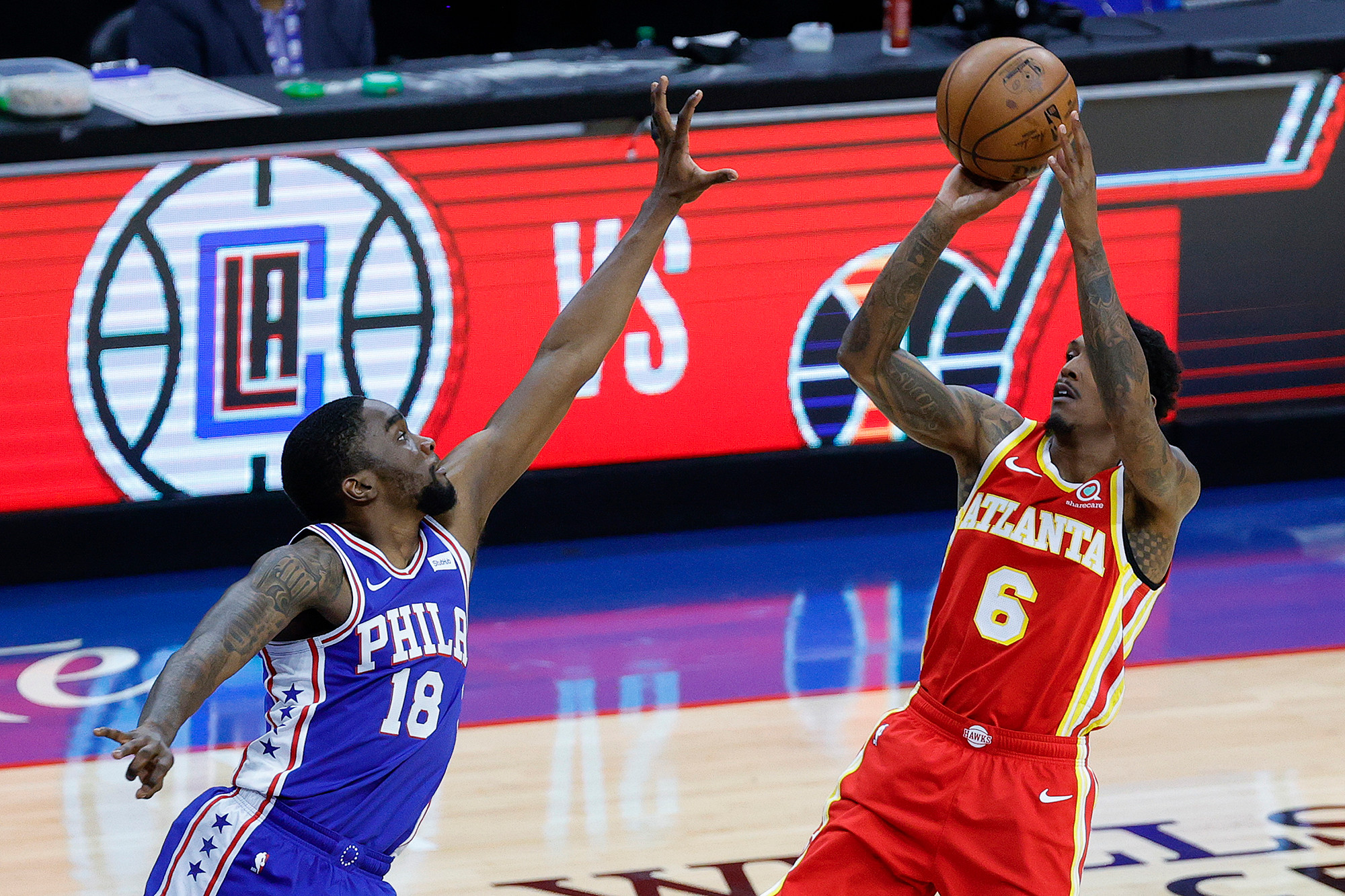
Rival owners of NBA’s Hawks and 76ers have common Apollo Global ties

The billionaire owners of the Philadelphia 76ers and the Atlanta Hawks are as sharp-elbowed as the NBA teams’ players — and that’s not all they’ve got in common.Buyout king Josh Harris, who bought the Sixers in 2011, is tied at a game a piece in the second-round, best-of-seven playoff series against his fellow private-equity mogul Antony Ressler, who scooped up the Hawks in 2015. 

What’s lesser known is that both financiers are alumni of Michael Milken’s Drexel Burnham Lambert, and both went on — along with billionaire Leon Black — to co-found the giant buyout firm Apollo Global Management in 1990.

Ressler left Apollo in 2002 to form the buyout firm Ares Management. Black, meanwhile, announced his surprise exit in March amid growing controversy over his business ties to dead pedophile Jeffrey Epstein.

Harris wasn’t far behind, having lost a race to succeed Black at the helm of Apollo to co-founder Marc Rowan. That was after reports that Harris had urged Black to step down over his Epstein ties.

Atlanta Hawks owner Tony Ressler co-founded Apollo Global Management along with his NBA playoff rival owner Josh Harris years before both men entered the sports business. Getty Images

While tensions between Harris and Black have been well-reported, Ressler’s relationship with Black also might be tense these days. That’s because Black is married to Ressler’s sister, Debra.

In addition to controversy over his financial ties to Epstein, Black last week was slapped by a defamation lawsuit from an ex-Russian model who claimed Black had raped her in 2014 despite Black’s previous insistence that the pair had a “consensual affair.”  Black denied the claims raised in the lawsuit.   

While both Harris and Ressler may be at odds with Black of late, they got along well enough during their early days at Apollo, according to a source close to the situation. 

Reps for Harris and Ressler declined to comment.

Phiadelphia 76ers owner and Apollo Global Management co-founder Josh Harris announced he would step down from his day-to-day role at Apollo after being passed over to succeed former Apollo CEO Leon Black.Getty Images

It’s not the first time private equity titans have had basketball teams meet in the playoffs, although it is a rare occurrence. The Milwaukee Bucks, owned by Marc Lasry and Wes Edens, in 2019 beat the Stephen Pagliuca-owned Boston Celtics in the NBA Semifinals.“Private equity guys are relatively new sports team owners,” a sports banker said. “Owners used to be real estate developers. I would think you would see more examples of this in the future.”

Losing Streak May Continue For Singapore Bourse

(RTTNews) – The Singapore stock market has finished lower in back-to-back trading days, sinking more than 20 points or 0.6 percent along the way. The Straits Times Index now rests just beneath the 3,155-point plateau and it’s tipped to open in the red again on Thursday.

The global forecast for the Asian markets is slightly soft ahead of key U.S. inflation data later today. The European markets were mixed and the U.S. bourses were down and the Asian markets figure to split the difference.

The STI finished modestly lower on Wednesday following losses from the financial shares and industrials, while the property stocks were mixed.

For the day, the index lost 13.67 points or 0.43 percent to finish at the daily low of 3,153.47 after trading as high as 3,169.08. Volume was 1.95 billion shares worth 1.29 billion Singapore dollars. There were 247 decliners and 238 gainers.

Among the actives, Ascendas REIT climbed 1.37 percent, while CapitaLand Integrated Commercial Trust jumped 1.90 percent, City Developments shed 0.52 percent, Dairy Farm International lost 0.46 percent, DBS Group retreated 1.03 percent, Genting Singapore added 0.57 percent, Keppel Corp plunged 1.51 percent, Mapletree Commercial Trust spiked 1.91 percent, Oversea-Chinese Banking Corporation dropped 0.72 percent, SATS advanced 0.74 percent, SembCorp Industries declined 0.91 percent, Singapore Airlines soared 2.45 percent, Singapore Exchange slid 0.29 percent, SingTel tumbled 1.27 percent, Thai Beverage sank 0.73 percent, United Overseas Bank skidded 1.06 percent, Wilmar International fell 0.42 percent, Yangzijiang Shipbuilding tanked 1.36 percent and Mapletree Logistics Trust, Jardine Strategic Holdings, Singapore Press Holdings, Singapore Technologies Engineering, CapitaLand and Comfort DelGro were unchanged.

The lead from Wall Street suggests mild consolidation as stocks opened mixed on Wednesday, bounced back and forth across the unchanged line and eventually ended slightly lower.

The Dow dropped 152.68 points or 0.44 percent to finish at 34,447.14, while the NASDAQ dipped 13.16 points or 0.09 percent to end at 13,911.75 and the S&P 500 eased 7.71 points or 0.18 percent to close at 4,219.55.

The cautious trade on Wall Street reflected concerns over key inflation data that could prompt the Federal Reserve to begin discussions on tapering its asset buying program sooner than expected.

In economic news, the Commerce Department said wholesale inventories rose 0.8 percent on month to $ 698.0 billion in April after seeing a 1.2 percent increase in March.

Crude oil prices edged lower on Wednesday after data showed a jump in U.S. gasoline stockpiles last week. West Intermediate crude oil futures for July ended down $0.09 or 0.1 percent at $69.96 a barrel.

Democrats circulate draft antitrust bills that could reshape Apple, Amazon, Facebook and Google

In this articleGOOGLFBAAPLAMZNU.S. House Impeachment manager David Cicilline (D-RI) speaks on the second day of former President Donald Trump’s second impeachment trial at the U.S. Capitol on February 10, 2021 in Washington, DC.congress.gov via Getty ImagesA group of House Democrats is circulating discussion drafts of antitrust bills that would force the biggest tech companies to change parts of their business models and curtail large acquisitions, according to copies obtained by CNBC.While the drafts could still change significantly prior to their introduction, as currently written, they could require business model overhauls for Apple and Amazon by limiting their ability to operate marketplaces for products and apps while selling their own goods and apps on those same stores. The bills would also make it harder for those companies plus Facebook and Alphabet (Google’s parent company) to complete large mergers, and would force them to make it easier for users to leave their platforms with their data intact. CNBC couldn’t immediately learn when the drafts will be introduced.The draft bills come after a 16-month investigation by the House Judiciary subcommittee on antitrust into the four companies, which culminated in a nearly 450-page report from Democratic staff last fall. While Republicans on the subcommittee diverged from some of the Democrats’ more extreme proposals, several agreed with the main findings of monopoly power and anticompetitive behavior in the Democratic report and on the need to rein in Big Tech’s power with antitrust reform.The drafts don’t indicate whether any Republicans are supporting the bills.What the draft bills saySpecifically, the five discussion drafts would prevent platforms from owning businesses that present a conflict of interest, bar large platforms from favoring their own products over those of competitors that rely on their sites, make it harder for large platforms to complete mergers, raise filing fees for acquisitions and mandate ways for users to transfer their data between platforms.One of the bills, sponsored by Rep Joe Neguse, D-Colo., appears to be companion legislation to the bipartisan Merger Filing Fee Modernization Act in the Senate, which passed in that chamber on Tuesday as part of a larger $250 billion tech and manufacturing bill. That bill would raise the fees companies pay to notify the Federal Trade Commission and Department of Justice Antitrust Division of large mergers with the goal of raising money for those agencies.The other four drafts obtained by CNBC include:Ending Platform Monopolies Act: Sponsored by Rep. Pramila Jayapal, D-Wash., the vice chair of the subcommittee, this bill would make it unlawful for a platform with at least 500,000 monthly active U.S. users and a market cap over $600 billion to own or operate a business that presents a clear conflict of interest. The draft defines an unlawful conflict as one that incentivizes a business to favor its own services over those of a competitors’ or disadvantage potential competitors that use the platform. Lawmakers have previously expressed concern that both Amazon and Apple, which run their own platforms for sellers and developers, respectively, could undermine competition due to a conflict of interest for their own competing products or apps.Platform Competition and Opportunity Act: This proposal from Rep. Hakeem Jeffries, D-N.Y., would shift the burden of proof in merger cases to dominant platforms (defined with the same criteria as the previous bill) to prove that their acquisitions are in fact lawful, rather than the government having to prove they will lessen competition. The measure would likely substantially slow down acquisitions by dominant tech firms.Platform Anti-Monopoly Act: This bill, proposed by Subcommittee Chairman David Cicilline, D-R.I., would prohibit dominant platforms from giving their own products and services advantages over those of competitors on the platform. It would also prohibit other types of discriminatory behavior by dominant platforms, like cutting off a competitor that uses the platform from services offered by the platform itself, and ban dominant platforms from using data collected on their services that isn’t public to others to fuel their own competing products, among several other prohibitions.Augmenting Compatibility and Competition by Enabling Service Switching (ACCESS) Act: This proposed bill from Rep. Mary Gay Scanlon, D-Pa., would mandate dominant platforms maintain certain standards of data portability and interoperability, making it easier for consumers to take their data with them to other platforms.Representatives for those lawmakers did not respond or did not provide comment on the discussion drafts.Axios first reported on the drafts.Subscribe to CNBC on YouTube.WATCH: Big Tech may face even more scrutiny for antitrust and monopoly in 2021—Here’s why

NY Liquor Authority adopts new rules on food delivery fees

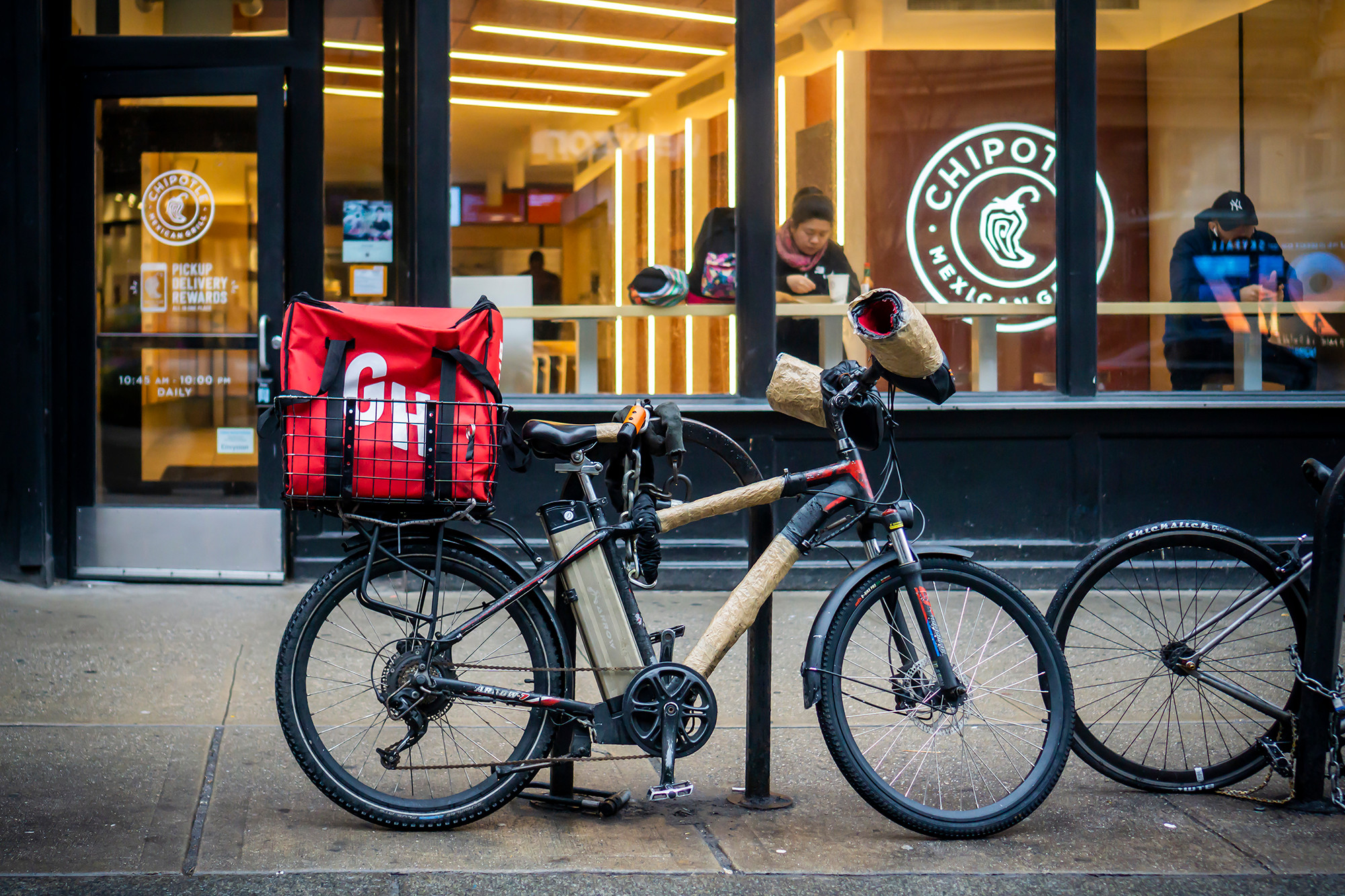
Two years after threatening to crack down on food delivery companies like Grubhub and Uber Eats, the New York State Liquor Authority has delivered a ruling that has both restauranteurs and delivery companies hopping mad.

The SLA on Wednesday adopted new rules that will require New York restaurants with a liquor license to add up all the fees a delivery company charges them each year to ensure the they don’t exceed 10 percent of the restaurant’s annual revenue. 

If the fees exceed 10 percent of the restaurant’s annual revenues, the delivery company will need to be added to the restaurant’s liquor license.

The SLA adopted the new rules to address concerns that food delivery apps like Grubhub, Uber Eats and Doordash may be violating long-standing rules prohibiting businesses with a liquor license from sharing their profits or revenues with anyone not already on that license.

The only exception to this rule has been for landlords, who are allowed to take up to 10 percent of a restaurant’s or bar’s profits.

The NY state liquor regulators say delivery apps like Uber Eats must be named on a restaurant’s liquor license if their fees total 10 percent of annual revenues.REUTERS

The issue came to a head in 2019 when the regulatory agency held hearings on food delivery app fees that ranged from 15 percent to 30 percent of each order, raising questions about whether these companies are violating the SLA’s rules.

Many restaurateurs expected the agency to resolve the issue by capping fees at 10 percent of each order, akin to the exception made for landlords. Alternatively, the SLA might have ordered food delivery apps to adapt a flat fee for NY restaurants with a liquor licence.

“Under our view of the law, they shouldn’t be charging anything, percentage-wise,” SLA chairman Vincent Bradley said in Oct. 2019. “They can charge a flat fee, whatever they want, whatever the market will bear. But they shouldn’t be taking a percentage of profits, revenues, whatever the case may be.”

Neither the delivery companies or the restaurants are happy now.

Restaurateurs are concerned that the new rules just creates more work for them by forcing them to calculate the sometimes inscrutable fees they pay food delivery companies for everything from delivery to marketing to assistance with orders.

Andrew Schnipper (left) says he will give up his liquor license over help with food deliveries.Tamara Beckwith

At least one restaurateur said he would drop his liquor license if he had to choose between it and maintaining his relationship with his principal delivery company, GrubHub.

“Why would they want to go on my license and assume that liability,” said Andrew Schnipper, co-owner of burger joint Schnipper’s. “I’m not even sure I’d want that.”

The delivery companies are also objecting to the change, saying small businesses will now “be forced to decide between forgoing their liquor license or not partnering with delivery apps that provide a valuable service by helping to reach a much broader customer base,” according to a letter from Amy Healy, head of government relations for GrubHub, who also claimed the SLA is overstepping it’s authority.

The SLA, for its part, pointed to its existing rule allowing landlords to share in a restaurant’s revenues — without being listed on its liquor license — as long as the landlord’s take does not exceed 10 percent of the restaurant’s revenues.

But restaurants wanted more, said Andrew Rigie, executive director of the NYC Hospitality Alliance. “We believe third party delivery companies should not be able to take more than 10 percent of a single order.”

Goldman Sachs finally paying off 1MDB debt

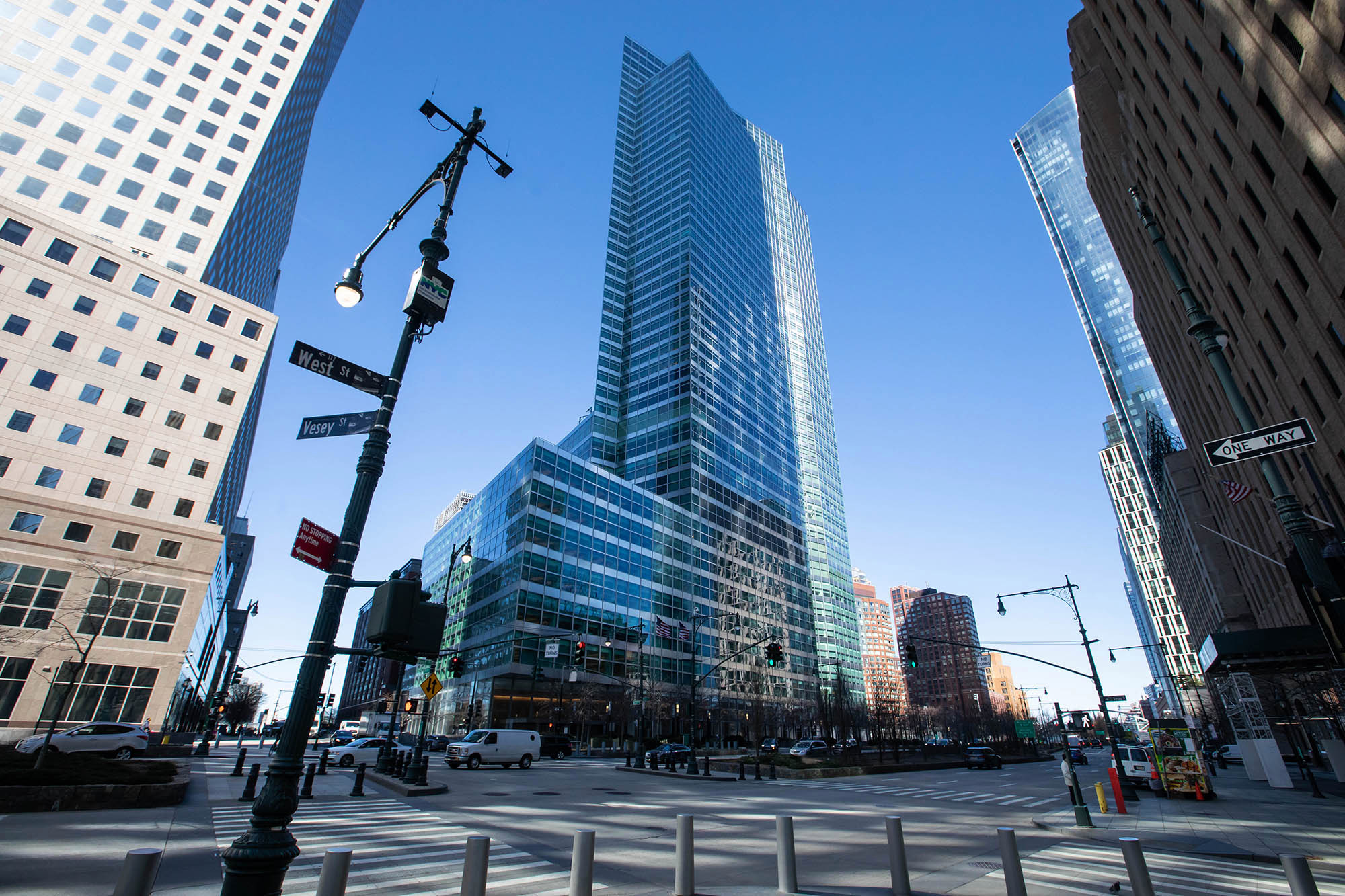
Goldman Sachs may finally be able to put the 1MDB scandal behind it.

The bank has 10 days to pay the remaining $1.26 billion of a $2.3 billion fine it owes the US government, according to a Bloomberg report.

Goldman was charged with wrongdoing for bribing foreign officials to keep its business relationship with 1Malaysia Development Berhad but arranged a deferred prosecution deal with the Department of Justice last year to give itself more time to pay the massive fine.

The payment is triggered by a U.S. District Judge’s ruling Wednesday that the bank’s Malaysia division is guilty and must pay $500,000.

The Goldman executives responsible for the misdealing, Roger Ng and Tim Leissner, have been barred from working in the securities industry again. The pair brought in an eye-popping $600 million in fees for Goldman during the height of their deal-making with 1MDB.

The Malaysian backed sovereign wealth fund gave kickbacks to Malaysian Prime Minister Najib Razak and became a personal piggybank for the scheme’s mastermind: Jho Low.

For Jho Low, who found the fund investors and roped in the PM,  it was all fun and games until the feds showed up.

The playboy financier embezzled money from the $6.5 billion bond offerings to fund a lavish lifestyle of private jets, parties, and yachts for himself and his short-lived celebrity besties like Leonardo DiCaprio and Paris Hilton.

Goldman Sachs has 10 days to pay the remaining $1.26 billion of a $2.3 billion fine.Nicky Loh/Bloomberg via Getty Images

Jho Low’s stolen funds paid for a sumptuous 31st birthday party in Vegas that had it all: Britney Spears emerging from a massive cake to serenade Low, performances from Chris Brown, Ludacris, and Usher, and appearances from Kayne West, Kim Kardashian, Bradley Cooper, and Zach Galifianakis. He even dated former Victoria’s Secret angel Miranda Kerr, whom he showered with expensive jewelry.

In an ironic twist, some of the stolen money even went to produce Martin Scorsese’s film about financial fraudster Jordan Belfort, “The Wolf of Wall Street.”

But all illegal things must come to an end.

And now Goldman is paying the price–shelling out the largest ever penalty to the US for foreign corruption charges. 

McDonald’s beats racial bias lawsuit brought by black franchise owners

A federal judge has dismissed a lawsuit accusing McDonald’s of racial discrimination for steering black franchise owners to underperforming stores.

In a decision on Tuesday, US District Judge Harry Leinenweber said the plaintiffs did not show that McDonald’s executives or managers treated black store owners differently from non-black owners, or when this might have occurred.

“The court does not mean to imply that McDonald’s operations over the years have not been tainted by the brush of racism,” but historical discrimination did not justify the lawsuit, the Chicago-based judge wrote.

James and Darrell Byrd, brothers with four McDonald’s restaurants in Tennessee, accused the company of placing black franchisees in economically undesirable inner-city locations with high security and insurance costs and below-average sales.

They also said the Chicago-based fast-food chain denied black owners the same opportunities for growth and financial assistance that it offered white owners.

Leinenweber said the Byrds could amend their complaint, but dismissed their steering claims for good because the statute of limitations had run out.

The Byrds’ lawyer Jim Ferraro said on Wednesday that they will amend their complaint.

A judge dismissed a lawsuit that accused McDonald’s of unfairly steering black franchise owners to economically undesirable inner-city locations with high security and insurance costs and below-average sales.AFP via Getty Images

He also said McDonald’s has lowered rents for many black store owners since the lawsuit was filed in October.

McDonald’s did not immediately respond on Wednesday to requests for comment. It has denied treating black owners differently from other owners, and has repeatedly pledged its commitment to diversity and inclusion.

Ferraro has a similar lawsuit pending in Chicago on behalf of black former franchisees. The two lawsuits sought damages that together could reach $4 billion.