Vice President Mike Pence at the unveiling of the Lordstown Endurance.
Lordstown Motors
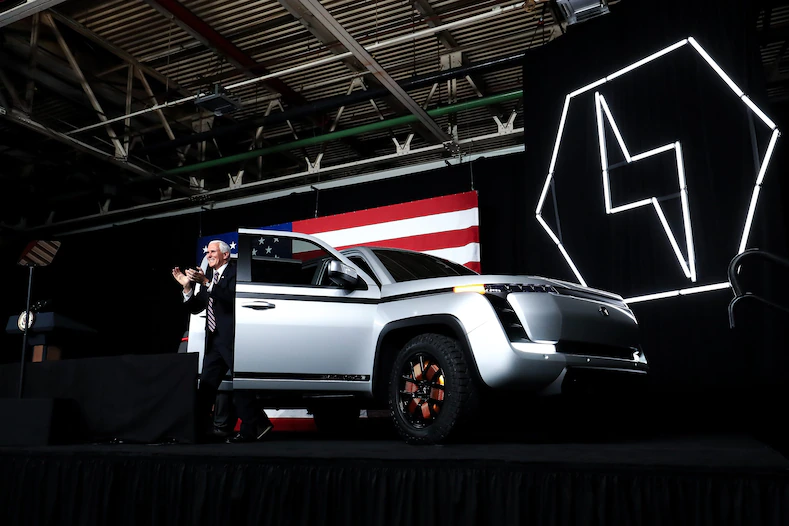

Vice President Mike Pence at the unveiling of the Lordstown Endurance.
Lordstown Motors
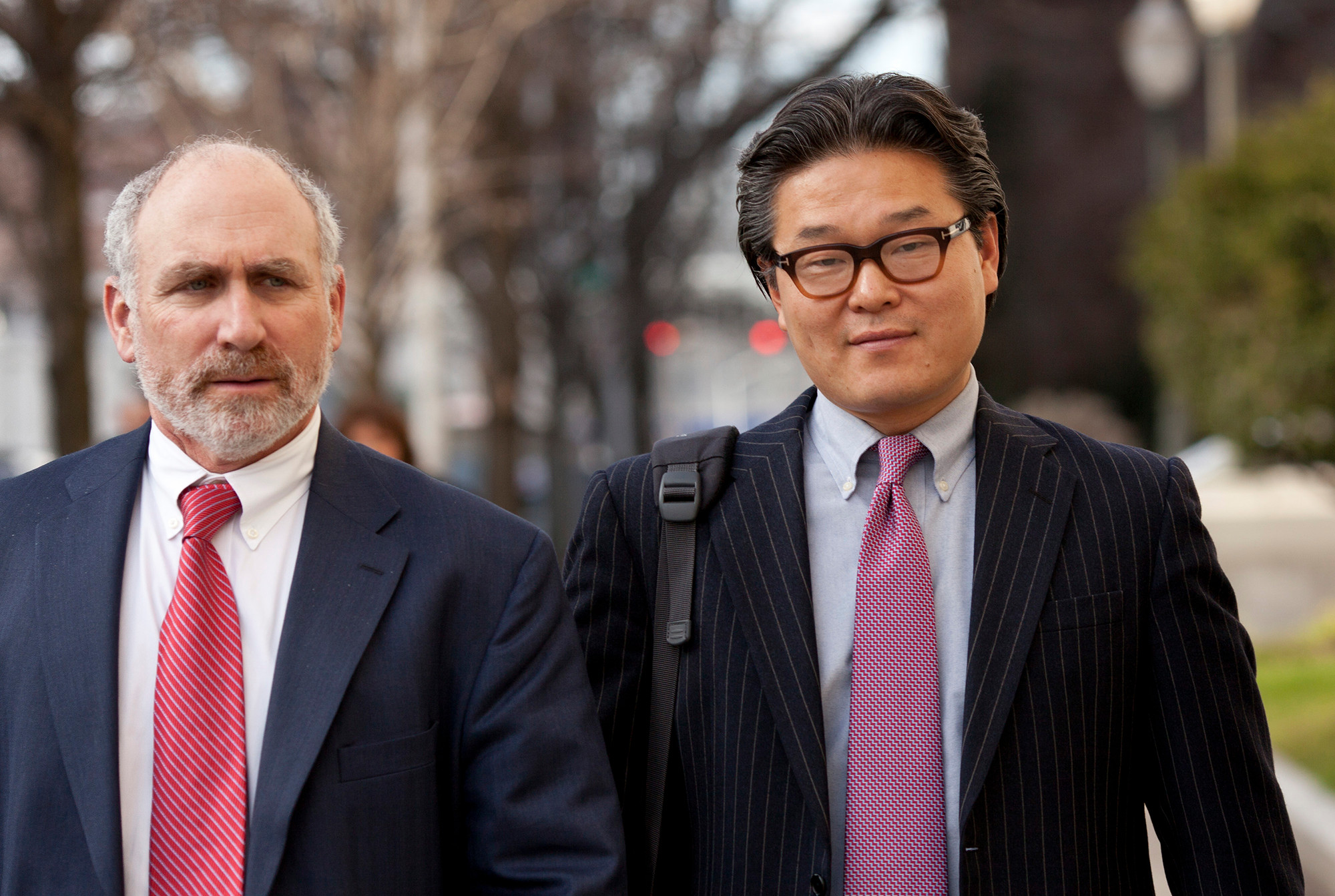
Before he was known as the guy behind billions in losses on Wall Street, Bill Hwang had been aiming to join the rarified air of Jeff Bezos and Bill Gates by becoming a member of the $100 billion dollar club, sources said.
Prior to the collapse of his family office, Archegos Capital, in March, Hwang had increased his personal wealth from around $200 million in 2013 to more than $20 billion. That’s a 4,900 percent increase in less than 8 years.
Given the pace at which Hwang was building his personal wealth, talk around the office at Archegos Capital, including from Hwang himself, was that the Julian Robertson protégé was well on his way to making the leap from $10 billion club to $100 billion club in two to three more years, sources said.
Boss of luxury-goods outfit LVMH, Bernard Arnault is part of the $100 billion “club.”AFP via Getty Images
Doing so would represent just a 900 percent increase in wealth, said a source who added that Hwang’s epic rise had staffers believing he could easily become one of the 10 wealthiest people on the planet.
In a statement to The Post, an Archegos spokesperson said, “Bill Hwang would never think like that, much less make the statement.”
Microsoft founder Bill Gates was the first person to reach the vaunted $100 billion threshold in 1999, followed by Amazon founder Jeff Bezos in 2017. Currently, more than nine people claim the title including LVMH Chairman and CEO Bernard Arnault, Tesla founder Elon Musk, Facebook founder Mark Zuckerberg, Berkshire Hathaway founder Warren Buffett, Oracle founder Larry Ellison, and Google founders Larry Page and Sergey Brin.
Jeff Bezos, seen here with wife Lauren Sanchez, first hit the $100 billion mark in 2017.Anadolu Agency via Getty Images
Critics, however, note that Hwang’s fast-and-furious ascent was riddled with warning signs.
“When you see someone hit it out of the park the way Hwang had, the law of time and numbers suggests it won’t continue,” Chris Whalen, chairman of research firm Whalen Global Advisors said. “As a risk manager, the first thing you say to yourself when you see someone hit alpha up the wazoo is they’re not going to do that again.”
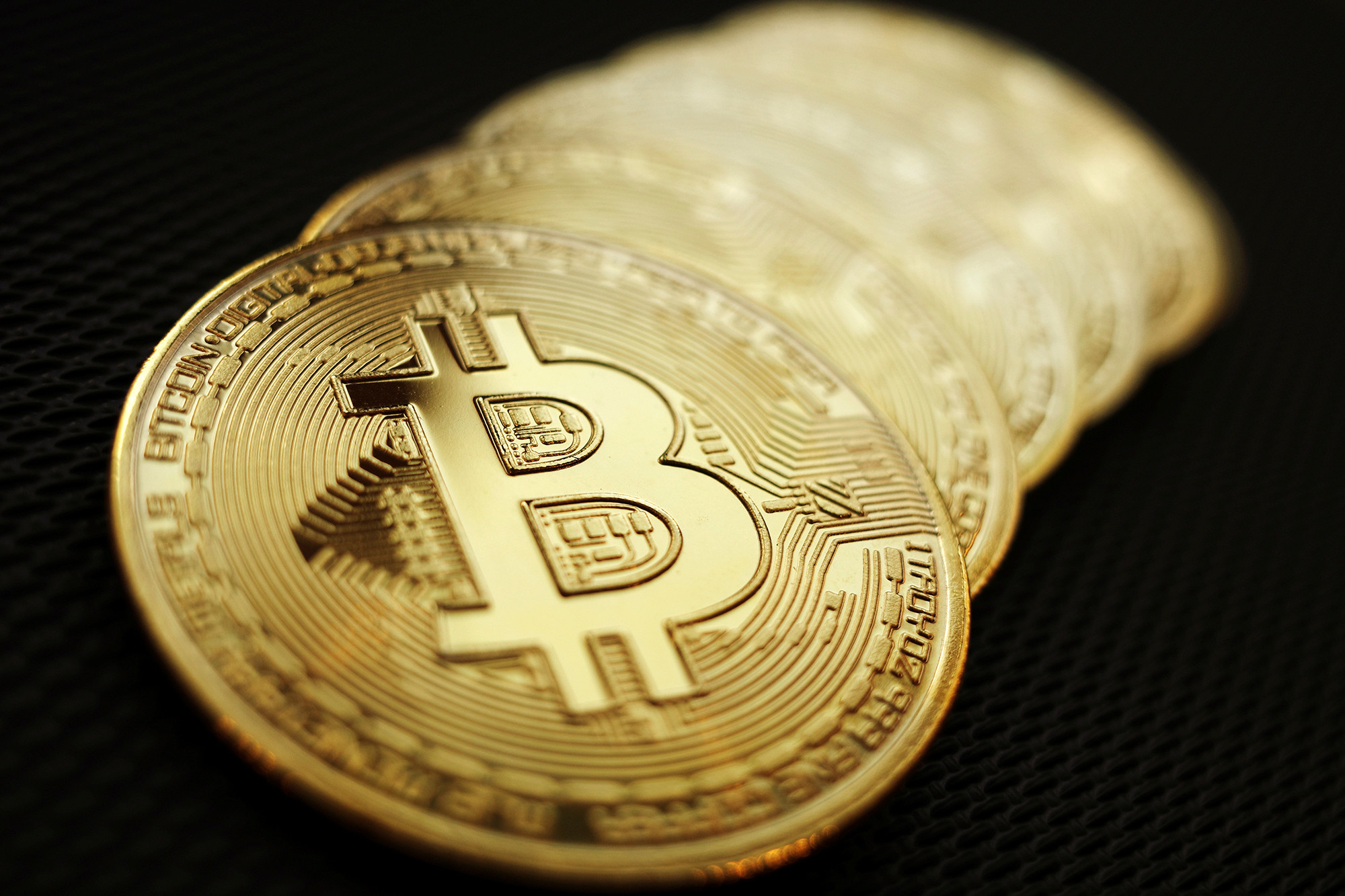
The price of bitcoin fell Tuesday, one day after US officials announced that they managed to recover most of the bitcoin that was paid as ransom to the Colonial Pipeline hackers.
Bitcoin traded almost 12 percent lower on Tuesday. The crypto was exchanging hands at about $31,800 per coin as of noon ET.
Other cryptos such as ether, binance coin, cardano and dogecoin also saw double-digit drops. And shares of crypto exchange Coinbase fell more than 4 percent in midday trading.
Tuesday’s losses put bitcoin about 50 percent below its peak earlier this year.
Anthony Denier, CEO of trading platform Webull, said the Department of Justice’s announcement that they were able to retrieve the ransom payment is hurting the price of bitcoin.
He noted that it’s unclear how the government got the crypto back, but regardless, “this shows bitcoin isn’t as secure as many people believe,” Denier told The Post.
“Criminals have been using bitcoin because of the supposed inability of governments to get at it, but if the US did reclaim the money, that destroys that claim,” he said. “This could be a very big problem for people trying to get money out of countries with poor economies. If governments can claw it back, that hurts its appeal.”
It’s not clear that the drop in the market was driven only by the Justice Department’s announcement.
The Colonial Pipeline’s Dorsey Junction Station in Woodbine, Maryland, that was attacked.REUTERS
Brock Pierce, chairman of the Bitcoin Foundation, said other factors like “broader regulatory concerns and global taxation” are also pressuring the price of bitcoin.
“The retrieval of the ransom could actually be viewed in a positive way, meaning that the government has recourse to hold bad actors accountable for their actions,” he added.
But the Justice Department’s announcement that they were able to retrieve 85 percent of the 75-bitcoin ransom Colonial Pipeline handed over to DarkSide, the Russia-based cybergang behind the hacking, also raises questions about the traceability of bitcoin and other cryptos.
One of the key attributes of bitcoin hailed by enthusiasts is that it’s decentralized and untraceable, whereas fiat currencies like the US Dollar are regulated by a central bank and transactions are tracked by government agencies.
Federal investigators, led by a specialized ransomware task force created by the Biden administration, said Monday they were able to access the password for one of the hackers’ bitcoin wallets and recover the cryptocurrency.
Dan Roberts, editor-in-chief of Decrypt, which covers blockchain technology and cryptocurrencies, said there’s no indication that the US government was able to “hack” bitcoin or somehow trace the crypto. He noted an insider might have leaked the password to officials.
“You can’t really hack the bitcoin blockchain. I mean, that’s the whole value proposition and appeal of the bitcoin blockchain,” he told The Post, adding that the headlines are nonetheless pressuring the price of the crypto.
Deputy US Attorney General Lisa Monaco announces the recovery of millions of dollars worth of cryptocurrency from the Colonial Pipeline Co. ransomware attacks.POOL/AFP via Getty Images
He said there are various factors pushing the price down, such as mounting regulatory concerns even as enthusiasm for the crypto market remains strong, evidenced by the recent bitcoin conference in Miami that drew about 50,000 attendees.
Internal Revenue Service Commissioner Charles Rettig on Tuesday asked Congress for the authority to regulate cryptocurrencies, especially when it comes to large transactions, at a Senate finance panel hearing.
And Chinese authorities last month called for their own crackdown on crypto mining and trading.
Recent tweets from Tesla CEO Elon Musk has added to the frothiness. The price of bitcoin fell last week after Musk posted a meme of a couple breaking up and added #Bitcoin and a broken-heart emoji. Two hours later, Musk posted an “I miss you” meme.
Musk’s tweets drew thousands of angry, stressed-out and disgusted replies, with many accusing him of “manipulating” the price of the volatile cryptocurrency.
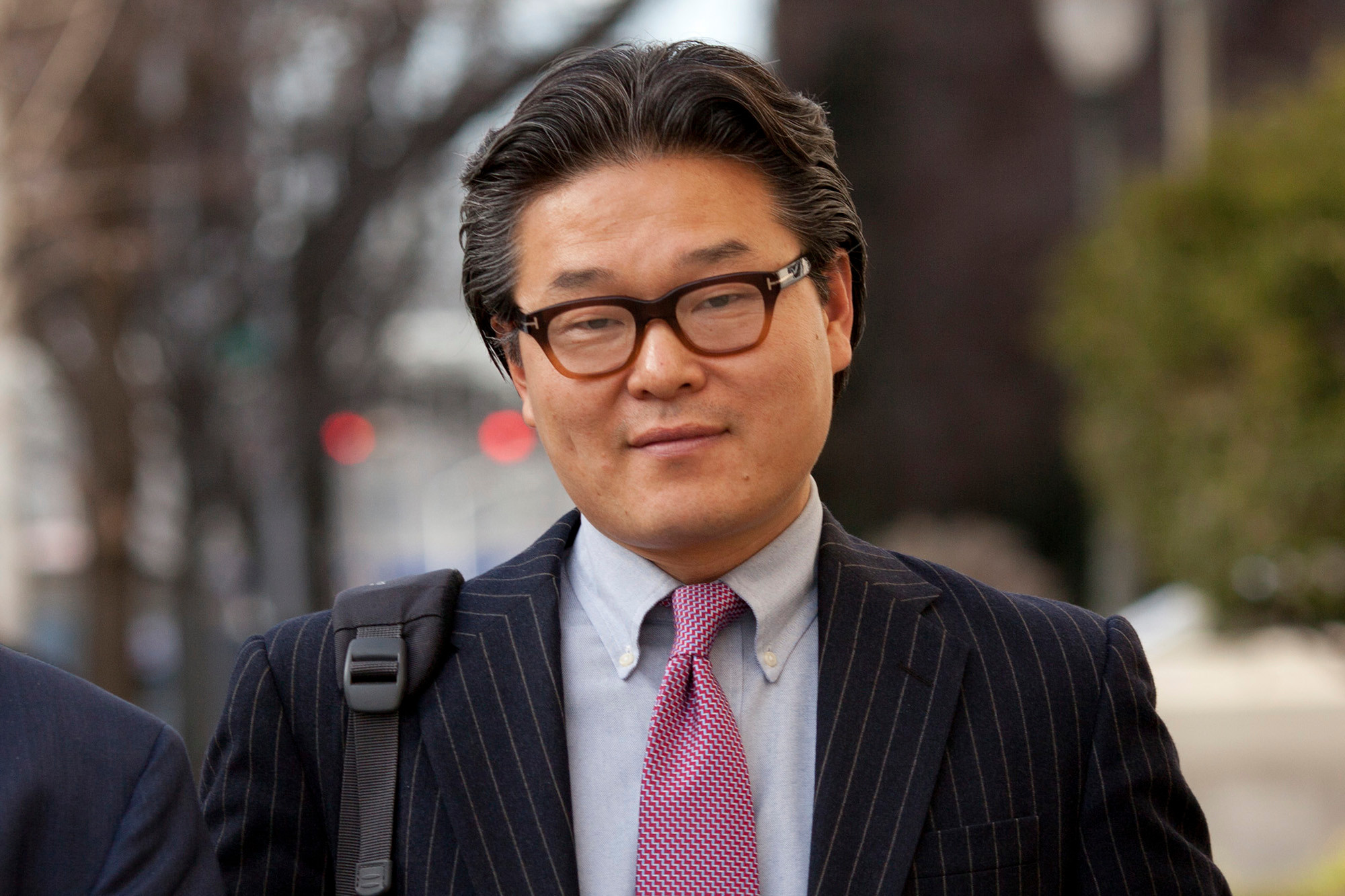
Just three months after investor Bill Hwang’s investment firm imploded — leaving Wall Street with billions of dollars in losses — two Archegos Capital staffers are gearing up to test the strategy all over again, The Post has learned.
Jensen Ko and Sterling Clay, who worked at Archegos until its epic collapse in March, are quietly preparing to launch a new fund using their former boss’s highly leveraged investment style, people with direct knowledge of the plans told The Post.
“The strategy worked until it didn’t…. but it worked,” a source close to one of the Archegos alumni told The Post in explaining their thinking.
Indeed, in autopsying Archegos, Bloomberg deemed Hwang “the greatest trader you’d never heard of” for turning his $200 million personal wealth into a massive $20 billion in the span of less than eight years.
Ko and Clay plan to use their own money over the next year to establish a track record of lucrative but reliable investments with the goal of eventually raising money from outside investors, according to people with direct knowledge.
The Post was unable to confirm how much the pair have to invest, but people close to them estimated it could be close to $50 million.
Ko, who didn’t respond to a request for comment, worked at Archegos with Hwang for 13 years as chief operating officer, and later as its chief technology officer, according to his LinkedIn profile. Clay, who declined to comment, was an associate director at Archegos for two years, according to LinkedIn.
The men, along with other Archegos staffers, were summarily let go in March after the firm’s investments collapsed, sources said.
To be sure, efforts to replicate Hwang may be tempting for some investors.
A former protégé of famed investor Julian Robertson, Hwang opened his family office in 2013 after shuttering two hedge funds following an SEC insider trading probe in 2012. And within a few short years, he built the modest operation to a multibillion-dollar empire with ambitions that stood to catapult Hwang to becoming one of the richest men on earth.
Credit Suisse is one of the international banks harmed by ‘implosion.’Getty Images
But the investment strategy behind Hwang’s success also led his investment empire to come crashing down in spectacular fashion over the course of just a few days. Because Hwang was managing his own money through what is known in industry parlance as a family office, he was able to make under-the-radar risky bets that caught even his big bank lenders off guard.
When the massive bets he’d made on ViacomCBS and Discovery went south, he was unable to meet his margin calls forcing his brokers to liquidate their positions — and his collateral — as quickly as possible.
The move spurred a frantic, market-melting fire sale that left banks six banks with more than $10 billion in losses. Credit Suisse lost more than $5 billion and Japanese bank Nomura lost more than $3 billion. US banks like Goldman Sachs were quicker to get out of their positions and escaped the incident largely unscathed.
Morgan Stanley, Credit Suisse and Nomura have all since replaced their prime brokerage chiefs in the wake of the destruction, while the Department of Justice and the Securities and Exchange Commission have both opened investigations to understand how one person could have controlled so much stock without disclosing it.
Japanese bank Nomura also took a hit when Archegos crashed and burned.Bloomberg via Getty Images
Ko and Clay are hopeful they can learn from his mistakes and capitalize on the successes without flying too close to the sun, sources said.
But they may now find it more difficult to scale their venture to the size of Archegos because burned banks will want to avoid making the same mistakes, sources said. And the fund’s tarnished record may make it difficult for Ko and Clay to raise money from outside investors.
“I think being an alumnus of Archegos will make it difficult,” Columbia University Law School professor John Coffee tells The Post. “It is a little like having been the lookout on the Titanic and applying for similar work.”
The two could also face regulatory hurdles. While people close to Hwang are quick to note there’s no evidence he did anything illegal and they say they are unaware of any criminal investigations, the probes into Archegos could lead to stricter rules for family offices.
“It’s possible for FINRA to take certain disciplinary actions that can extend to investment advisors who may be serving in some capacities.” Columbia Law Professor Joshua Mitts advises. “But at the moment it’s not clear what the liability, if any, would be.”
A spokesperson for Archegos did not respond to request for comment.
(RTTNews) – The U.S Justice Department said on Monday that investigators have recovered $2.3 million in cryptocurrency, which was paid as ransom to hackers who shut down the East Coast pipeline last month.
In April, hackers had got access to Colonial Pipelines computer networks using a compromised password, thus leading to the shutdown of the country’s biggest fuel distribution companies along the East Coast. The hacking led to fuel outages and hoarding across the entire region for nearly a week.
Colonial Pipeline Co. CEO Joseph Blount had earlier said that the company had given the $4.4 million ransom demand as officials did not have any knowledge of the extent of intrusion by hackers and how much time it will take to get everything running as before.
The Justice Department said that it had seized the $2.3 million in bitcoins to members of a criminal hacking group called the DarkSide, which was being investigated by the FBI since the last one year. The Russia-based group was known to circulate its malware tools with other criminal hacking groups.
Commenting on the developments, Lisa Monaco, President Biden’s Deputy Attorney General said, “The sophisticated use of technology to hold businesses and even whole cities hostage for profit is decidedly a 21st century challenge, but the old adage ‘follow the money’ still applies. Today we turned the tables on DarkSide.”

The Reddit crowd’s latest stock darling is a little-known health care company that became a target of short sellers earlier this year after a respected research firm called it a “broken business.”
Shares of Clover Health surged as much as 109 percent on Tuesday before retreating to a gain of closer to 50 percent as chatter about it grew to a deafening roar on Reddit’s popular Reddit’s WallStreetBets forum.
The company, which provides consumers access to public and private health plans, went public in January with the help of “SPAC King” Chamath Palihapitiya.
And while deals to take companies public via special purpose acquisition companies have lost some of their luster amid increased regulatory scrutiny, Palihapitiya’s Clover appears to be getting a second wind on renewed efforts by day traders to squeeze Wall Street short sellers.
Venture capitalist and ‘SPAC King’ Chamath Palihapitiya speaks during an event in 2018.Bloomberg via Getty Images
Some 43.5 percent of Clover’s float shares have been sold short, CNBC said Tuesday, citing data from S3 Partners. The push kicked off in February after respected research firm Hindenburg Research issued a scathing report suggesting the company was facing a probe from the Department of Justice over possible corruption charges.
Hindenburg, known for its takedown of electric-vehicle maker Nikola last year, also raised questions about whether Palihapitiya misled investors about the business and failed to disclose the investigation.
Clover has disputed Hindenberg’s finding, but investors still sent the stock down from $13 at the beginning of February to below $7 last month. On Tuesday afternoon, the stock traded up 74 percent to $20.81 a share.
The WallStreetBets Reddit app has been linked to other dramatic changes in stock prices, including shares of AMC Entertainment and GameStop.SOPA Images/LightRocket via Gett
Clover’s surge is just the latest eye-popping increase among the so-called “meme stocks” that win support on Reddit. Last week, indebted movie theater chain AMC Entertainment’s shares more than doubled as retail traders buoyed up the price.
The “meme stock” tend made headlines earlier this year when investors sent video game retailer GameStop Corp soaring to soaring new heights, resulting in losses at established Wall Street firms shorting the company.

Summer weather has arrived, and New England tourists are hungry for a lobster roll or a whole cooked lobster — but they’re going to have to pay up.
Lobster is more expensive than usual this season due to a limited supply, high demand and the reopening of the economy as the nation moves past the coronavirus pandemic. Consumers are headed back to seafood restaurants and markets for the first time in months, and the lobsters there to greet them are at a premium.
Some Maine stores charged $17 or $18 per pound for live lobster in May, and that was about twice the price a year ago. Prices are lingering in the $13 or $14 range this month. Lobster is usually expensive in late spring, but this season has seen prices that are higher than typical.
Visitors to Maine vacation spots like Old Orchard Beach might have been surprised to find that May 2021 lobster prices had risen by $2.70 from May 2020.Getty Images/iStockphoto
The wholesale price for live, 1.25-pound lobsters in the New England market was $9.01 per pound on May 1, business publisher Urner Barry reported. That was about $2.70 per pound more than the previous May 1, and the highest price for that date in at least five years, the company reported.
The high lobster prices are an indicator that customers are looking to get back out to restaurants, and that high-end seafood is in high demand, said John Sackton, an industry analyst and founder of SeafoodNews.com.
“It’s the strength of food service, and trying to gear up for what they think is going to be a strong summer,” Sackton said. “That’s pushing the price on a lot of these items that can draw traffic and are kind of must-have on a casino menu or something like that.”
Restaurant owners no doubt hope that diners are so happy they’re open again that they won’t notice the extra pinch for lobster rolls.Getty Images/iStockphoto
Other factors influencing the high prices include a lack of available inventory and what appears to be a slow start to the fishing season. New England’s busiest lobster fishing season takes place in summer, and many harvesters are just starting to get their traps into the water.
“The fishermen will tell you, check back at the end of the season, then they’ll know whether they had a good season,” said Beth Casoni, executive director of the Massachusetts Lobstermen’s Association.
U.S. lobster fishing is based primarily in Maine, though many lobsters also come ashore in Massachusetts, Rhode Island and New Hampshire. Fishermen managed to have a productive season in 2020 despite the economic damage caused by the coronavirus pandemic.
Maine fishermen brought more than 96 million pounds of lobsters to the docks, and while that was the lowest total since 2010, it was still much more than they typically caught in the 1990s.
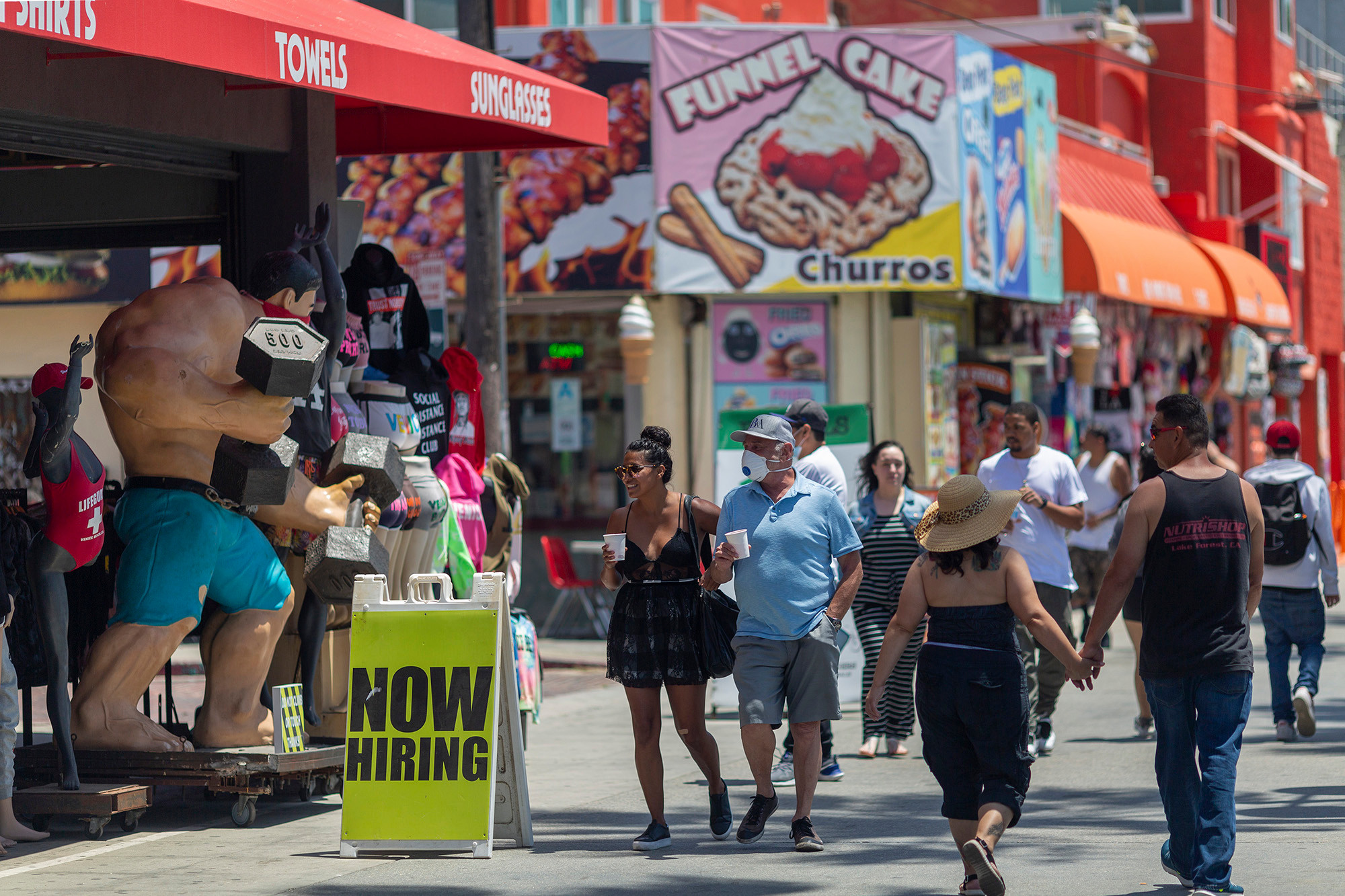
US job openings soared to a fresh record of 9.3 million in April while companies struggled to find new workers as the economy continued to heat up, the feds said Tuesday.
Total openings rose by about 1 million compared to March, according to the Labor Department’s Job Openings and Labor Turnover Survey, or JOLTS.
The 9.3 million openings is the highest level reported since the data series began in December 2000, the feds said.
That means the number of job openings in April nearly matched the 9.8 million Americans who were unemployed but searching for work in that month, according to federal data.
The leisure and hospitality sectors saw the most job growth, according to the data.
And the rate at which workers quit their jobs, seen as a sign of worker confidence in their ability to find another job, also rose to a record high in the month.
A chart shows total nonfarm job openings between April 2016 and April 2021.Bureau of Labor Statistics
Retail saw a spike in quits up to 4.3 percent from 3.6 percent in the month prior.
The rate at which workers were laid off fell to a record low, the Labor Department said.
The latest round of data comes as companies across industries struggle to staff up just as the economy’s beginning to rebound. Many business owners now find themselves unable to operate at full capacity and meet demand heading into what’s expected to be a bustling summer season.
Retailers need more workers like this grocery store employee.AFP via Getty Images
April boasted 1 million more job openings than March.SOPA Images/LightRocket via Gett
Economists say three factors are keeping new workers on the sidelines: fear of catching COVID-19, child-care responsibilities and pandemic-boosted unemployment benefits that give people an extra $300 per week.
Americans could also soon see their benefits slashed, as at least 25 states are now looking to lure workers back into the labor market by withdrawing from the federal program. President Biden confirmed last week that he will let that program end in September, as scheduled.
Biden has added, “If you’re receiving unemployment benefits and you’re offered a suitable job, you can’t refuse that job and just keep getting the unemployment benefits.”
A sign outside the window manufacturer Regency Plus advertises for job openings. SOPA Images/LightRocket via Gett
Rather than cutting the federal benefits, some states have sought to incentivize returning to the workforce through new programs.
New Hampshire, for example, is offering a $1,000 hiring bonus to full-time workers, and $500 for part-timers, who earn less than $25 per hour and stay on the job for at least two months. Other states have sought to pair incentives like that with cutting the federal benefits.

The San Jose Sharks will become the first NHL team to accept cyptocurrency payments, joining other pro sports teams from the NBA and MLB in embracing digital currency.
Beginning at the start of the 2021-2022 season in October, the Sharks will accept cryptocurrencies including bitcoin, ether and dogecoin as payment for season tickets, suite leases and partnerships, Sharks president Jonathan Becher confirmed on Twitter.
The ability to use crypto for smaller purchases like individual game passes, merchandise and concessions “will be evaluated over time,” Becher added.
The Sharks head honcho said that the team could also consider selling additional blockchain-based goods like collectible NFTs, writing, “I do think the blockchain will have more of an impact on sports and entertainment than people realize.”
The Sharks — who did not reach the NHL playoffs this year — join the NBA’s Sacramento Kings and Dallas Mavericks and the MLB’s Oakland Athletics in accepting crypto.
Becher told the Sports Business Journal, which first reported the news, that payments giant PayPal’s decision last year to let its customers use cryptocurrencies factored into his thinking.
“We’re accepting PayPal, so then by definition, we’re accepting cryptocurrency. Why not embrace it and make it more visible as opposed to just doing it through a third party?” he said.
The ability to use crypto for smaller purchases like individual game passes, merchandise and concessions “will be evaluated over time,” Becher said. Getty Images
The Sharks plan to accept crypto payments through the processor BitPay.
The price of bitcoin, the most popular cryptocurrency, has taken a dive in recent months after peaking at more than $63,000 in April. The cryptocurrency was trading at about $32,000 on Tuesday afternoon — down more than 10 percent in the past week alone.
Dogecoin has had an even wilder 2020, soaring from 3 cents in late 2020 to a peak of 73 cents in early May, buoyed by encouragement from Elon Musk and hype among online traders. It is currently trading at around 32 cents.
The Sharks will accept cryptocurrencies including bitcoin, ether and dogecoin.Getty Images
