Microsoft delivers strong earnings.
Cindy Ord/Getty Images
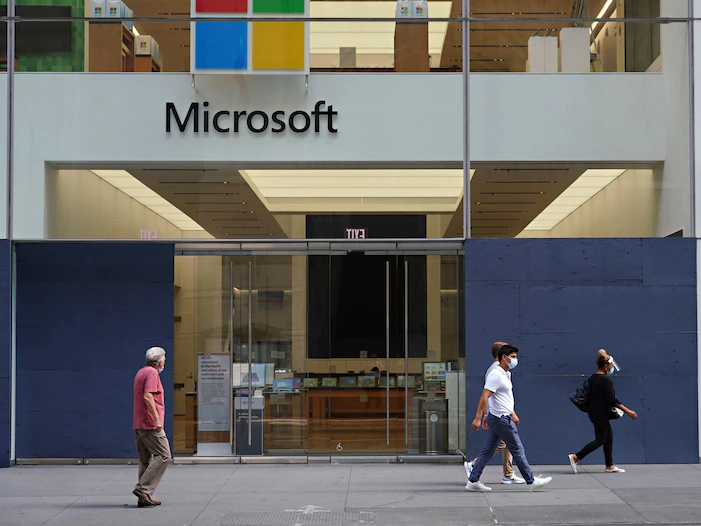

Microsoft delivers strong earnings.
Cindy Ord/Getty Images
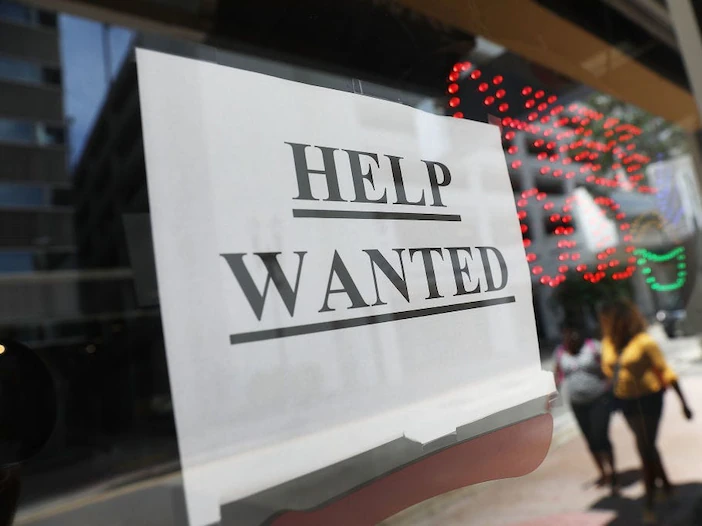
A “help wanted” sign on a window of a restaurant in Miami.
Joe Raedle/Getty Images
In this articleGOOGL SOPA Images | Contributor | Getty ImagesLONDON — Google said Tuesday that it will stop charging a fee for search engines to appear in a list of default search engines on Android that’s exclusive to European users.The so-called “choice screen” was introduced by Google in 2019 in response to a record $5 billion antitrust fine from the European Union targeting anti-competitive practices in its smartphone software.Search engines would have to take part in blind auctions in which they bid to appear in the choice screen — which is shown to users when setting up their device — in various EU countries.Now, Google has scrapped the auctions, in a key concession to the U.S. internet giant’s smaller competitors.Google said that after “further feedback” from the European Commission — the EU’s executive body — “we are now making some final changes to the Choice Screen including making participation free for eligible search providers.””We will also be increasing the number of search providers shown on the screen,” Oliver Bethell, director of competition legal at Google, said in a blog post. “These changes will come into effect from September this year on Android devices.”In 2018, the EU fined Google $5 billion for allegedly favoring its own search engine within Android. The company appealed the penalty and introduced its “choice screen” preference menu in an effort to address the EU’s concerns.But smaller rivals, including DuckDuckGo, Qwant and Ecosia, complained that this “pay-to-play” auction system favored cash-rich competitors, such as Microsoft’s Bing.Google said its choice screen will now instead show a continuous, scrollable list of up to 12 eligible search services in every European country, with the five most popular appearing at the top.”We’ve campaigned for fairness in the search engine market for several years, and with this, we have something that resembles a level playing field in the market,” Christian Kroll, Ecosia’s CEO, said in a statement Tuesday.”Search providers now have a chance to compete more fairly in the Android market, based on the appeal of their product, rather than being shut out by monopolistic behaviour,” Kroll added.
The World Bank is upgrading the outlook for global growth this year, predicting that COVID-19 vaccinations and massive government stimulus in rich countries will power the fastest worldwide expansion in nearly five decades.
In its latest Global Economic Prospects report, out Tuesday, the 189-country anti-poverty agency forecasts that the world economy will grow 5.6 percent this year, up from the 4.1 percent it forecast in January. The global economy last year shrank 3.5 percent as the coronavirus pandemic disrupted trade and forced businesses to close and people to stay home.
The projected expansion would make 2021 the fastest year of growth since 1973’s 6.6 percent.
But the 2021 rebound will be uneven, the bank predicts, led by rich countries such as the United States that could afford to spend vast amounts of taxpayer money to support their economies: 90 percent of advanced economies are expected to return to pre-pandemic levels next year — measured by income per person — versus just a third of developing countries.
Increased COVID vaccination has reinvigorated the world economy.Getty Images
The World Bank is calling for wider distribution of COVID vaccines to low-income countries, where inoculations have gone slowly.
The bank expects the US economy to expand 6.8 percent in 2021, up from the 3.5% it forecast in January; the world’s biggest economy shrank 3.5 percent last year as COVID-19 brought economic activity to a near standstill in the spring. But an aggressive vaccine rollout, along with low interest rates and massive government spending revived the economy.
China’s economy is is forecast to grow 8.5 percent in 2021.SOPA Images/LightRocket via Gett
China — the world’s No. 2 economy and the first to emerge from the coronavirus recession — is forecast to grow 8.5 percent in 2021 after expanding just 2.3 percent last year.
The 19 European countries that share the euro currency are collectively expected to 4.2 percent, reversing last year’s 6.6 percent drop. And Japan is forecast to post 2.9 percent growth this year after registering a 4.7 percent drop in economic output last year.
The bank notes downside risks to its forecast, including the possibility that the pandemic lingers, that inflation flares and forces central banks to raise interest rates and that countries struggle with high debt burdens.
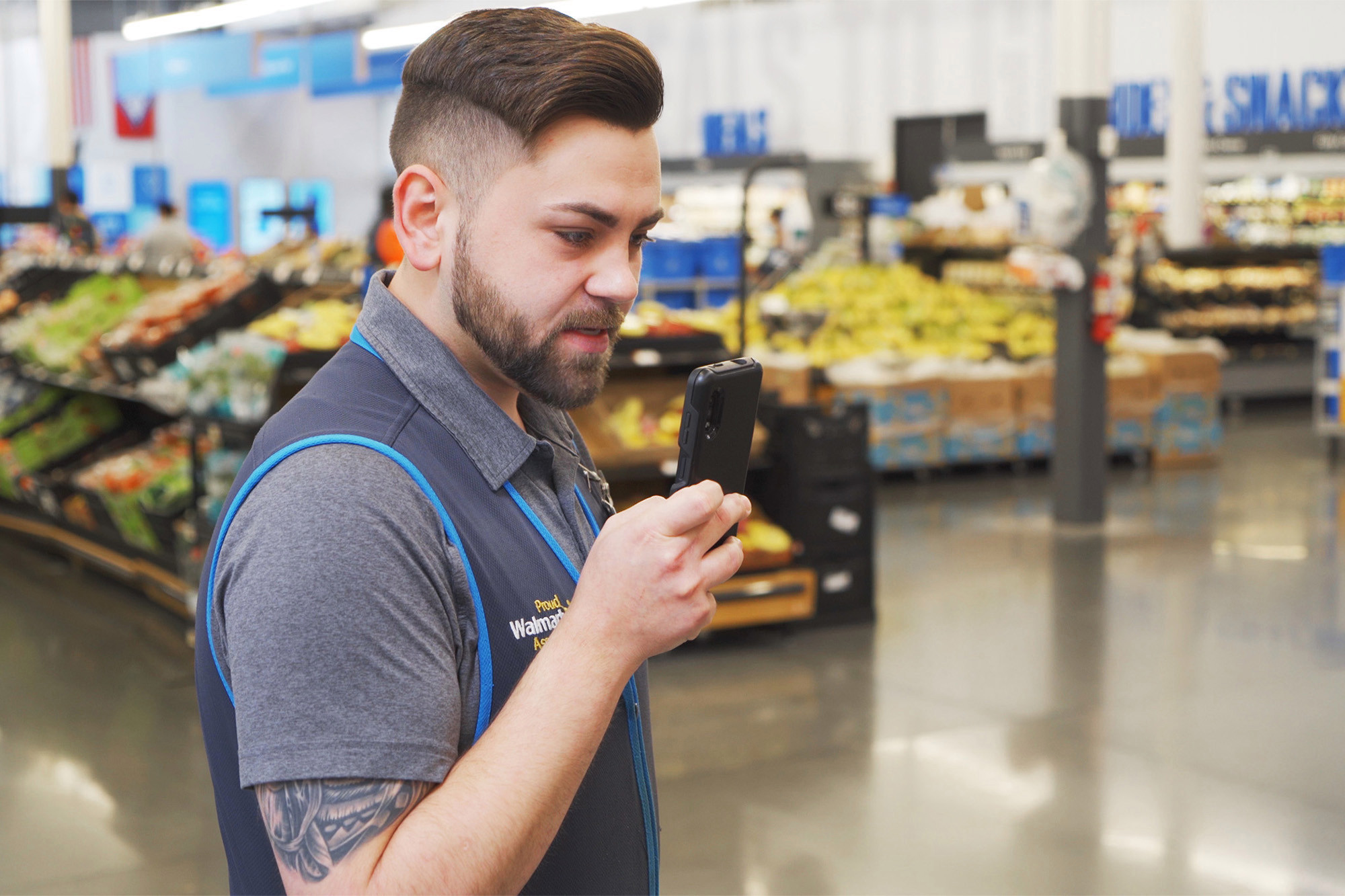
Digital privacy experts are raising red flags about Walmart’s plans to give 740,000 employees free smartphones that the company says will improve worker productivity without collecting personal data.
Walmart said Thursday that it planned to give nearly half its US employees free Samsung Galaxy phones by the end of the year. Employees will use the phones to access the “Me@Walmart” app, which will allow them to clock in, manage shifts and communicate with supervisors.
Employees will also be allowed to take the phones home for personal use.
But Darrell West, a senior fellow at the Center of Technology Innovation at the Brookings Institution, had some blunt advice for Walmart workers: “Turn down the phone.”
“Employees should realize when they’re using company provided phones, the company can engage in surveillance on what they do on that phone,” West told The Post. “That can include a wide range of personal, financial and social interactions. Basically everything you do on that phone can be subject to surveillance.”
According to privacy disclosures on the Apple App Store, the “Me@Walmart” app can access employee data including financial information, precise location data and health and fitness information.
Walmart promises that this information is only used for app functions. Financial information is used for paychecks, precise location data confirms when employees clock in to work and health and fitness is used for coronavirus assessments, according to Walmart spokesperson Camille Dunn. She said that use of any individual feature was optional.
Walmart promises that the information it collects is only used for app functions like scheduling shifts. Wamart
“Walmart will not have access to any personal data,” Dunn told The Post.
She added that Walmart will not see employees’ non-work-related emails, text messages, calls, voicemails, browser history, photos, videos or location.
But West argued that the lines between work and personal information are less clear than presented by Walmart. He questioned whether employees’ personal email use and web browsing while on the clock could be monitored, for example.
On a Reddit forum used by Walmart workers, some users complained about the plan.
“Walmart will not have any access to personal data… HAHAHAHAHA,” wrote one apparent employee.
Another said, “Nah, we good. Keep it.”
United for Respect, a labor advocacy group, painted the smartphone initiative as a distraction from low wages at Walmart.
“Associates don’t need free smartphones, they need a starting wage of $15 and a voice in health and safety on the job,” the group’s corporate accountability director Bianca Agustin told The Post.
Another apparent Walmart employee wrote on Reddit, “Keep it and give me my $15 already.”
Andrés Arrieta, director of consumer privacy engineering at the civil liberties-focused nonprofit the Electronic Frontier Foundation, said Walmart workers who choose to accept smartphones should turn them off when they leave work and keep a separate device for personal use.
“If you can afford having a different phone for your personal life, I would highly recommend to do that,” he said.
Andrés Arrieta of the Electronic Frontier Foundation said Walmart workers who choose to accept smartphones should turn them off when they leave work and keep a separate device for personal use.Wamart
Like West, Arrieta said the lines between personal and work data are often blurred.
“If the app needs your contacts because your co-worker needs you to call them, the app can’t necessarily tell which contacts in your list [are work-related] and which aren’t,” he said. “It starts getting really complicated.”
Nonetheless, Arrieta said he did not “necessarily assume this a nefarious app.” He said that if companies are going to require employees to use apps, providing work devices for free is better than requiring them to install the apps on their personal phones.
“We’ve seen in the past that employers will force employees to install these very intrusive applications in their personal phones,” he said. “I think it’s a good step that they’re saying, ‘We’re going to give you another phone for free.’”
In this articleAAPLBenchmark’s Bill Gurley said Tuesday that Apple set itself up for trouble years ago when it implemented its 30% take rate of in-app purchases, a figure that’s been under increased scrutiny.”I’d always rather see a company have a lower rake and have a very long sustainable future, and I felt the 30% number was so high and so egregious that you were going to set yourself up for the exact type difficulty you’re having right now,” Gurley, who led the firm’s investments in companies like GrubHub and Zillow, said in interview on CNBC’s TechCheck.Apple has for years taken 30% from purchases of software or digital goods from apps distributed through the App Store. But developers have alleged that Apple’s App Store platform is unfair to smaller companies, and last year Apple lowered the commission to 15% for apps with less than $1 million in annual net sales on its platform. Most recently, Epic Games sued Apple and argued in court that the company’s App Store is anti-competitive.Apple has denied the allegations and has said it “does not have a dominant market share in any category where we do business.” In response to the suit, Apple is arguing that it built the App Store and gets to set the rules, which are designed to ensure that apps are high-quality and secure.”I think it was a bad decision back then and hard to recover from. I think they’d probably be best off just picking something like 10 and taking it down for everybody,” Gurley said.Still, it’s an issue that could have been avoided, Gurley said.”If you had started with a lower rake and being kind of fair across the board, you don’t end up in this mess,” Gurley said.The tech investor has long said that Apple has taken too much, criticizing the company in a 2013 blog post called “A Rake Too Far: Optimal Platform Pricing Strategy.””Most venture capitalists encourage entrepreneurs to price-maximize, to extract as much rent as they possibly can from their ecosystem on each transaction. This is likely short-sighted. There is a big difference between what you can extract versus what you should extract. Water runs downhill,” Gurley wrote in 2013.Subscribe to CNBC on YouTube.
Gainers
Clover Health Investments, Corp. (NASDAQ:CLOV) shares jumped 72.4% to $20.55 amid increased retail investor interest in the stock.
NextDecade Corporation (NASDAQ:NEXT) shares jumped 51.2% to $5.26 after Evercore ISI upgraded the stock from In-Line to Outperform and raised its price target from $3 to $9.
Antelope Enterprise Holdings Limited (NASDAQ:AEHL) shares gained 42% to $4.0899.
CarLotz, Inc. (NASDAQ:LOTZ) jumped 30.6% to $7.20.
LightPath Technologies, Inc. (NASDAQ:LPTH) rose 29% to $3.4199.
Velodyne Lidar, Inc. (NASDAQ:VLDR) gained 19.7% to $12.10 after it was announced the company will join the Russell 2000.
Workhorse Group Inc. (NASDAQ:WKHS) rose 19.7% to $16.69 amid continued interest in EV names from retail investors on Reddit.
GameStop Corp. (NYSE:GME) jumped 18.2% to $330.88 amid continued volatility and interest in the stock from retail investors.
Cyclerion Therapeutics, Inc. (NASDAQ:CYCN) gained 16.2% to $3.66 following disclosures of a series of insider buying. CEO Peter Hecht, Terrance McGuire, a director of the board, and Slate Path Capital, all bought shares of the company.
Aptinyx Inc. (NASDAQ:APTX) rose 16.2% to $3.12.
Vera Therapeutics, Inc. (NASDAQ:VERA) surged 15.8% to $15.59. Evercore ISI Group and Cowen & Co. initiated coverage on Vera Therapeutics with an Outperform rating.
Canoo Inc. (NASDAQ:GOEV) gained 15.7% to $10.30.
Lannett Company, Inc. (NYSE:LCI) rose 15.4% to $5.59. Lannett recently said the U.S. Food and Drug Administration accepted the Abbreviated New Drug Application for Fluticasone Propionate and Salmeterol inhalation powder.
Bed Bath & Beyond Inc. (NASDAQ:BBBY) surged 15.2% to $39.15 amid increased retail investor interest in the stock.
PDS Biotechnology Corporation (NASDAQ:PDSB) gained 14.8% to $10.79. PDS Biotechnology announced interim data from the Phase 2 trial led by the National Cancer Institute (NCI) evaluating PDS0101 (Versamune-HPV16) in combination with two investigational immune-modulating agents – bintrafusp alfa and NHS-IL12 for HPV16 positive cancers.
The Wendy’s Company (NASDAQ:WEN) rose 14% to $26.14 amid increased retail investor interest in the stock.
GBS Inc. (NASDAQ:GBS) surged 14% to $3.30.
Arcimoto, Inc. (NASDAQ:FUV) gained 13.6% to $15.10 after it was announced the company will be added to the Russell 2000 and Russell 3000 indexes.
Carver Bancorp, Inc (NASDAQ:CARV) climbed 13.6% to $16.25 after jumping 22% on Monday.
XL Fleet Corp. (NYSE:XL) gained 13.5% to $9.40.
Cyren Ltd. (NASDAQ:CYRN) rose 13.4% to $0.7720 after dropping over 4% on Monday. The company released Q1 results last month.
Eastman Kodak Company (NYSE:KODK) gained 13.1% to $9.81.
Stitch Fix, Inc. (NASDAQ:SFIX) rose 12% to $64.84 after the company reported better-than-expected Q3 results and issued strong sales guidance.
MoSys, Inc. (NASDAQ:MOSY) shares rose 12% to $7.85. MoSys recentlu inked an agreement to sell 1.8 million shares $7.15 per share to raise $13 million in gross proceeds in an institutional offering.
Revlon, Inc. (NYSE:REV) gained 11.7% to $17.38.
Dada Nexus Limited (NASDAQ:DADA) rose 11.5% to $28.70 after the company reported Q1 results and announced a $150 million buyback plan.
Safe-T Group Ltd (NASDAQ:SFET) shares rose 11.2% to $1.59 after gaining around 4% on Monday.
Chico’s FAS, Inc. (NYSE:CHS) gained 7.1% to $6.16 following strong Q1 results.
Aytu Biopharma, Inc. (NASDAQ:AYTU) gained 6.3% to $5.71.
1847 Goedeker Inc. (NYSE:GOED) rose 6.2% to $3.34 after surging 18% on Monday.
AMC Entertainment Holdings, Inc. (NYSE:AMC) rose 5.6% to $58.06 amid interest in the name from retail traders on Reddit. The company’s stock also surged 15% on Monday.
Marvell Technology, Inc. (NASDAQ:MRVL) rose 5.1% to $50.74 after the company reported better-than-expected Q1 results.
Check out these big penny stock gainers and losers
Losers
Ra Medical Systems, Inc. (NYSE:RMED) fell 18% to $7.50. Ra Medical Systems shares jumped 87% on Monday after retail traders pushed the stock higher.
HOOKIPA Pharma Inc. (NASDAQ:HOOK) shares dipped 16.3% to $11.09. HOOKIPA Pharma reported positive Phase 1 data from its ongoing Phase 1/2 study of HB-200 for the treatment of advanced human papillomavirus 16-positive cancers.
AC Immune SA (NASDAQ:ACIU) shares declined 14.1% to $6.89. AC Immune gained around 28% on Monday following a report the FDA approved Biogen’s Alzheimer’s drug candidate. AC Immune is trialing an Alzheimer’s vaccine.
Jiuzi Holdings, Inc. (NASDAQ:JZXN) dropped 13.4% to $13.16.
CureVac N.V. (NASDAQ:CVAC) fell 12.7% to $109.17. CureVac recently said its first-generation COVID-19 vaccine candidate had passed its first interim analysis, but it was not yet ready to share efficacy data.
Aclaris Therapeutics, Inc. (NASDAQ:ACRS) dipped 11% to $19.91. Aclaris Therapeutics announced preliminary topline results from its Phase 2a trial evaluating ATI-1777 for moderate to severe atopic dermatitis (AD).
Summit Wireless Technologies, Inc. (NASDAQ:WISA) dropped 10.1% to $4.5013. Summit Wireless Technologies is set to join Russell Microcap Index.
DLocal Limited (NASDAQ:DLO) fell 9.5% to $30.90. DLocal recently raised around $92.6 million from the sale of 4.4 million shares in its IPO.
Riot Blockchain, Inc. (NASDAQ:RIOT) shares fell 8.4% to $26.40 amid a decrease in the price of bitcoin.
GTT Communications, Inc. (NYSE:GTT) dipped 8.4% to $2.73.
Liminal BioSciences Inc. (NASDAQ:LMNL) shares fell 8.2% to $4.7450 after surging 28% on Monday. Liminal BioSciences recently reported the FDA approval for its Biologics License Application for Ryplazim.
Image Sensing Systems, Inc. (NASDAQ:ISNS) dropped 8.2% to $7.59.
Histogen Inc. (NASDAQ:HSTO) fell 7.6% to $0.9975 after the company reported a $6.5 million registered direct offering of 5.977 million shares priced at-the-market.
Coupa Software Incorporated (NASDAQ:COUP) shares fell 7.1% to $219.94 after the company reported Q1 earnings results and issued guidance.
Windtree Therapeutics, Inc. (NASDAQ:WINT) fell 6.5% to $2.61.
Leslie’s Inc (NASDAQ:LESL) fell 5.7% to $29.48 after the company announced a secondary offering of 24.5 million shares.
Keurig Dr Pepper Inc. (NASDAQ:KDP) fell 5% to $35.00 after the company announced a secondary offering of 28 million shares of common stock on behalf of Mondelēz International.
Jamf Holding Corp. (NASDAQ:JAMF) dropped 4.4% to $34.78 after the company announced the launch of a proposed follow-on offering of 8.5 million shares of common stock by selling shareholders.

Bidding for a seat on Blue Origin’s first passenger flight to space next month hit $3.5 million on Tuesday, one day after founder Jeff Bezos announced he and his brother will join the auction winner on the flight.
The flight to the edge of space is set for July 20, and it’s lured about 6,000 bids from more than 140 countries, according to Blue Origin.
The space tourism company kicked off the auction for its first passenger seat last month. Bidding will end with a live auction on Saturday.
The highest bid stood at $2.8 million before Bezos, the richest man in the world with a net worth of about $187 billion, announced he would join the flight.
The winning bid amount will be donated to Blue Origin’s foundation, Club for the Future, the company said. The foundation tries to encourage kids to pursue careers in STEM, specifically the future of life in space.
New Shepard, Blue Origin’s rocket ship, has flown more than a dozen successful uncrewed test flights.
Jeff Bezos is set to be on Blue Origin’s first flight.EPA
The system is designed to carry as many as six people at a time on a sub-orbital ride to space. The capsule has huge windows that give passengers a gaping view of Earth. Passengers will spend a few minutes in zero gravity before returning to Earth.
The Amazon founder said Monday morning in a surprise announcement that he will join the auction winner on the July 20 flight, which is about two weeks after he’s set to resign as CEO of Amazon.
“Ever since I was five years old, I’ve dreamed of traveling to space,” the Amazon founder said Monday on Instagram. “On July 20th, I will take that journey with my brother. The greatest adventure, with my best friend.”
Blue Origin founder Jeff Bezos checking out Crew Capsule 2.0 after touchdown in West Texas.EPA
The trip would make Bezos the first of the billionaire space tycoons to travel to space through their own companies. Elon Musk, founder and CEO of SpaceX, and Richard Branson, founder of Virgin Galactic, have yet to ride with their companies to space.
Musk has spoken before about traveling to space with his company but has not yet given a firm timeline.
Branson, whose Virgin Galactic wants to compete directly with Blue Origin in the space tourism sector, has spoken often about his plans to be among the first of his company’s passengers to space. But delays have seen Virgin Galactic’s earliest expected passenger flights pushed to later this year.

The first accusation posted by the Taking Back Our Power movement was deleted after the accuser found out about it.
@takingourpowerbackmvmt/Instagram; Samantha Lee/Insider
The logo of US cloud computing services provider Fastly is seen on a smartphone screen.Pavlo Gonchar | SOPA Images | LightRocket via Getty ImagesA slew of major websites including Amazon, Reddit and news publishers like The New York Times were affected by a massive internet outage Tuesday.The outages started at around 6 a.m. ET, with users reporting they were receiving error messages including “Error 503 Service Unavailable” and “connection failure” when attempting to visit various websites.The sites — which also included the U.K. government website — are now mostly back online.Early reports have pointed the blame at Fastly, an American cloud computing services firm. Fastly’s status page said Tuesday morning that it was investigating a technical issue. It now says the issue has been resolved.Shares of Fastly were down in U.S. premarket trading, but rose as much as 6% as markets opened for trading Tuesday.What is Fastly?Fastly operates what’s known as a content delivery network, or CDN.CDNs are networks of servers and data centers distributed around the world that allow for the transfer of assets needed for loading internet content.The company describes its technology as an “edge cloud” platform, which essentially means it places its infrastructure closer to the location where it’s needed to offer users faster response times.Fastly’s tech is designed to counter common causes of online outages, such as distributed denial-of-service attacks which overwhelm a website with a sudden wave of traffic.”The intention of CDNs is to route (or distribute) internet traffic and services through ‘nodes’ in order to balance the load of traffic, prevent bottlenecks and result in high availability and faster content delivery,” said Mark Henry, director of data protection and cyber security at global law firm DWF.”Requests for content are directed by an algorithm, for instance the algorithm might direct the traffic so that it routes through the most available or highest performing node, or so that the traffic takes the fastest network route to the requestor.”Henry said that some of the organizations affected by the outage were reverting to non-CDN distribution schemes to get their sites back up and running, but that this could result in a “slower than normal” experience for users.Why did the outage happen?The outage led to speculation online that Fastly may have fallen victim to a cyberattack. But Joshua Bixby, Fastly’s CEO, told the Wall Street Journal Tuesday that the outage wasn’t attack-related.The company said in a tweet that it had “identified a service configuration that triggered disruptions” across its clusters of machines globally.”Our global network is coming back online,” the company added.Tuesday’s downtime was another reminder of the increased concentration of crucial internet infrastructure among a relatively small number of companies.”This is what happens when half of the internet relies on Goliaths like Amazon, Google and Fastly for all of its servers and web services,” said Gaz Jones, technical director of digital agency Think3. “The entire internet has become dangerously geared on just a few players.”When Amazon’s cloud computing unit Amazon Web Services encountered an issue in 2017, some of the world’s biggest websites went offline for several hours across the entire U.S. East Coast.Meanwhile, in 2019 U.S. web security firm Cloudflare experienced a problem that lasted around an hour and affected websites including chat service Discord and the dating site OKCupid.
