TokyoTokyo Mon - Fri 10:00-18:00 +81 (366) 701-751
info@mountequitygroup.com

Blog

SEC said Elon Musk's Tesla tweets violated settlement agreement, WSJ reports

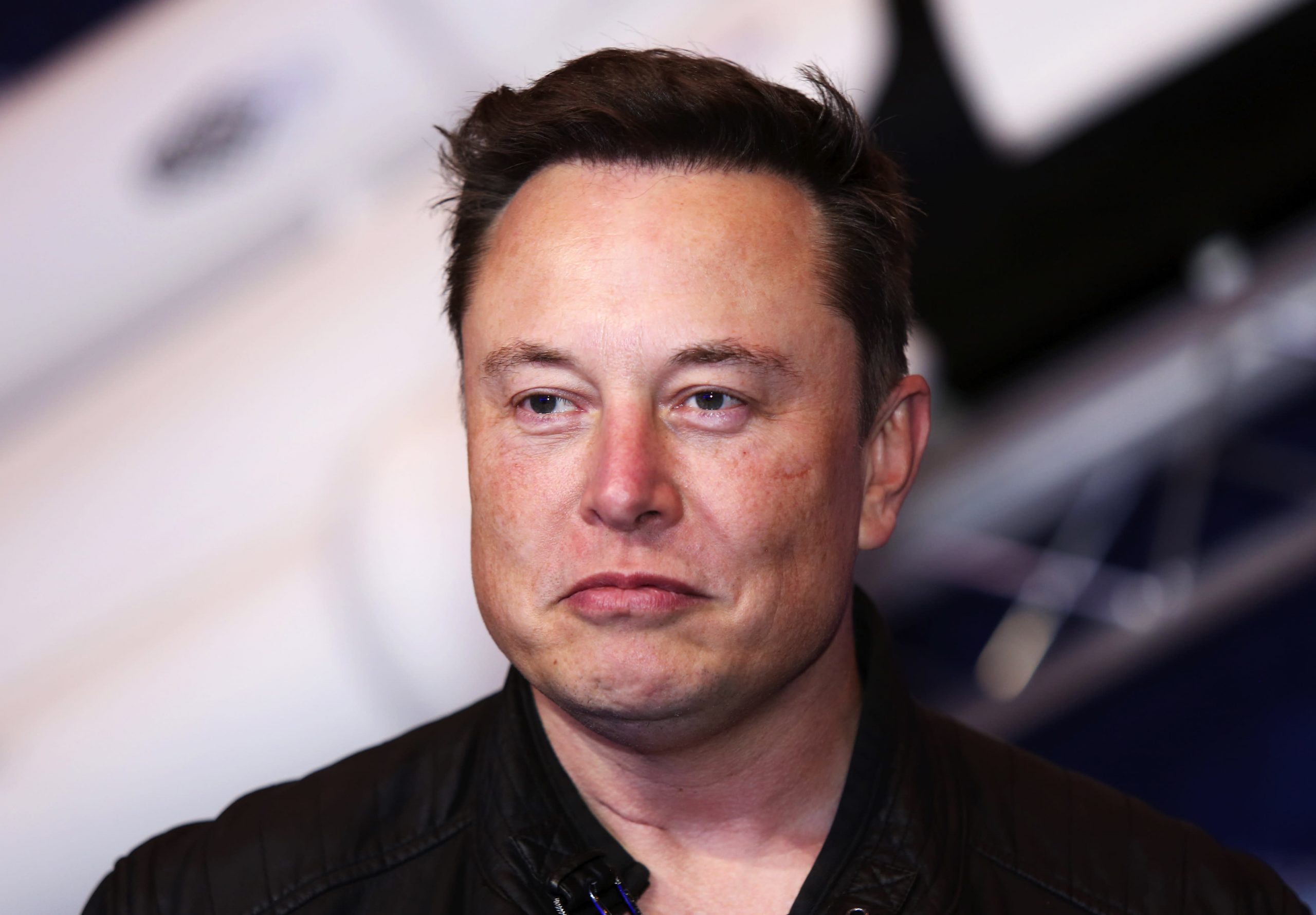
Elon Musk, founder of SpaceX and chief executive officer of Tesla Inc., arrives at the Axel Springer Award ceremony in Berlin, Germany, on Tuesday, Dec. 1, 2020.Liesa Johannssen-Koppitz | Bloomberg | Getty ImagesLast spring, the U.S. Securities and Exchange Commission admonished Tesla and CEO Elon Musk for allegedly violating terms of a 2019 revised settlement agreement, according to correspondence first obtained and reported on by the Wall Street Journal.SEC officials pointed to a tweet on May 1, 2020, in which Musk said that Tesla’s stock price was “too high,” prompting a more than $13 billion decline in the company’s market value, according to the report. The SEC also pointed to Musk tweets from 2019, where he discussed solar roof production numbers without obtaining pre-approvals, the Journal said.While the securities regulators monitored Musk’s use of Twitter amid the pandemic, and confronted him and Tesla via correspondence, they did not file a motion to compel enforcement of the settlement agreement.Musk is required to have Tesla-related tweets that contain material company information approved by an attorney before posting them. A so-called “twitter sitter” was part of a revised settlement agreement struck between the SEC, Musk and Tesla. The settlement terms also required Musk to give up his role as chairman of the Tesla board, among other things.The securities regulators originally filed two separate complaints — one against Musk personally, and a separate one against Tesla — accusing them of committing securities fraud in 2018, after the CEO tweeted that he would take the company private at $420 per share, and had “funding secured” for the deal.The infamous tweet on Aug. 7, 2018, sent Tesla stock soaring, and sparked a period of volatility for the company and Musk. In the 16 months that followed, Tesla’s stock hit a three-year low around $177 per share before rocketing back up and breaching $420 in December 2019.Tesla shares closed Tuesday at $623.90 and were declining slightly after hours.Shareholder lawsuits against Tesla and Musk, including the case Gharrity v Musk et al, have also pointed to the CEO’s Tweets, and said they caused shareholders and the company financial harm.WATCH: Don’t count out Tesla’s dominance in the EV space, traders suggest


AMC stock surges as hedge fund buys — then sells — $230M stake

Suspense, mystery, intrigue — the latest AMC drama has a plot twist not even the movie theater company saw coming.

AMC Entertainment announced Tuesday it will raise $230.5 million by selling 8.5 million shares to hedge fund Mudrick Capital, saying it plans to use the cash to “go on the offense” by pursuing opportunistic acquisitions across the virus-ravaged movie-theater sector.

But just hours later, it was reported that Mudrick Capital had sold all of its shares, saying the stock was “overvalued,” and pocketing a tidy profit in the process. The second headline didn’t tank AMC’s shares, however. They closed up 23 percent, higher than the 15-percent boost they got after the initial news.

Mudrick valued AMC stock at $27.12 a share, giving the company a valuation upwards of $13 billion — a remarkable number for a stock that had dropped to $4 six months ago as its business was on the brink of bankruptcy amid nationwide COVID-19 lockdowns.

AMC is reportedly looking to make acquisitions as movie lovers return to theaters.AFP via Getty Images

“I’ve never seen anything like this,” LightShed Partners analyst Rich Greenfield told The Post. “Good news is positive for the stock; bad news is even better.” Greenfield has given AMC shares a one penny price target, predicting the company will never generate cash again.

A person close to Mudrick said the hedge fund never intended to hold the shares long-term but had not informed AMC they would sell their stake so quickly. Mudrick Capital, which specializes in distressed debt, has almost $200 million in outstanding loans to AMC and a vested interest in the movie theater exhibitor paying down doubt.  

One person close to Mudrick says, “Whether Mudrick holds the shares or sell is irrelevant — AMC raised $250 million dollars today, which will help as they pay down almost $6 billion in debt.”

The source added that investors at the hedge fund want the best for the company but are cynical the Reddit rally can be sustained. Most of Mudrick’s investors come from a different world than Redditors — “one that values business based on fundamentals,” a source adds.

AMC’s shares have gotten a boost from the meme stock phenomenon.Evan Agostini/Invision/AP

While the company has struggled through the pandemic, its shares have gotten a massive boost from day traders who have organized on Reddit to push so-called meme stocks including AMC, Gamestop and BlackBerry higher. AMC stock is now up more than 1,000 percent year to date.

And even as the Reddit army has buoyed the price over the last few months, sources note that day traders aren’t as reliable as institutional investors and could decide to sell as quickly as they decided to buy into the company.

In a Tuesday securities filing, AMC admitted that its current market capitalization “reflects valuations that diverge significantly from those seen prior” and that “purchasers of our Class A common stock could incur substantial losses if there are declines … driven by a return to earlier valuations.”

AMC declined comment. Mudrick declined comment.

LinkedIn spinout Confluent files for IPO, with annualized revenue of over $300 million

Seven years after spinning out of LinkedIn, cloud software developer Confluent is going public.Confluent, which sells software that developers can use to quickly move data for use inside applications, filed its IPO prospectus on Tuesday, seeking to become the latest enterprise business to go from open-source project to multibillion-dollar public company.Revenue in the first quarter jumped 51% from a year earlier to $77 million, with most of its sales coming through subscriptions. The company’s let loss widened to $44.5 million from $33.6 million, as sales and marketing costs jumped.At the foundation of Confluent’s software is Apache Kafka, which got its start inside of LinkedIn. The founders of Confluent — Jay Kreps, Jun Rao and Neha Narkhede — created Kafka in 2011 and then formed Confluent in 2014 with an investment of about $500,000 from LinkedIn. The company was most recently valued at $4.5 billion in a round last year led by Coatue Management and Altimeter Capital.”We rolled it out at scale for early use cases at LinkedIn, handling data streams with billions of messages,” Kreps, Confluent’s CEO, wrote in a letter in the prospectus. “But even then, our ambition was bigger. Kafka was built to be open source, and we wanted it to do much more than serve one use case in one company.” Before Confluent, Cloudera and Hortonworks gained momentum by commercializing Apache Hadoop, which originated inside internet companies such as Facebook, Google and Yahoo. Hortonworks spun out of Yahoo and merged with Cloudera in 2019.As independent companies and then a combined entity, Cloudera and Hortonworks struggled to find a workable business model. Earlier on Tuesday, Cloudera agreed to sell to private equity firms in a $5.3 billion deal.In the realm of on-premises software Confluent said that Cloudera poses some competition, along with IBM and Oracle. However, its primary business is across the big cloud infrastructure providers Amazon, Microsoft and Google, which all also have competitive offerings of some sort.Confluent had $167 million in non-cancelable purchase obligations, primarily related to cloud agreements, at the end of 2020. The company received 18% of its revenue from its cloud service in the first quarter, up from 12% in the year-ago quarter.Confluent, which has close to 1,500 employees, said in its prospectus that over 70% of Fortune 500 companies are estimated to have used Kafka. Its customers include Citigroup, Humana, Intel and Walmart, according to Confluent’s website.Confluent said it offers offers a traditional license to customers, and also has a community license to its software available that provides access to its source code. The company said it “explicitly restricts others, including cloud vendors, from taking this source code and using it to offer a competing software-as-a-service, or SaaS, offering.” Amazon introduced a service based on Kafka in 2018.Morgan Stanley, JPMorgan Chase and Goldman Sachs are the lead underwriters of the IPO. The stock will trade on the Nasdaq under the symbol “CFLT.”WATCH: Making big data personal

New Uber, Lyft competitor in NYC mistakenly failed to charge sales tax

A new ride-sharing app that advertised lower prices than Uber and Lyft launched in New York City over the weekend — but was forced to raise fares after admitting Tuesday that it was not charging some riders sales tax.

Co-op Ride, which has billed itself as an ethical alternative to Uber and Lyft, said that offering lower fares to some users by not charging sales tax was an honest mistake. The snafu comes days after the group received a favorable write-up in the New York Times on Friday. 

“We are looking into this and have contacted the tech provider,” co-founder Ken Lewis told the Post, adding that the co-op would pay any missed sales tax out-of-pocket rather than hitting riders with surprise charges.  “We will investigate.” 

On Tuesday afternoon, Co-op Ride offered a Post reporter using an iPhone a $29.14 ride from the Metropolitan Museum of Art to City Hall. The fare included a $0.77 black car fund charge and a $2.75 congestion fee — but not the required 8.875-percent local and state sales tax. With the taxes included, the ride would have come out to about $31.72. 

Co-op Ride says it will allow drivers to work for it as well as Uber and Lyft.Education Images/Universal Image

Nevertheless, Uber and Lyft asked $42.78 and $40.97 respectively, including tax, for the same ride — meaning that Co-op Ride still would have been the cheaper option.

The Co-op Ride app was created by New Jersey-based software firm Limosys, although Lewis told the Post that the co-op is also developing its own software with volunteers from Facebook, Google and other technology companies. 

The app is run by a group called the Drivers Cooperative that was founded by Lewis, who is a a former black-car driver, as well as former Uber East Africa operations manager Alissa Orlando and self-proclaimed “social(ist) entrepreneur” Erik Forman. 

The group says it takes a smaller chunk of fares than Uber or Lyft, resulting in higher pay for drivers and lower fares for riders. And while Co-op ride wants to take market share away from Uber and Lyft, its drivers are allowed to drive for any ride-sharing service. 

Despite the tax issue, Co-op Ride says it can offer lower prices than Uber or Lyft.Getty Images

Lewis said that he was inspired to create the ride-share service, which currently has about 2,500 drivers, after thousands of Uber drivers were left without work during the pandemic and had difficulty collecting unemployment benefits. 

“Uber and Lyft and the ride-share space has been really hard on drivers,” said Lewis. “Our model is one that will be driver-centered and we expect that to bring benefits.”

Co-op Ride did not charge sales tax in several other routes tested by the Post. 

At around 3:30 p.m. on Tuesday, Co-op Ride offered a $51.15 ride from Times Square to JFK Airport, which would have come out to $55.69 with sales tax included — far less than the $96.83 and $124.99 requested by Uber and Lyft respectively. 

Co-op Ride’s launch comes as wages for Uber drivers have surged. Uber spokesman Harry Hartfield recently told the Post that the median New York Uber driver is currently making $38 per hour as a shortage of drivers has driven up wages.

Hartfield declined to comment about Co-op Ride. Lyft did not immediately reply to a request for comment.

Amazon backs federal bill to legalize marijuana and adjusts its drug testing policy for some workers

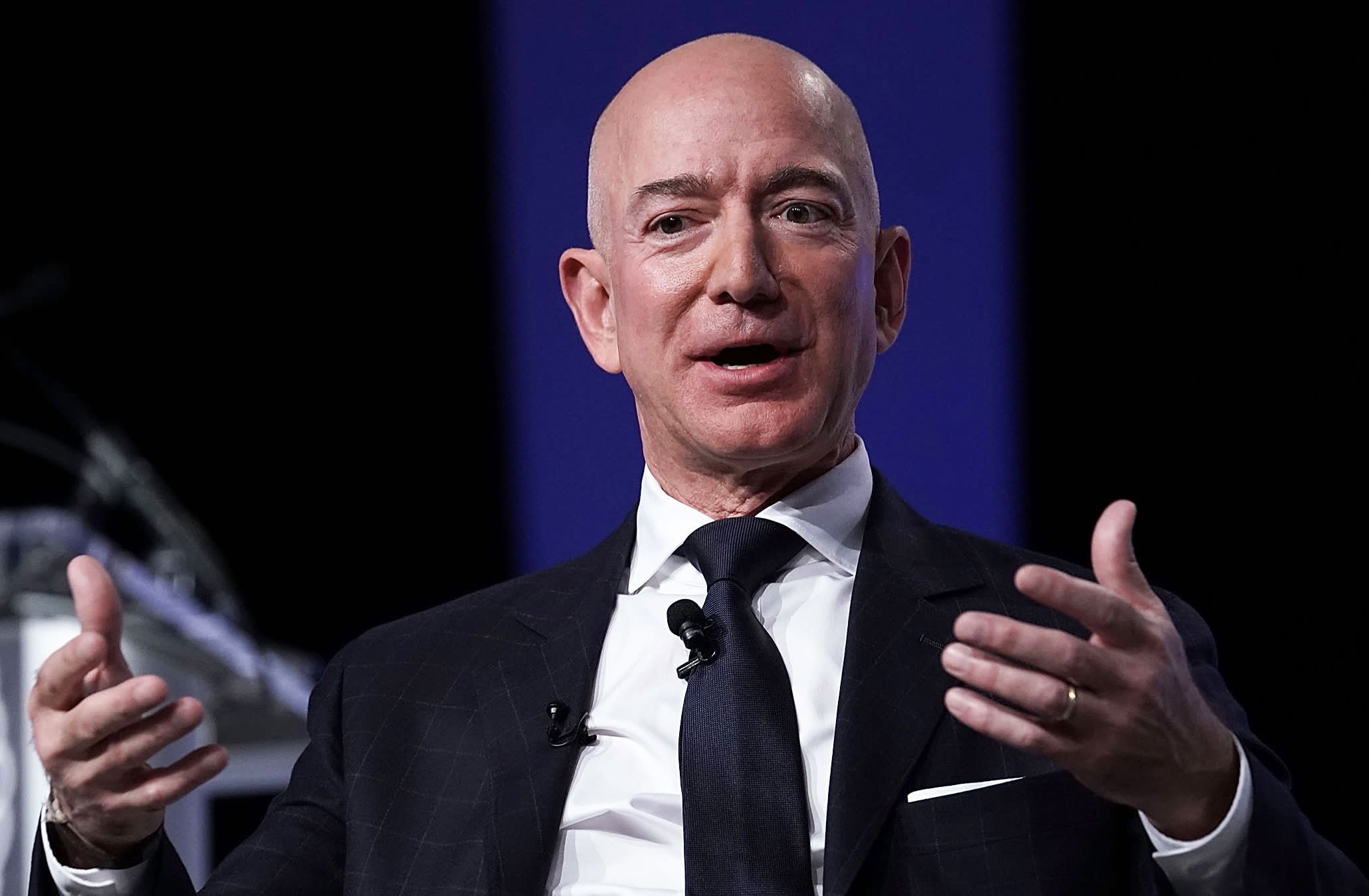
Amazon CEO Jeff BezosAlex Wong | Getty ImagesAmazon is throwing its weight behind federal legislation to legalize marijuana, while pledging to no longer screen some of its workers for the drug.In a blog post Tuesday, Amazon’s consumer boss Dave Clark said the company supports the Marijuana Opportunity Reinvestment and Expungement (MORE) Act, reintroduced in the House late last month. The measure would decriminalize cannabis at the federal level, expunge criminal records and invest in impacted communities.”We hope that other employers will join us, and that policymakers will act swiftly to pass this law,” Clark wrote.Amazon also said it would adjust its corporate drug testing policy for some of its workers. The company will no longer include marijuana in its drug screening program for any positions not regulated by the Department of Transportation.”In the past, like many employers, we’ve disqualified people from working at Amazon if they tested positive for marijuana use,” Clark said. “However, given where state laws are moving across the U.S., we’ve changed course.”WATCH: A closer look at Amazon’s warehouse injuries

Coinbase Pro opens up to dogecoin after cryptocurrency's 6,000% gain this year

Monitors display Coinbase signage during the company’s initial public offering (IPO) at the Nasdaq MarketSite in New York, on Wednesday, April 14, 2021.Michael Nagle | Bloomberg | Getty ImagesCoinbase is finally getting into dogecoin.Starting Tuesday, the crypto exchange is offering its Pro users the option to trade dogecoin, a cryptocurrency that was started as a joke and has taken off this year, helped by the frequent tweeting of Tesla CEO Elon Musk.Dogecoin is currently trading at 32 cents, up almost 6,000% for the year. However, it’s dropped by more than 50% since reaching a high in May.Coinbase is one of the largest crypto exchanges on the planet, and its Pro service is designed for professional traders. Dogecoin is also available for purchase on Robinhood’s app and through Gemini.Coinbase said in a blog post that it will “immediately” begin accepting inbound transfers to Coinbase Pro. If there is enough liquidity, trading of dogecoin will begin on or after 9 a.m. Pacific Time on Thursday, in supported locations. However, trading will be staggered.The company says it plans to launch in three phases: post-only, limit-only and full trading.”If at any point one of the new order books does not meet our assessment for a healthy and orderly market, we may keep the book in one state for a longer period of time or suspend trading,” the company wrote, citing its trading rules,Dogecoin is not yet available on Coinbase’s primary website or its consumer mobile apps. The company said that there will be a “separate announcement if and when this support is added.” For now, that means that retail investors will have to look elsewhere. Coinbase, which went public in April, makes most of its money from the trading and storage of bitcoin and ethereum, the largest cryptocurrencies.CEO Brian Armstrong has been a public advocate of the meme-inspired dogecoin. In the company’s May 13 earnings call, Armstrong said that “asset addition is something near and dear” to his heart.He referenced dogecoin as one of the cryptocurrencies that’s getting a lot of attention and shared the company’s plan to list the token in six to eight weeks.

Amazon workers injured on the job far more often than competitors

Amazon warehouse workers and delivery drivers are injured far more often on the job than employees of competitors like Walmart and UPS, according to a new study.

In 2020, 5.9 out of every 100 Amazon warehouse workers were victims of “serious injuries” that required them to either miss work or be placed on light duty. By comparison, that figure was 2.6 for Amazon competitor Walmart and 4.0 for warehouse workers overall, according to the report by the Strategic Organizing Center.

In total, workers at the Jeff Bezos-run company logged more than 27,000 injuries last year, according to the report, which used OSHA data.

“Amazon’s obsession with speed has come at a huge cost to its workers,” wrote the Strategic Organizing Center, which is a coalition of large labor unions including the Service Employees International Union and the International Brotherhood of Teamsters. “It’s time to hold Amazon accountable for the dangerous working conditions it has created and continues to ignore.”

Amazon workers have spoken up about workplace injury rates for years. In 2019, over a hundred Staten Island Amazon warehouse workers protested the company’s workplace conditions, accusing Amazon of treating workplace safety as a “secondary concern.” Injury rates were also a key issue for organizers of the failed 2021 union drive at an Amazon warehouse in Bessemer, Alabama.

And it’s not just Amazon’s warehouse workers who are injured abnormally frequently. Last year, 9.7 out of every 100 “last mile” delivery drivers for Amazon were seriously injured on the job, compared to 6.5 out of 100 for similar workers at logistics competitor UPS. 

Under tight deadlines and quotas, some Amazon delivery drivers have taken to urinating in bottles inside their vehicles. 

Workers at the Jeff Bezos-run company logged more than 27,000 injuries last year.REUTERS

Amazon spokesperson Kelly Nantel did not dispute the report’s conclusions but said that the company was taking steps to reduce worker injuries. 

“While any incident is one too many, we are continuously learning and seeing improvements through ergonomics programs, guided exercises at employees’ workstations, mechanical assistance equipment, workstation setup and design, and forklift telematics and guardrails,” she told the Post. 

The report comes after Amazon reported a record $8.1 billion profit during the first three months of 2021, buoyed by online shopping during the pandemic. 

Also on Tuesday, the Jeff Bezos-owned Washington Post published a separate analysis of Amazon OSHA reports, also finding a rate of 5.9 serious injuries per 100 warehouse workers. 

The report comes after Amazon reported a record $8.1 billion profit during the first three months of 2021. AFP via Getty Images

Zoom reports blowout earnings but warns of a coming slowdown

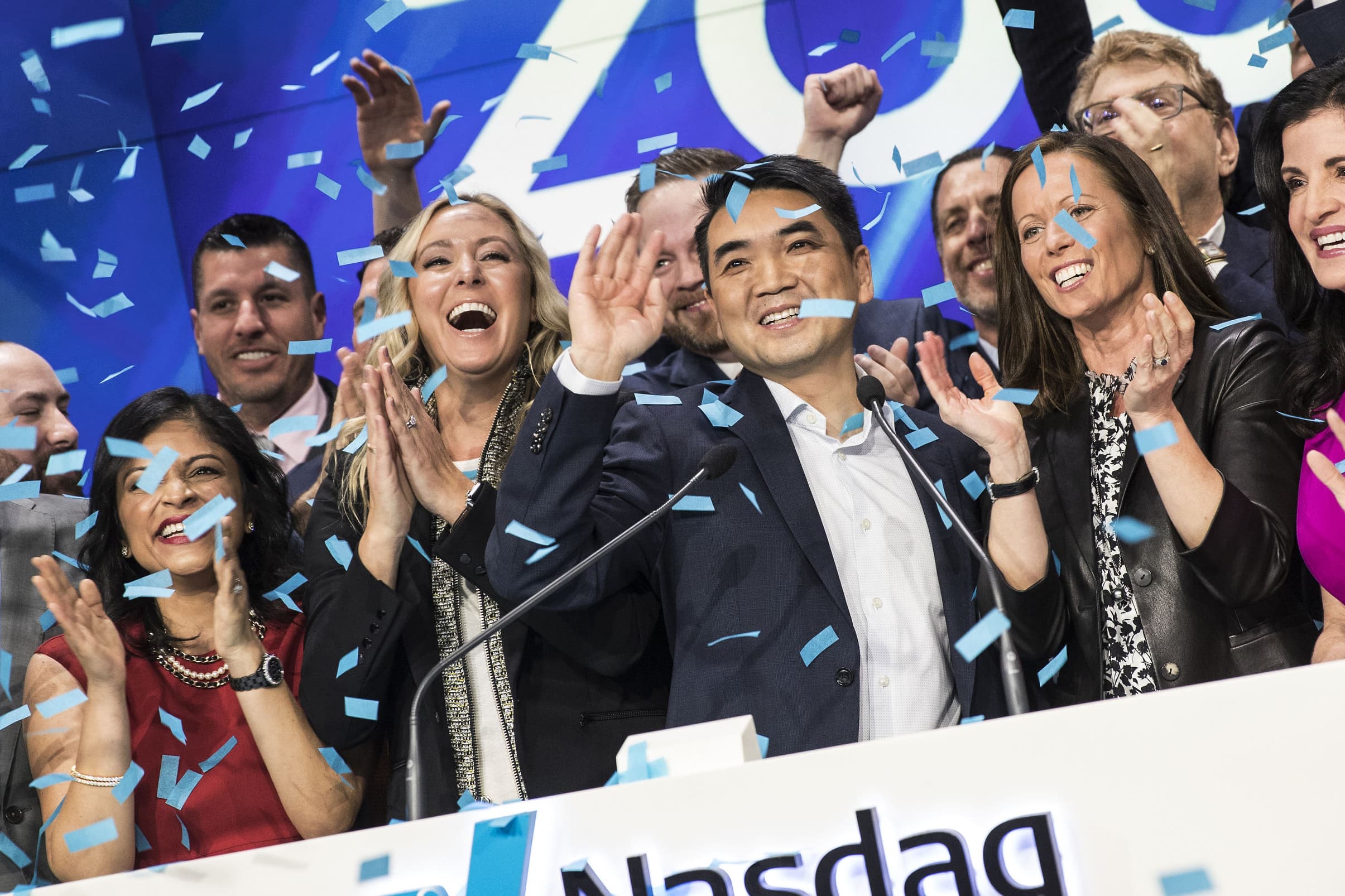
In this articleZMZoom Video Communications Inc. founder and CEO Eric Yuan at the company’s IPO at Nasdaq MarketSite in New York, April 18, 2019.Victor J. Blue | Bloomberg | Getty ImagesZoom reported better-than-expected first-quarter results Tuesday, with sales growth of 191%. The shares rose 2% in extended trading after initially falling as much as 5% on concerns of a looming slowdown.Here’s how the company did:Earnings: $1.32 per share, adjusted, vs. 99 cents per share as expected by analysts, according to Refinitiv.Revenue: $956.2 million, vs. $906.0 million as expected by analysts, according to Refinitiv.Revenue in the quarter, which ended on April 30, jumped from $328.2 million a year earlier, according to a statement. In the previous quarter revenue rose 369% as the company lapped the onset of the coronavirus pandemic in the U.S., which brought in millions of new users.Zoom said it expects $1.14 to $1.15 in adjusted earnings per share on $985 million to $990 million in revenue in the fiscal second quarter. Analysts polled by Refinitiv had expected adjusted earnings of 94 cents per share and $931.8 million in revenue.For the full 2022 fiscal year, Zoom now sees $4.56 to $4.61 in adjusted earnings per share and $3.98 billion to $3.99 billion in revenue. Analysts polled by Refinitiv had been looking for $3.76 in adjusted earnings per share and $3.8 billion in revenue.Zoom said its Zoom Phone product, including cloud-based phone services along with video calls and other capabilities, had 1.5 million seats at the end of April, up from 1 million in January.Shares of Zoom have fallen about 3% since the start of 2021, while the S&P 500 index is up nearly 12% over the same period.During the quarter, Zoom announced enhancements to its Zoom Rooms offering for meeting locations, as well as a $100 million venture-capital fund.Executives will discuss the results with analysts on a Zoom call starting at 5 p.m. ET.This is breaking news. Please check back for updates.WATCH: Zoom COO Aparna Bawa on the hybrid working environment

New York AG Letitia James seeks insider-trading evidence from Kodak

New York Attorney General Letitia James on Tuesday asked a state court to order Eastman Kodak and its CEO James Continenza to provide evidence and testimony in advance of a planned insider-trading lawsuit against them.

The company and Continenza both violated New York securities law when he bought 46,737 shares of the company’s stock on June 23, James’ office alleged in court filings.

The company warned investors last month that James had threatened to sue over the matter. 

Continenza’s stock purchases came about a month before Kodak and the Trump administration announced a deal that gave the ailing camera company a shot at a $765 million loan under the Defense Production Act to support the production of drug ingredients critical to fighting the COVID-19 pandemic.

The announcement sent shares of the company soaring from just over $2 per share to a peak of $60, which raised eyebrows about Continenza’s stock purchase at an average price of $2.22 per share a month earlier. Ultimately, the feds halted the deal as regulators looked into suspicious trading activity.

James on Tuesday asked a court to order Continenza and Kodak General Counsel Roger Byrd to publicly testify and provide documents related to Continenza’s June trade.

“Corporate greed will never go unchecked in New York,” James said in a statement. “As millions of New Yorkers and Americans across this nation lost their jobs and were waiting for unemployment checks, Kodak’s CEO was using insider information to illegally trade company stock.”

James alleged that the purchase was in violation of the company’s inside-trading policy. She said Continenza did not seek nor receive written pre-clearance to make the purchase, despite the company’s claims that it was in line with protocol. 

James also said that Kodak, its chief accounting officer, Continenza and CFO David Bullwinkle made “false and misleading” statements to investors when it said in its quarterly earnings report that Continenza’s June stock purchase was “in compliance with the Company’s insider trading policy.”

“Kodak even double downed on this fraud by relaying false information to investors before the company’s annual meeting that took place last month,” James added. “We are asking the court to order Mr. Continenza to testify in open court, so the facts can be exposed before the American people. My office will use every tool at its disposal to hold those who violated the law accountable.”

Ellen Davis, an outside spokeswoman for Kodak, noted that the company retained the DC law firm Akin Gump Strauss Hauer & Feld last year to conduct an internal review, which found that Continenza’s transactions did not violate company policy or securities laws.

“Importantly, Mr. Continenza has purchased Kodak stock in virtually every open window period – and has never sold a single share,” Davis said.

She added that before Tuesday, Kodak “repeatedly offered to make witnesses available and the Attorney General repeatedly declined.” 

“It is telling that she has now chosen to publicly seek this order asking for the very testimony in which she previously had no interest,” Davis said. “In addition to being wrong on the facts, the Attorney General’s novel and highly problematic legal theory that seeks to impose liability in the absence of intent would have a chilling effect on directors and executives of every public company, who could never invest in their own companies without fear of having good-faith decisions, pre-approved by counsel, second-guessed by regulators and charged as insider trading.

“We are confident that the facts and the law are on our side and are prepared to present our case in court if there becomes a need to do so.”

Engine No. 1 plans new socially conscious ETF

Investment firm Engine No. 1, which last week won at least two seats on Exxon Mobil Corp’s board, is planning to launch an exchange-traded fund that will focus on socially conscious investing, according to a regulatory filing.

The portfolio will be called the Engine No. 1 Transform 500 ETF and will invest in the consumer, energy, financial services, healthcare, technologies and utilities sectors, among others, according to a May 28 regulatory filing.

It “seeks to encourage transformational change at the public companies within its portfolio through the application of proxy voting guidelines,” the filing said.

There are no details in the filing on the fees the fund plans to charge, how much money it may try to raise or when the Securities and Exchange Commission may make a decision on approving the planned new offering.

Engine No. 1 recently won two seats on Exxon’s board.SOPA Images/LightRocket via Gett

Engine No. 1 was founded late last year with roughly $250 million in assets and made an enormous splash when it announced a $40 million investment in Exxon and plans to force the oil giant to improve its financial performance and focus more on clean energy by adding new directors to the board.

Last week, Exxon shareholders elected at least two of Engine No. 1’s nominees, with the counting not yet complete.

All along, investors expected Engine No. 1 soon to try to raise fresh cash from institutional and retail clients.

A May 28 filing confirmed that Engine No. 1 plans to launch its Transform 500 ETF.AFP via Getty Images

Planning for the ETF was set in motion long before last week’s win, according to previous regulatory filings.

The new portfolio will be managed by Molly Landes, who joined Engine No. 1 in March after having worked for BlackRock Inc, the world’s biggest asset manager, since 2011, the filing says.

Investors have plowed trillions into exchange traded funds over the last decade, according to Morningstar, attracted by their lower costs.

Engine No. 1’s planned ETF was first reported by Bloomberg.