
TokyoTokyo Mon - Fri 10:00-18:00 +81 (366) 701-751
info@mountequitygroup.com

Blog

China's Robinhood rivals pile into the crypto craze as they look to compete overseas

In this articleETH=BTC.BS=-USSTIGRFUTUIn this photo illustration a Bitcoin logo seen displayed on a smartphone with stock market percentages in the background.Omar Marques | SOPA Images | LightRocket | Getty ImagesBEIJING — Two of China’s rivals to stock trading app Robinhood are looking to cryptocurrencies as a way to compete overseas.The companies, Futu and Tiger Brokers, disclosed during earnings calls last month they are applying for licenses in Singapore and the U.S. that would allow local customers to trade digital currencies.The move comes as cryptocurrencies such as bitcoin have climbed back into the spotlight in recent months, while Chinese regulators have increased their efforts to limit speculation in the market. In the last few weeks, authorities issued new warnings against digital currency trading and a crackdown on bitcoin mining — an energy-heavy computing process that allows participants to earn bitcoin.But in the financial trading world, demand for cryptocurrencies is high as bitcoin’s price surged to record levels above $60,000, before dropping sharply to around $35,000.Robinhood, which launched bitcoin and ethereum trading in the U.S. in early 2018, has added 3 million customers a month this year for its crypto business. In April, U.S.-based cryptocurrency trading site Coinbase debuted on the Nasdaq.”We do hear a lot of interest from our users across the world in terms of crypto. We have listened to that,” Arthur Chen, Futu’s chief financial officer, told CNBC last week. He said the company hopes to offer cryptocurrency-related products as soon as the end of this year.Both Futu and Tiger Brokers got their start primarily from Chinese employees of major tech companies like Alibaba and Baidu. Since these companies are listed in the U.S., that piqued their employees’ interest in trading stocks abroad.However, both companies are increasingly focused on markets outside mainland China. In addition to essentially banning yuan-bitcoin transactions, Beijing tightly controls capital flows out of the mainland.Futu has gained 100,000 paying clients in Singapore less than three months since launching there in early March, Chen said. He said about one-fourth of new paying clients in the first quarter came from Singapore and the U.S.In the international retail trading market, the two companies face competition not just from Robinhood but traditional players such as Interactive Brokers. Both Futu and Tiger seek to attract customers with an in-app social network where users can swap trading ideas and watch investor education courses.By the end of March, Futu said it had 789,652 customers with assets in their trading accounts, more than three times that of a year ago.Tiger said the number of customers with deposits more than doubled in the first quarter from a year ago to 376,000.Cooling interest in IPOsCustomers are very interested in cryptocurrencies and Coinbase’s stock listing attracted new users, Tiger Brokers’ CEO Tianhua Wu told CNBC last week.But he said users’ overall interest in initial public offerings has cooled off from last year. While exuberance over IPOs then might have generated $1 billion or more worth of orders around a listing, now the offerings are drawing far less in terms of orders, Wu said.Last week, both Futu and Tiger Brokers were added to MSCI stock indexes, which are tracked by trillions of global investment dollars.Read more about cryptocurrencies from CNBC ProGoldman, Roubini and Novogratz explain where they stand on bitcoin and etherCathie Wood sees deflation returning, boosting innovation stocks and bitcoinHow another ‘crypto winter’ could affect Coinbase’s stock price, according to Mizuho— CNBC’s Kate Rooney contributed to this report.

China races to rival the U.S. with its own GPS system — but one analyst says it won't overtake the U.S. yet

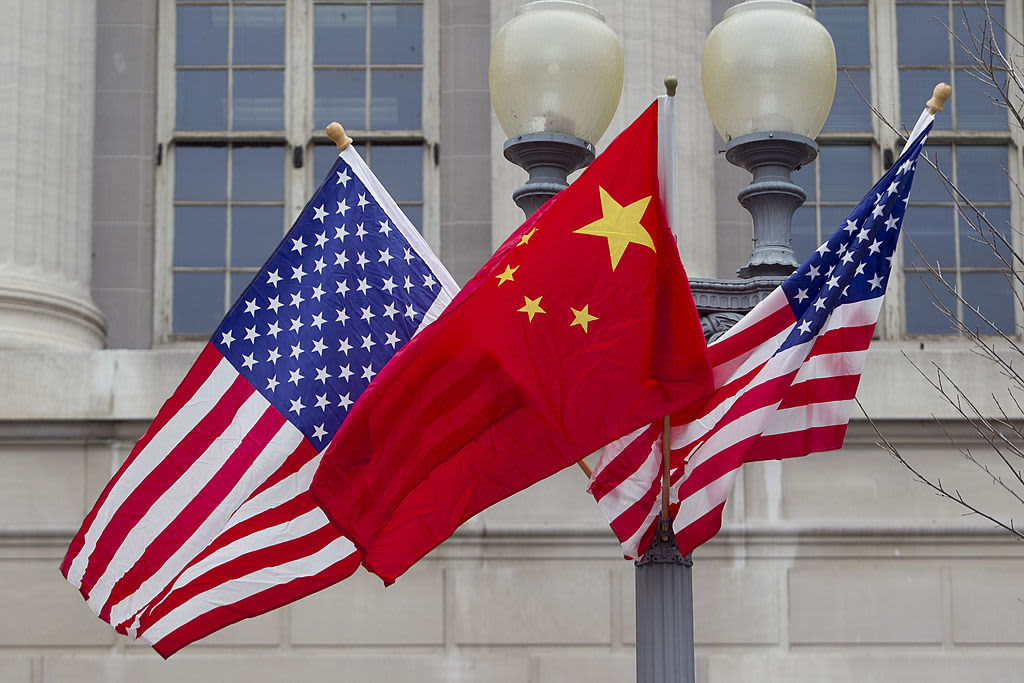
China is set to become a major player in the “highly lucrative” satellite navigation market, as it seeks to compete with the U.S. government-owned Global Positioning System (GPS), an analyst said Monday.But China’s homegrown Beidou system is not likely to overtake the GPS system for now, said Craig Singleton, adjunct fellow at the hawkish Foundation for Defense of Democracies.”China has marked a major step in its race to increase market share in this highly lucrative sector,” Singleton told CNBC’s “Squawk Box Asia.””The completion of the system also reaffirms China’s status as a world power. It represents a major declaration about its technical independence from the West, which carries wide-ranging geopolitical implications,” said Singleton.Flags of the U.S. and China fly along Pennsylvania Avenue in Washington, D.C., on Jan. 17, 2011.Andrew Harrer | Bloomberg | Getty ImagesMore than 120 countries — including Pakistan and Thailand — are using China’s Beidou system for purposes such as monitoring traffic at ports or guiding rescue operations, the analyst said.And Beijing is counting on its massive Belt and Road Initiative to “convince” more countries to use Beidou, he added.The Beidou system was completed in June last year. Chinese state media Xinhua said last week that the value of Beidou-related industries will exceed 1 trillion yuan ($157.1 billion) by 2025.’Bifurcated world’Singleton said Beidou’s completion has rekindled concerns among some in the West about the privacy and security of Chinese technology. He explained that some people fear Beijing could use its technology to track individuals, such as dissidents or democracy activists.Such concerns have come as U.S.-China competition heats up in the technology space. The U.S. under former President Donald Trump introduced export controls on several Chinese tech companies, including telecommunications equipment maker Huawei and top chipmaker SMIC, or Semiconductor Manufacturing International Corp.President Joe Biden has kept many Trump-era restrictions on Chinese companies. Biden is seeking to boost investments in U.S. research and development so that his country can build tech capabilities to compete with China.Read more about China from CNBC ProChinese yuan will become a top reserve currency sooner than expected, says Ray DalioChinese consumers are getting richer. UBS picks the stocks to cash inMorgan Stanley picks China stocks for the second half of the yearFor now, China’s Beidou system doesn’t appear to threaten the dominance of GPS, said Singleton.”At this point, it doesn’t look as if Beidou is going to overcome GPS, but it’s certainly possible that we will see a bifurcated system, bifurcated world between GPS and Beidou in the future,” the analyst said.— CNBC’s Arjun Kharpal contributed to this report.

French investigators question fugitive auto titan Carlos Ghosn in Beirut

French investigating judges questioned the high-flying auto executive-turned-international fugitive Carlos Ghosn for several hours in Beirut on Monday.

Ghosn, who simultaneously led three automakers as part of the Nissan-Renault-Mitsubishi alliance, has been fighting multiple probes since fleeing Japan in late 2019 in a daring escape that allegedly involved an ex-special forces soldier who helped Ghosn hide in a music equipment box.

Ghosn hopes to clear his name in the multiple legal challenges against him in France, his legal team told reporters Monday.

“It is the very first time that our client can explain himself in front of the judges with his lawyers sitting next to him and after preparing his defense,” Jean Tamalet, one of Ghosn’s lawyers, told reporters, according to Reuters. “It is the very first time of justice for Carlos Ghosn since he was arbitrarily arrested in Japan.”

Ghosn has not been charged in France, but has faced accusations of fraud, corruption, money laundering, misuse of company assets and aggravated breach of trust, the Associated Press reported.

Jean Yves Le Borgne and Jean Tamalet, lawyers for fugitive former car executive Carlos Ghosn, speak to journalists outside the Justice Palace in Beirut.REUTERS

Ghosn was arrested in Japan in November 2018 on accusations of under-reporting his salary and using company funds for personal purposes. He fled to Lebanon, where Ghosn was born and has citizenship, a year later in a stunning escape. Several of his associates, however, remain in jail or on trial in cases related to his financial activities or escape.

Ghosn has maintained his innocence and said he lost faith in the Japanese legal system’s treatment of foreigners. 

The focus of French investigators in Lebanon is lavish parties Ghosn threw at the Versailles Palace, which even included period costumes, when he was the head of the Renault-Nissan car alliance, the AP report said. They’re also examining millions in spending on private planes and events arranged by a Dutch holding company, and subsidies to a car dealership in Oman, according to the AP.

Fugitive ex-auto tycoon Carlos Ghosn (left) is pictured after being heard as a witness in a Beirut courtroom.AFP via Getty Images

In a wide-ranging interview last week, Ghosn again defended himself and told the AP that he was the victim of a corporate coup attempting to oust him due to a drop in Nissan’s financial performance as the Japanese automaker resisted losing autonomy to French partner Renault. 

Ghosn has previously fingered former Nissan CEO Hiroto Saikawa, who resigned in the year after Ghosn’s arrest, and Hari Nada, a former senior vice president, among others as involved in the alleged conspiracy. 

With Post wires

Boat sales, rentals through the roof heading into the summer

Jeff Bezos isn’t the only one spending big on a new boat. 

Boat sales and rentals spiked in 2020 as Americans searched for pandemic-friendly summer activities, and it doesn’t look like interest has fallen off yet this year. 

Charity Garey, co-owner of Lakeshore Marina in Chattanooga, Tennessee, told WRCB-TV that they’ve been completely booked with boat renters all weekend.

“All the dealerships are sold out of boats, there’s not many left,” Garey told the outlet. “If you can get one, buy one.”

The National Marine Manufacturers Association says powerboat sales hit a 13-year high in 2020, with 310,000 new vessels sold, up 12 percent from the previous year. Sales have waned slightly this year, but remain higher than pre-pandemic levels, the NMMA said.

As of February, shipments of new powerboats were up 23 percent compared with the 2020 average, and up 9 percent compared with the 2019 average. Pontoon boats, wake sport boats and jet boats were among the most popular types sold in February.

The National Marine Manufacturers Association reported that powerboat sales hit a 13-year high in the year 2020 amid the pandemic.Getty Images/iStockphoto

With demand surging for new boats, manufacturers can’t keep up. NMMA’s senior director of business intelligence Vicky Yu said, “boats are being sold as soon as they hit the marketplace as manufacturers work to fulfill the backlog of orders.”

“Boatbuilders continue facing supply-side constraints, and the challenge ahead will be keeping leads evergreen as inventories get replenished and life returns to normal,” she said. 

With inventory constrained, Americans are increasingly turning to rentals, according to data from marine rental platform GetMyBoat. 

GetMyBoat sent 178,000 renters out in 2019, up from 60,500 the previous year, Bloomberg News reported. The start-up expects to hit more than 1 million rentals this year, Bloomberg reported. 

“I’ve been in this business 20 years, and I’ve never seen the boat market, in the last 18 months, do what it’s doing,” Bret Uptagraft, sales manager of SkipperBud’s in Oshkosh, Wisconsin, told FOX11 News.

Summer hot spots brace for seasonal rush amid labor shortage

If you stopped by Morey’s Piers & Beachfront Water Parks in Wildwood, NJ, this Memorial Day weekend, you may have seen the chief financial officer slinging tickets. 

The company’s housing safety manager was running rides, and one of the lead carpenters was working the grill, vice president of human resources Denise Beckson said.

The Jersey Shore hotspot, which boasts over 100 rides and attractions spanning the boardwalk, normally employs about 1,500 people when the summer season kicks off, Beckson said.

It’s currently got about 850 staffers and didn’t open its water parks, among other popular attractions, in time for the holiday weekend as a result. 

“We’re facing an unprecedented challenge here to get enough people,” Beckson added. 

With pandemic restrictions largely lifted and Americans emerging from their homes, businesses across the country are finding themselves unable to staff up in time for what’s expected to be a bustling summer season.

Morey’s Piers is one of many businesses facing a staffing shortage heading into the summer rush. Alamy Stock Photo

Lingering COVID-19 concerns, child-care demands and pandemic-boosted unemployment checks are all keeping workers out of the labor pool, which threatens to hold back the economic rebound through the summer, business owners and economists say.

Seasonal businesses like Morey’s are getting hit doubly hard due to COVID-19-related travel bans and delays in processing visas for overseas workers, who typically play a crucial role fulfilling staffing needs from Memorial Day to Labor Day.

But business owners also blame the federal pandemic program that’s provided an extra $300 in additional unemployment benefits every week for encouraging people to remain out of work, despite a growing vaccination effort.

“While some people may not be making more on unemployment than if they were to work, they’re making enough to survive and stay out of the workforce,” Beckson said. 

Morey’s vice president of human resources Denise Beckson says the seasonal business now has just 850 staffers, well short of the 1,500 employees they usually have this time of year.

Beckson said Morey’s is offering $15-per-hour wages and has become more flexible than ever with part-time work. But at this point, the boardwalk operation just hopes it can be fully operational by July 4, she said. 

“Our focus has been on everything we can possibly do to get as many people on the roster as we can,” she said. “We’re basically just trying to claw our way there.”

It’s a similar story at the Montauk, New York-based eatery Hooked. Owner-chef Brian Mooney said business has been booming since it reopened for the summer season just over a month ago. But the five-person staff can’t keep up with demand.

“It’s all hands on deck right now — even my wife is working with the kids running around outside. She should be at home with the kids,” he said. 

Mooney says his restaurant is missing out on sales as a result. While customers are finally lining up out the door, some are also walking away due to long waits.

Montauk, New York-based eatery Hooked is finally seeing customers line up outside the door again. But the restaurant doesn’t have enough staff to meet the summer demand. Credit Brian Mooney

Mooney, who seeks to double his staff, raised wages about 15 percent and closes the restaurant every Tuesday to give staffers a day off.

But it hasn’t been enough. Only one person has applied for a job in the past month, he said. 

The summertime labor shortage is also squeezing Dewberry, a luxury hotel in downtown Charleston, South Carolina. The hotel is so short on housekeepers, said general manager Kristie Rasheed, that it needs to pull workers from other areas like events planning, sales and human resources to clean rooms on a timely schedule. 

Businesses that cater to summertime fun — think bars, restaurants, theme parks and resorts — are bearing the brunt of the labor shortage in part because “that was ground zero for job loss,” explained Mark Hamrick, senior economic analyst at Bankrate. 

People are venturing out again amid mass vaccinations, but summer hotspots say they are not well staffed enough to meet the rush. Getty Images

“In some cases, they’re having to pay a little more,” Hamrick said. “In some cases, they’re having to do with less — think of a restaurant that says, ‘OK, we’ll get rid of breakfast or lunch just to limit the number of hours that we have to staff.’”

Kenan Porter, owner of Clemson Brewing Company, which boasts locations in Middletown, New York, and New Paltz, says he’d love to have about 30 more employees on top of his staff of 120. In the meantime, his team will do whatever they can to meet the summer rush. 

“We’re probably going to get a little bit inundated, but what do we?,” he said. “We slow the door down, we slow the tickets down, we send out some beer or some food if we got a delay at a certain point. We shake and we curve and we match. We make it work. We get it done at the end of the day.”

Restaurants nationwide raise prices amid soaring costs, labor shortage

Americans returning to restaurants might notice something different: a bigger bill. 

Rising costs of ingredients and basic supplies as well as a nationwide labor shortage are throttling restaurants just as they begin to fully reopen and ramp up for a bustling summer season. 

Alan Natkiel, the owner of Georgia’s Northside in Concord, New Hampshire, took to Facebook to plead with customers to understand. 

“Due to the surging costs.. I hate saying what I’m about to say but here it is-  I will be raising prices on select items to offset my increased wholesale costs,” he wrote in a post. “When supply chain issues and availability come back around, I pledge to adjust my prices accordingly in order to maintain a menu that is fresh, dynamic, and very importantly to me: affordable to the Concord community.”

The price of St. Louis Ribs, for example, is up 50 percent over the past three months, he said, and fryer oil prices have almost doubled while food service gloves have tripled in cost. 

Alan Natkiel, owner of New Hampshire restaurant Georgia’s Northside, informed guests on Facebook that menu price items may be going up.Instagram

Natkiel added that he’s not currently selling chicken wings due to a national shortage that’s driven the price up. 

Prices across all products jumped 4.2 percent over the past year — the largest increase since 2008, according to the Labor Department. As the economy comes roaring back to life, an imbalance between demand for goods and companies’ ability to supply products has sent prices up, and now it’s hitting small restaurateurs just as many are welcoming back customers after over a year of pandemic-constrained operations.

Brian Mooney, the owner-chef of to-go seafood joint Hooked in Montauk, New York, said costs of everything are rising, squeezing the small five-employee business’ ability to turn a profit. He added that he’s had to raise pay about 15 percent to retain employees and try to attract a couple more workers to help with surging demand. 

Prices across all products jumped 4.2 percent over the past year.Noam Galai/Getty Images

“Pay is up. Food prices are up. Glove costs are up. The cost of everything is up,” he told The Post. 

Kenan Porter, owner of Middletown, NY-based Clemson Bros. Brewery, noted that costs of beer ingredients are up, too. During normal times, he said, costs take between 18 percent and 22 percent of sales. Right now, they’re at 25 percent, he said. 

“That translates to a nice chunk of money at the end of each month,” he told The Post.

Johnson & Johnson asks Supreme Court to void $2B talcum powder cancer verdict

Pharmaceutical giant Johnson & Johnson is asking the United States Supreme Court to review the $2 billion verdict against it in favor of women who said the company’s talc products contain asbestos and can cause ovarian cancer.

The nation’s high court could say as soon as Tuesday whether it will involve itself.

The case features former independent counsel Kenneth Starr, who is representing the women who sued Johnson & Johnson. Starr investigated former President Bill Clinton’s affair with Monica Lewinsky, which led to Clinton’s impeachment.

After a six-week trial in St. Louis Circuit Court in 2018, a jury awarded $4.7 billion to 22 women who used J&J talc products and developed ovarian cancer.

Circuit Judge Rex Burlison later wrote that evidence presented at the trial showed “particularly reprehensible conduct” on the part of the defendants.

Women have claimed that Johnson & Johnson’s baby powder has talc in it, which can cause ovarian cancer.AP Photo/Jeff Chiu, File

Burlison wrote that “defendants knew of the presence of asbestos in products that they knowingly targeted for sale to mothers and babies, knew of the damage their products caused, and misrepresented the safety of these products for decades.”

J&J appealed the jury verdict, and last year a Missouri appeals court rejected the company’s request to throw out the ruling but did reduce the verdict to about $2.1 billion because some of the women were from out of state.

Kenneth Starr is representing the women suing J&J in the case.Michael Brochstein/SOPA Images/LightRocket via Getty Images

The lawsuit is one of many filed on behalf of thousands of women who claim J&J’s talc-based products like baby powder contributed to their ovarian cancer. Other suits have claimed that the products caused mesothelioma. 

The company has denied that its products can be linked to cancer, though it announced last year it would stop selling its talc-based baby powder in the US and Canada. 

It said at the time that the decision to discontinue the product was due to falling demand “fueled by misinformation around the safety of the product and a constant barrage of litigation advertising.”

Last year, a US-led analysis of 250,000 women found no strong evidence linking baby powder with ovarian cancer, though the study’s lead author called the results “very ambiguous.”

An editorial published in January 2020 in the Journal of the American Medical Association called the findings “overall reassuring.” The study wasn’t definitive but conclusive research probably isn’t feasible due to a drop in women using the products, the editorial said.

With Post wires

Florida threatens to fine cruises over COVID vaccine requirements

Florida is threatening to slap cruise lines with tens of thousands of dollars in fines for requiring passengers to show proof of COVID-19 vaccination — uncomfortably wedging the sector between a federal mandate and the state’s sensibility.

Florida Gov. Ron DeSantis signed a law earlier this month that banned bars, schools, restaurants and other businesses from asking customers whether they’ve been vaccinated against COVID-19. 

The law goes so far as to impose a fine of $5,000 per customer that is required to show proof of vaccination, and the governor hasn’t yet shown any signs of making a carveout for the cruise industry. 

“We are going to enforce Florida law,” DeSantis told reporters Friday, according to the Orlando Sentinel. “I mean, we have Florida law. We have laws that protect the people and the privacy of our citizens, and we are going to enforce it.”

Florida Gov. Ron DeSantis vowed to “protect the people and the privacy of our citizens,” with the ban on vaccine mandates.ZUMAPRESS.com

But the state ban on vaccine mandates clashes with cruise industry requirements laid out by the Centers for Disease Control and Prevention that are aimed at giving the industry an opportunity to resume operations after over a year of standstill.

The agency has told cruise companies that they can begin commercial operations immediately if 98 percent of the crew and 95 percent of passengers on the ship are vaccinated. If they don’t meet those thresholds, the companies must first perform test cruises to ensure other safety protocols are working.

Last week, the CDC authorized the first test cruise with volunteer passengers, as well as the first commercial cruise, which is slated for late next month. Both are set to depart from Florida, the main base of cruise operations in the US. 

Florida’s vaccine mandate ban may force cruise lines to relocate out of Florida.Corbis via Getty Images

Industry executives have expressed some concern about the Florida ban on vaccine mandates — even warning investors that they might have to move operations out of Florida. 

“We hope that this doesn’t become a legal football or a political football, but at the end of the day, cruise ships have motors, propellers and rudders, and God forbid we can’t operate in the state of Florida for whatever reason, then there are other states that we do operate from. And we can operate from the Caribbean for ships that otherwise would have gone to Florida,” Norwegian Cruise Line CEO Frank Del Rio said on an earnings call with investors earlier this month about the law.

“We certainly hope it doesn’t come to that. Everyone wants to operate out of Florida. It’s a very lucrative market,” Del Rio added. “But it is an issue. Can’t ignore it. And we hope that everyone is pushing in the same direction, which is, we want to resume cruising in a safe manner.”

How to send an item from Amazon as a gift so people know who sent it

In this articleAMZNGetty ImagesMy son turned one earlier this month. We received a lot of presents from friends and family through Amazon. But we aren’t sure where to send some of the thank you cards.If you buy an item from Amazon and have it shipped somewhere else, it’ll just arrive in a box without any sort of note for the recipient about who sent it. Amazon knows you have a record of the purchase through its website. It makes sense most of the time. But, if you’re sending a gift, you need to mark it as a gift before you finish the purchase.When you do that, Amazon will ship the item with a gift receipt and a note that shows who bought the item. And then people like me will know who to thank. (Thank you for the gifts, by the way.)How to send items as gifts on Amazon so people know who sent itFind an item you want to buy and add it to your Amazon cart.On the cart subtotal screen that opens next, click the small checkbox that says “This order contains a gift.”Zoom In IconArrows pointing outwardsHow to send a gift from AmazonClick proceed to checkout.You’ll see a screen that shows here option to customize a message — it’s autopopulated with “Hi, Enjoy your gift!” and a note who it’s from.Make sure the “gift receipt” box is checked if you want the recipient to have the option to return or exchange it. Prices are hidden.You can include an optional gift bag for an added fee. In this example, my fee is about $5.Click “Save gift options.”Select your payment method and continue checkout as normal.That’s it! Now, the recipient of your gift will know who sent it.Subscribe to CNBC on YouTube. 

How the trucker shortage is fueling the meat crisis

Meat lovers are paying through the nose for their favorite cuts — and a raging trucker shortage is increasingly to blame, The Post has learned.

The cost of a summer BBQ starring boneless ribeye steak, for example, cost an average of $12.37 a pound last week, up from $9.75 the prior week, according to the US Department of Agriculture.

St. Louis style spareribs, meanwhile, cost $3.82 a pound last week, up from $2.77 the week prior, the USDA data said.

While the skyrocketing price of corn feed – used to fatten animals – has been widely reported to be fueling the price hikes, sources say the dearth of truckers is a big factor as well.

“The driver shortage is pushing the entire pricing system up,” said Daniel Romanoff, president of Nebraskaland, a meat distributor in the Bronx.

In a desperate attempt to hire drivers, Nebraskaland has taken to recruiting them at local fueling stations — distributing flyers that shout, “ATTENTION PLEASE!,” next to a picture of a hand holding a bullhorn.

Many NYC supermarkets are being forced to up their prices for meat.Education Images/Universal Image

The flyers offer $4,000 bonuses to new hires after 90 days on the job, and $4,000 to existing Nebraskaland drivers who refer workers to the company. Nebraskaland is offering a similar $2,000 incentive to recruit warehouse workers along with a $2,000 referral bonus for its employees who recruit workers to the company.

Meat wholesaler Baldor Specialty Food, also based in the Bronx, has taken a slightly different tact. Last month it plastered an ad on the Bruckner Expressway — a major thoroughfare for truckers — boasting $3,000 signing bonuses for new drivers.

The driver shortage has many meat wholesales suffering on both ends — enduring long delays in getting their orders fulfilled and then struggling to get their products to supermarkets and restaurants.

WestSide Foods, for example, is now waiting five days – up from three — for its wholesale orders to get to its Bronx warehouse, according to Shawn Reid, vice president of sales.

This and other supply chain factors are all contributing to what Reid called “the longest sustained spike in meat prices in my 35 years in this business.”

Lower-income customers are shifting their meat choices after seeing prices rise.LightRocket via Getty Images

While fears of the coronavirus continue to keep some people home, employers say generous unemployment benefits, including $300 weekly checks from the federal government, are also to blame.

“The $300 weekly unemployment checks is a terrific program for those who really need it but it is a deterrent for people to come back to the workforce,” Romanoff said.

“We have heard indirectly from our current employees that their friends and acquaintances who have trucking licenses and have opted not to work right now,” he said.   

The pain of rising meat prices will arguably be felt most acutely by lower income people in places that are far from cattle country, like NYC.

Indeed, Sal Bonavita, who owns two Key Food stores in the Bronx, has largely stopped carrying rib meat, including ribeye steaks and ribs, because he now has to charge customers $16 a pound up from $12. 

“It’s no longer economically viable for us to offer rib steak,” Bonavita told The Post.

Bonavita brought in some rib meat for the Memorial Day weekend for customers who asked for it, but expects to take a loss on it because most of his customers — a diverse group of immigrants from Latin America, the Caribbean, Eastern Europe and the Middle East — cannot afford it.

“If they are coming in with a $50 budget, that $50 is buying less today,” he said.

Places that are far from cattle country like NYC will acutely feel the effects of the trucker shortage.Getty Images

It’s not just ribs. Before the pandemic, Bonavita was able to offer sales on chicken cutlets for $1.99 a pound. But he recently had to raise his lowest sale price by $1.

His chuck meat prices had been $3.99 per pound, but recently went up to $5.29 per pound — and is likely going up to $5.99 per pound, he said.

The pain is especially acute for lower-income customers, he said. “We are seeing a shift from red meat to chicken from our customers who receive federal assistance,” Bonavita said.