TokyoTokyo Mon - Fri 10:00-18:00 +81 (366) 701-751
info@mountequitygroup.com

Blog

Conservative group slams Nike, Coke, and American Airlines over ‘woke politics’

A conservative group has launched a massive $1 million advertising campaign to “name and shame” companies and executives for putting “woke politics over consumer interests.”

Consumers’ Research, a right-leaning consumer protection group, said the initial launch of its campaign will target Nike, Coca-Cola and American Airlines.

The video ads will run nationally across cable TV and websites as well as in the local markets where the companies are headquartered. Nike is based in Beaverton, Oregon; Coca-Cola is headquartered in Atlanta, Georgia’ and American Airlines is based in Fort Worth, Texas.

“American Airlines shrunk legroom for passengers and laid off thousands of employees during the COVID pandemic while receiving billions in taxpayer bailouts. Coca-Cola and Nike have both been exploiting foreign, potentially forced, labor in China while American workers suffer,” Will Hild, executive director of Consumers’ Research, said in a statement.

“It is time these corporate giants were called to task,” he continued.

The drinking giant is attacked in an ad for purportedly using forced labor.Consumers’ Research

“We are giving consumers a voice. These companies should be putting their energy and focus on serving their customers, not woke politicians.”

Each ad is 30 seconds long, and calls out the CEOs of each company by name. The ad targeting American Airlines takes aim at chief executive Doug Parker’s nearly $11 million compensation in 2020, which was down slightly from 2019. 

It also notes the billions of dollars the company received from the US government to keep the company afloat during the pandemic while travel was largely halted. 

[embedded content]

Consumers’ Research’s ad against Coca-Cola criticizes CEO James Quincey for “attacking Georgia’s voting law,” which critics argue blocked black people and other people of color from voting.

Nike was also criticized for serving “woke” politicians.Consumers’ Research

It also slams the health effects of Coke products on kids and the company’s attempts to downplay such concerns. 

[embedded content]

And the commercial against Nike CEO John Donahoe mostly centeres on Congressional and news reports that say the company’s products rely on goods produced in China using forced labor.

One ad took aim at American Airlines for the billions it received in bailouts during the pandemic.Consumers’ Research

The ad says Nike has lobbied against US efforts to keep American companies’ supply chains away from Xinjiang, the area in China where members of the Uighur ethnic minority have reportedly been forced into work. 

Several Georgia-based corporations, including Coca-Cola, Delta Air and Major League Baseball, waded into politics after the federal election, criticizing the Peach State’s controversial new voting law.

[embedded content]

Republican politicians in turn slammed the vocal companies, calling for boycotts of their products. 

Several Georgia-based corporations, including Coca-Cola, Delta Air and Major League Baseball, waded into politics after the federal election.Consumers’ Research

$280 billion wiped off crypto market as bitcoin falls below $40,000 for first time in 14 weeks

In this articleBTC.BS=-USSIn this photo illustration, a visual representation of the digital Cryptocurrency, Bitcoin is on display in front of the Bitcoin course’s graph on February 09, 2021 in Paris, France.Chesnot | Getty ImagesBitcoin fell sharply on Tuesday continuing a major sell-off that began a week ago.The digital currency fell over 13% to hit an intraday low of $38,585.86 at around 12:54 a.m. ET, according to CoinDesk data. It was the lowest level since Feb. 9, the last time it dropped below $40,000.Negative news over the past week has dampened sentiment for bitcoin.On May 12, Tesla CEO Elon Musk said the electric carmaker had suspended vehicle purchases using bitcoin, citing environmental concerns over the so-called computational “mining” process. This is where high-powered computers are used to solve complex mathematical puzzles to enable transactions using bitcoin.Musk’s comments caused over $300 billion to be wiped off the entire cryptocurrency market that day.The announcement to suspend bitcoin payment came just three months after Tesla revealed that it bought $1.5 billion worth of bitcoin, and would start accepting bitcoin in exchange for its products.Early this week, the Tesla CEO clarified that the company has “not sold any Bitcoin.”Then on Tuesday, three Chinese banking and payment industry bodies issued a statement warning financial institutions not to conduct virtual currency related business, including trading or exchanging fiat currency for cryptocurrency.China’s hard line on digital currencies is not new. In 2017, authorities shut down local cryptocurrency exchanges and banned so-called initial coin offerings (ICOs), a way for companies in the space to raise money through issuing new digital tokens.Traders in China once accounted for a huge share of the bitcoin market but after the crackdown, their influence was reduced significantly. Chinese cryptocurrency operations have moved abroad.Bitcoin is still up over 40% year-to-date and 320% in the last 12 months.Other cryptocurrencies also plunged. Ether, the digital currency that powers the Ethereum blockchain, was down nearly 15% at $3,001.70 at 1:15 a.m. ET. Dogecoin, a cryptocurrency that started as a joke and has been talked up by Musk, fell over 18% to $0.4076, according to Coinmarketcap.com.Around $279.65 billion had been wiped off the entire value of the cryptocurrency market in 24 hours as of 1:18 a.m. ET.Close to a bottom for bitcoin?Bitcoin is off by about 39% from its all-time high of $64,829.14 which was hit in mid-April.Vijay Ayyar, head of business development at cryptocurrency exchange Luno, said that a 30% to 40% pullback is “normal” during bitcoin bull markets.”So this is very much expected after we topped out at 64K ($64,000),” he said.Ayyar pointed to a roughly 35% correction in January as well as similar falls during the huge run-up in bitcoin’s price in 2017.”We are definitely close to a bottom” around $38,000 to $40,000, he said.Bitcoin bull Mike Novogratz told CNBC on Tuesday that he sees $40,000 as a buying level for the digital currency. The investor, who runs cryptocurrency financial services and investment management Galaxy Digital, said he expects bitcoin to consolidate in a trading range between $40,000 to $55,000.”Then we’ll have another leg up. And I say that not just by guessing. We see institutions moving in, and it takes them a while,” Novogratz said.

Ex-TikTok CEO seen as contender for Discovery-WarnerMedia streaming

As the ink begins to dry on the mega merger between AT&T’s WarnerMedia and Discovery, two big questions have surfaced: 1) Who will run their new powerhouse streaming service, and 2) How much will it cost to get rid of the current guy?

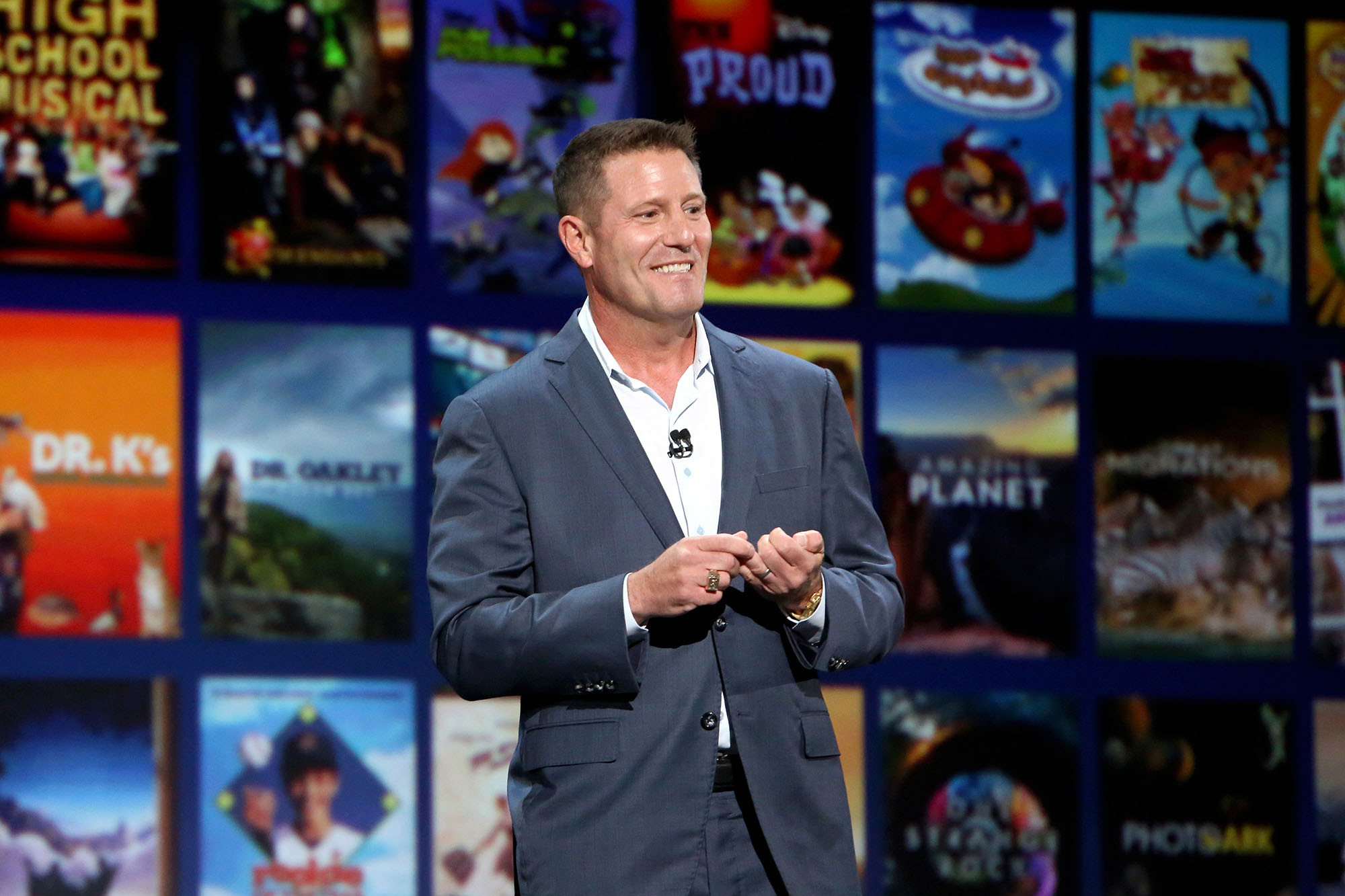
Kevin Mayer — who left the helm of Disney’s streaming juggernaut last summer to lead TikTok — is being viewed as a contender to helm the as-yet-nameless WarnerMedia-Discovery venture, sources told The Post. (Mayer famously ditched TikTok three months in after the service’s ties to China got it into trouble with the Trump administration.)

While one source close to the situation cautioned that it’s too early to speculate and no decisions have been made, another noted that Mayer is friendly with a number of Discovery and WarnerMedia insiders, including Discovery Chief Executive David Zaslav.

HBO Max may soon be in the market for a new chief as parent company WarnerMedia preps to merge with Discovery Inc.SOPA Images/LightRocket via Getty Images

In March, Mayer was named chairman of DAZN, the sports streaming service owned by Len Blavatnik’s investment firm Access Industries. DAZN is known as the “Netflix of sports” and is one of Britain’s only tech unicorns.

Mayer also has helped raise money for a special purpose acquisition company, or SPAC, with The Forest Road Company. Still, insiders say he may be restless and reckon the WarnerMedia-Discovery job could pique his interest.

Meanwhile WarnerMedia CEO Jason Kilar appears to be on his way out, and the big question is what will it cost AT&T. According to securities filings, Kilar is eligible to get cash and stock options worth $53 million after just a year on the job. But Kilar has also reportedly hired lawyers as he negotiates his exit, which has some AT&T insiders on edge.

“There’s heightened sensitivity … AT&T is already embarrassed,” one source said, noting that AT&T already is taking a painful haircut on the sale. “The entire deal was a disaster and they don’t need more bad press.”

Discovery officials declined to comment. An AT&T spokesperson couldn’t immediately be reached for comment.

Here's what Google announced today at its first developer conference since 2019

Google CEO Sundar Pichai speaks at the company’s 20201 Google I/O conference.GoogleGoogle announced a slew of updates to its developer products Tuesday at its first Google I/O event since 2019.Though Google makes most of its money from advertising, the annual event is a way to excite its developer ecosystem with updates ranging from software and artificial intelligence moonshots to shopping features. The company cancelled the annual developer conference last year due to the Covid-19 pandemic. This year’s event was mostly virtual, with a few in-person attendees at the company’s headquarters in Mountain View, Calif.Here’s a roundup of some of the more interesting announcements from the day’s event:HardwareThis year’s event was pretty light on hardware announcements — no big unveiling or refresh to its Pixel phones or home speakers. It did, however, announce some updates to existing products.Most notably, Google said it now has a whopping 3 billion active Android devices, globally, well ahead of Apple’s claim of 1 billion iPhones. However, Android devices are widely divergent in terms of the version of the platform they run, with some relying only on the core open-source code and others relying on custom apps and skins issued by hardware makers and carriers.The company announced its latest operating system update called Android 12, which works on a reduced server CPU time by 22%, essentially meaning “basically, everything is faster,” said Google’s Vice President of Android and Google Play Sameer Samat said.Google executives said it’s combining Wear, Google’s wearable tech software platform, with Samsung’s Tizen software. It will aim to streamline the smartwatch OS for the Android platform along with faster load times and battery life improvement. The company also said it will be bringing YouTube Music app for Wear OS later this year.Fitbit CEO James Park said that Google Wear will include Fitbit popular features such as tracking healthy progress with plans for more. Google parent company Alphabet finally closed its $2.1 billion acquisition of the fitness-tracking company in January after regulators took more than a year to sign off on the proposed deal.”In the future, we’ll be building premium smart watches based on Wear that combines the best of Fitbit’s healthcare expertise with Google’s ambient computing capabilities,” Park said, referring to Google’s aim to place computing in all spaces.  ShoppingThe company announced a few updates in its push for e-commerce as it aims to compete with Amazon.The company announced a deepened partnership with Shopify, by letting the company’s more than 1 million merchants make their products more discoverable in Google Search and elsewhere. It will allow Shopify businesses to appear across Google Search, Maps, Lens, Images and YouTube “with just a few clicks.” Shopify’s stock popped as much as 4% on the news. Separately, the company announced other enhancements to its e-commerce functionality: For instance, Google’s Chrome browser will persistently display shopping carts when people open new tabs, so they can return to shopping after doing other tasks.Collaboration techGoogle also announced some updates to make collaboration easier within its Workplace products. The industry, which also includes Microsoft Teams, Zoom and Slack, saw a surge in usage during the pandemic.A new feature in Workspace called smart canvas will let people tag other users in a documents and the call through its video platform, Google Meet, directly from a document, spreadsheet or slide.The company also showed off an early research project called Project Starline which builds a 3D image of a person that can be used for conversations in a meeting. It appears as a type of a hologram chat.CEO Sundar Pichai stressed that Project Starline is still in the early stages but that some employees have been testing it amid efforts to collaborate between separate locations during the pandemic. It’s planning trial deployments with enterprise partners later this year.Artificial intelligenceGoogle is best known for its artificial intelligence technology, which powers its products from Search to self-driving cars. Executives said Tuesday that it’s getting even smarter.Pichai unveiled LaMDA, a breakthrough in natural language processing, which aims to make conversations and searches more natural while having the ability to answer more open-ended questions. Pichai gave the example of a person heaving a conversation with the planet Pluto, which gave answers to questions the user had about it.  Execs also announced a “Multitask Unified Model” it calls MUM, which they said is 1,000 times more powerful than the BERT model powering Google Search. Pulling data from texts, images and videos, MUM can supposedly answer complex questions about what a user might need for, say, a specific hike on Mt. Fuji. Google also announced its first campus dedicated to quantum computing. The Quantum AI campus in Santa Barbara, Calif., includes a data center, research laboratories, and its own quantum processor chip fabrication facilities. “These new computing capabilities will help to accelerate the discovery of better batteries, energy-efficient fertilizers, and targeted medicines, as well as improved optimization, new AI architectures, and more,” the company says.Speaking at her first Google I/O, Google’s chief health officer Karen DeSalvo, the former Obama administration official who joined the company in 2019, said that the company is helping create a device that uses AI to detect skin conditions. After users upload three different photos from skin, hair or nail issues and answer some questions, it’ll offer a diagnosis of possible dermatological conditions along with some information about them.  DeSalvo said the product will be accessible from internet browsers and cover 288 conditions, including 90% of the most commonly searched derm-related questions on Google. It will first be available to consumers in the European Union by the end of the year, she said.

Developers take cautious approach

Developers take cautious approach
Several significant projects delayed

An artist’s rendition of the Golden Neo Khon Kaen – Bueng Kaen Nakhon project that Frasers Property Thailand launched on May 8.

Property developers have become more careful in launching new residential project this year and are focusing on segments where demand is strong as the daily number of Covid-19 cases continues to escalate.Thongchai Busrapan, chairman of Noble Development Plc, said the company delayed the launch of a new luxury condo project on Wireless Road — The Embassy at Wireless — from the second quarter to the fourth quarter as it is a big project worth 10.7 billion baht.
“This project was earlier planned to launch after the Songkran holidays. But with the recent pandemic, we have to wait and see but the postponement would be no longer than six months or when foreign tourists come back,” he said.
Other delayed projects will be a low-rise condo and a townhouse project in the Don Mueang area worth a combined 2.2 billion baht, which have been rescheduled from the second quarter to the third quarter this year.
However, the delay of the launch will not have an impact on the company’s projection in terms of its presales target this year at 16 billion baht, up 142% from 6.6 billion baht in 2020, as the majority of 2021 presales will come in the fourth quarter.
“At present, it is the bottom of the market but many people can adjust with it,” he said. “If the situation in the third quarter is not better and we need to delay the launch again, we will revise down the target.”
Noble will diversify to the housing market in the UK through a joint venture with Hong Kong-based Fulcrum Global Investments, one of its major shareholders. Both established Noble Venture Investment in which Noble holds 45% and Fulcrum has 55%.
The first deal worth 100 million baht will be inked by the end of this month which is an apartment project for rent in Manchester. The firm plans to resell individual units to foreign investment buyers, most of whom are Chinese.
It set an investment budget of 2.5 billion baht to invest in the UK residential market over the next three years and expects that profit from the UK investment would represent 25% of total net profit.
Thanapol Sirithanachai, country chief executive of Frasers Property Thailand Plc, said the company’s plan to launch 10 new residential projects in the next six months remain unchanged, even though demand faces challenges in securing home loans.
“Before the third wave of the pandemic, we recorded a good presales from new projects launched in the first half,” he said. “But now we need to refocus on new projects we plan to launch in the remainder of the year.”
He said the firm will be more selective in launching new housing projects by considering locations where demand is strong and purchasing power is still good.
One is a low-rise housing project in Khon Kaen which was not a tourism destination. It recorded 300 million baht in presales on one weekend.
Mr Thanapol said the firm’s platform with three different businesses comprising residential, commercial and industrial estate helped minimise the impact from Covid-19.

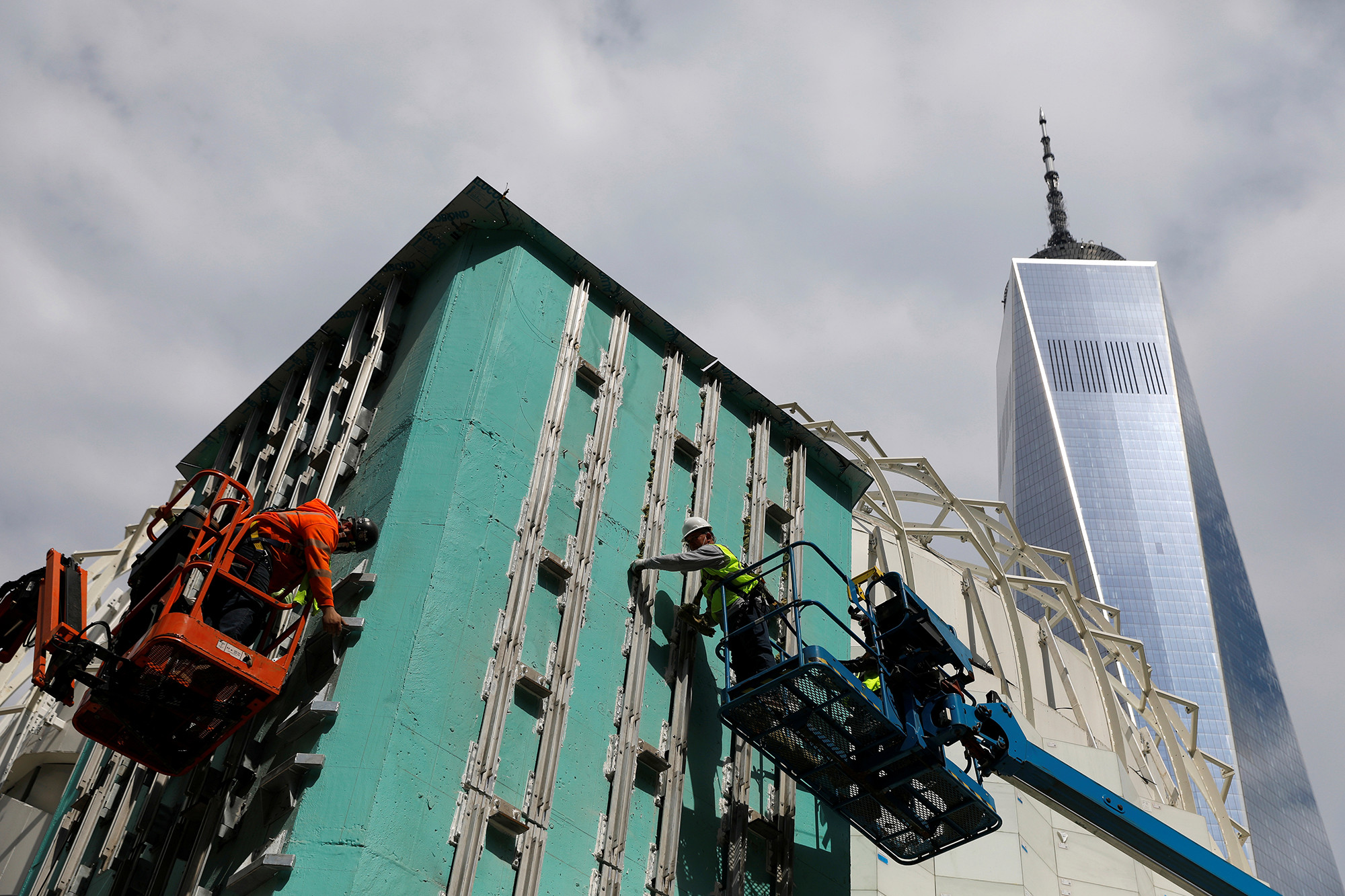
NYC construction industry lost 74K jobs during pandemic

The New York City construction industry lost 74,000 jobs and $9.8 billion in activity last year during shutdowns triggered by the coronavirus pandemic, according to a new study by an industry group — which is urging lawmakers to take action to get hard hats back to work.

The COVID-19 safety restrictions that closed job sites resulted in a loss of $5.5 billion in wages and 8.3 percent in commercial real estate, mortgage recording and transfer taxes to the city, the analysis conducted for the Building Trades Employers Association said.

The building and construction trade industry represents 20 percent of the city’s economy, 10 percent of jobs and 5 percent of wages, the report said.

The city is not expected to regain all the jobs lost during the pandemic until 2025.

“We’re at a critical point in our history. New York City is in danger,” said Lou Coletti, president and CEO of the Building Trade Employers Association.

The building and construction industry accounts accounts for nearly a quarter of NYC’s economy.Michael M. Santiago/Getty Images

“The city shot itself in the foot with Amazon. We’re strangling ourselves,” he added, referring to the proposed Amazon campus along the Queens waterfront that was scuttled by anti-development politics.

Coletti is urging Gov. Andrew Cuomo, the state legislature, Mayor de Blasio and the City Council to take actions to rev up construction.

Tops on his list is persuading lawmakers to back Cuomo’s controversial Penn Station redevelopment project.

Cuomo’s plan would redevelop the area around Penn Station, with 10 new office towers, as well as giving the dowdy rail station a makeover.

It could take another four years to gain back the job losses.Justin Lane/EPA

Amid neighborhood opposition, lawmakers in the state budget had limited the use of $1.3 billion in bonds for the “Empire State Complex” to expanding the station and upgrading its tracks — and excluded financing for the above-ground tower development.

The contractors’ group lawmakers to allow the Penn project to skip the city’s lengthy Uniformed Land Use Review Procedure, which it fears could kill the development.

“We’re not opposed to a public process. What we’re concerned about is opposition that stops the project,” Coletti said.

He argued that knee-jerk opposition to development post-pandemic could be the “death knell to the city.”

Lou Coletti, the president and CEO of the Building Trade Employers Association, has called on the state to take more action to build back the construction industry.Mike Segar/Reuters

The group is also calling on Albany to pass legislation to help lower building insurance costs and allow design-build procurement — the hiring of architects and engineers and a general contractor at the same time — to speed up completion of projects.

The WarnerMedia-Discovery deal was structured to make a future sale easier

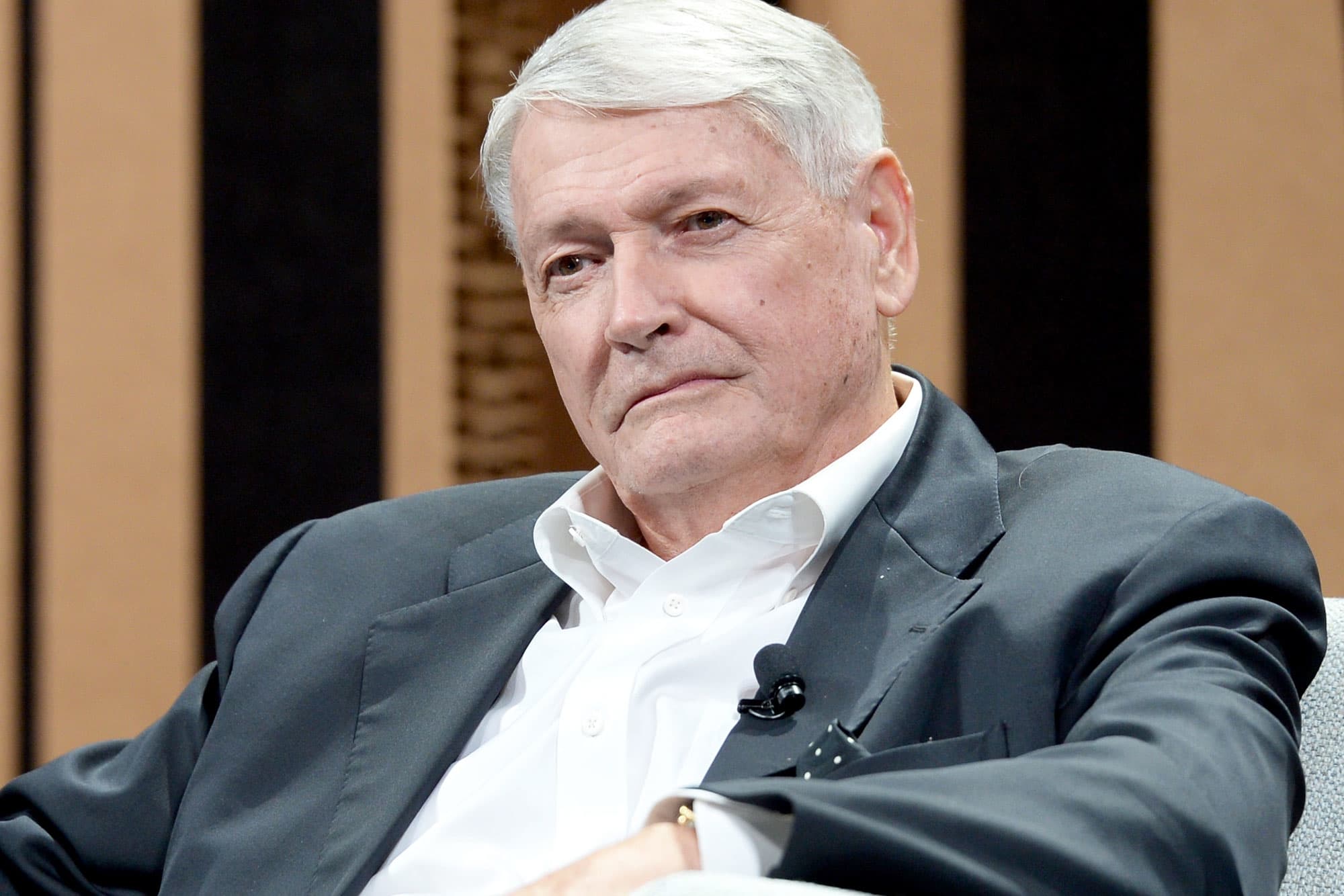
Liberty Media’s John MaloneMichael Kovac | Getty ImagesLong-time employees of WarnerMedia have been through so many spinoffs and mergers that Monday’s announcement of its impending separation from AT&T and combination with Discovery amounted to gallows humor.”You just have to laugh,” said one veteran employee.Given that context, it may not be surprising that WarnerDiscovery — the leading candidate for a name, according to a person familiar with the matter — is structuring itself for a future sale.The key indicator that future chief executive David Zaslav is already considering a sale down the road — assuming the merger passes regulatory approval — is John Malone’s decision to give up his Discovery super-voting shares to merge with WarnerMedia.Based on the latest proxy statemen filed on Apr. 30, Malone owned 6.2 million Discovery Class B shares, giving him a total of 26.5% voting control — the most of any single owner. He held 19.5 million shares in total, amounting to a 4% economic interest. His voting control was much greater because of the super-voting stock.Malone agreed to turn in those shares for common equity because he wanted to give a combined WarnerDiscovery flexibility to sell itself in the future — most likely to a deep-pocketed technology company like Amazon or Apple or another media behemoth like Disney, according to a person familiar with the matter.A deal would be huge — but not unprecedented. In fact, previous iterations of WarnerMedia have already sold — twice — for more than $100 billion with debt. AT&T’s purchase of Time Warner in 2016 topped $100 billion and AOL’s takeover of Time Warner in 2000 cost $160 billion.WarnerMedia M&AWhy has the company been subject to so many mergers compared with its media rivals? Blame the lack of dual-class shares, which give founders or other insiders outsized voting control for the number of shares they actually own.ViacomCBS is controlled by Shari Redstone. Comcast is controlled by the Roberts family. AMC Networks is controlled by the Dolan family. Fox is controlled by the Murdochs.But Time Warner has always had one class of stock. That paved the way for Fox’s hostile takeover attempt of Time Warner in 2014, and later facilitated then-CEO Jeff Bewkes’s decision to sell to AT&T.AT&T also only has one class of stock. That contributed to hedge fund Elliott Management taking a stake in 2019 and agitating for divestitures, expediting the removal of CEO Randall Stephenson and the ultimate hiring of John Stankey. It was Stankey who ultimately decided to bail on WarnerMedia in the interest of “shareholder accretion.”Simplifying to one class of shares will also aid WarnerMedia’s attempts in acquiring future media companies with stock, if it chooses to grow by mergers instead of selling. It’s possible Zaslav will want to give himself many years atop a huge media company after years of running a relatively small player like Discovery.Then again, if Zaslav does sell, there’s $115 million waiting for him as a change of control provision in his contract if he departs as CEO.And WarnerMedia employees can enjoy what’s becoming a regular rite of passage — another corporate integration and reorganization.WATCH: Discovery CEO: We can get to 400 million direct-to-consumer homes

NYC supermarket enters ‘hornets nest’ in dropping mask mandate

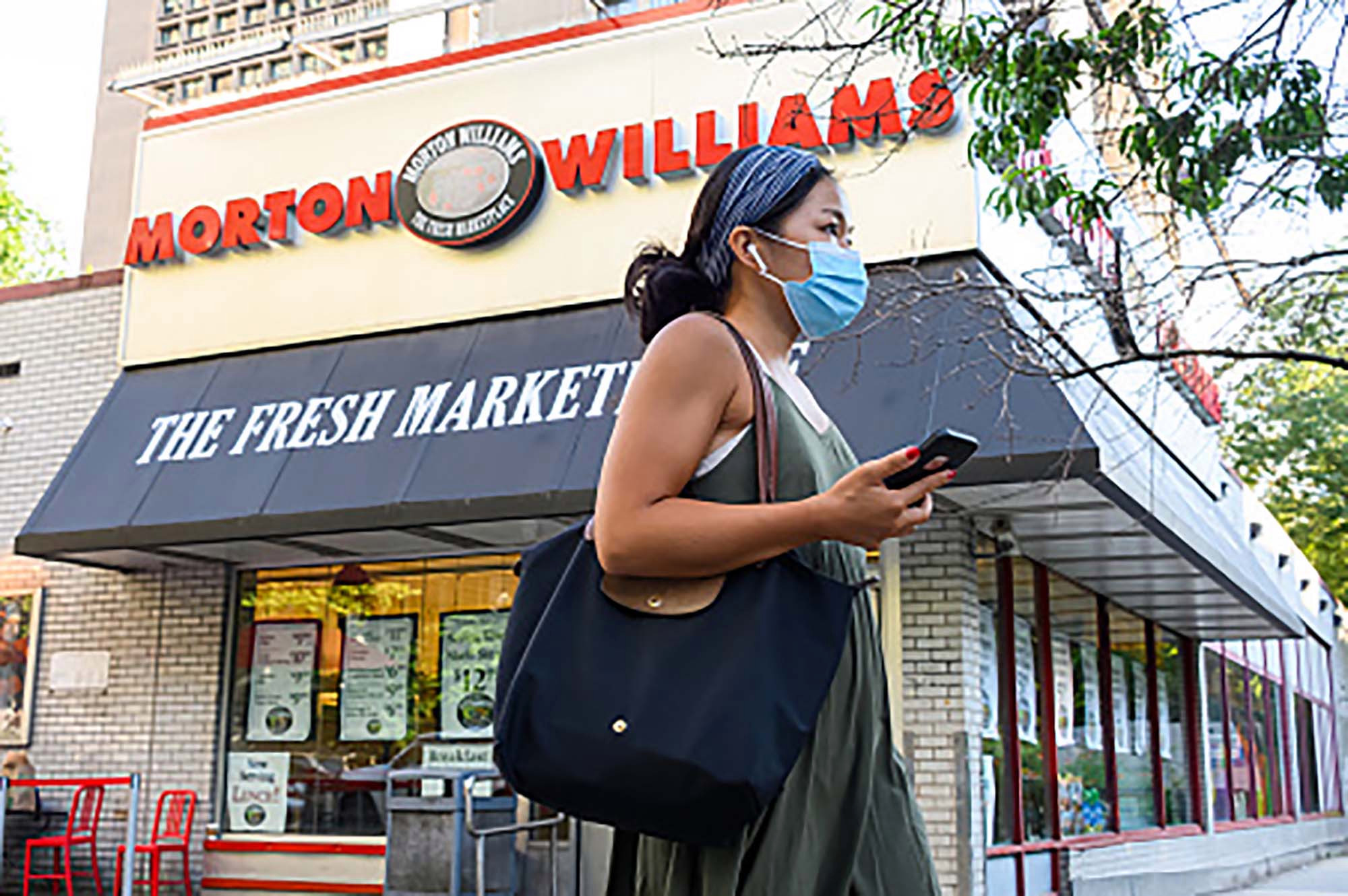
Morton Williams customers are sharply divided over the grocery chain’s decision to no longer require vaccinated shoppers and employees to wear masks — a scenario that’s likely playing out at retail establishments across the country.

The controversy kicked off on Monday when the popular supermarket emailed customers about its decision to comply with the new CDC coronavirus guidelines starting Wednesday, when New York state will drop its mask mandate.

The short email simply explained the new policy and said the Big Apple grocer “will not ask for proof of vaccination.”

But it resulted in a “hornets nest” of backlash from mask advocates, according to a follow-up email the chain sent out a few hours later.

“We recently sent you an email explaining our policy regarding masks,” the follow-up email said. “In doing so, we knew that we were stepping into a hornet’s nest and that many would feel this is a premature decision better suited for a later day.”

The follow-up email explained that Morton Williams stores will put up signs “encouraging” customers and employees to continue to wear masks regardless of their vaccination status. It also reminded customers to please “to be respectful to those who do not feel comfortable.”

Masked and maskless shoppers in New York on Saturday, May 15, 2021. after CDC released new guidelines allowing the fully vaccinated to participate in indoor and outdoor activities without wearing a mask or social distancing. (ÂPhoto by Richard B. Levine)Levine-Roberts/Sipa USA

That resulted in a whole new set of stinging criticisms — this time from people eager to ditch their masks, the chain’s co-owner Avi Kaner told The Post.

“Have you decided what percentage of people who are ‘uncomfortable’ will continue to dictate protocol for those of us who are done with masks?” one customer wrote, according to redacted copies of replies provided to The Post. “Perhaps 10 percent or less? You really need to know what will allow you to allow the ‘comfortable’ folks to prevail!”

That sentiment was countered by emails like this from mask advocates: “I’d rather be safe than sorry and I think you’re making a mistake! I’ll continue wearing my mask indoors, as I believe any intelligent, well-informed, scientifically literate person will do!”

“We were not expecting the level of passion on both extremes,” Kaner said. Some customers said they would continue to double mask indoors despite being vaccinated — and wanted others to as well, Kaner said. Other customers were resentful at even the suggestion that they consider wearing a mask, he said. 

Not everyone who responded complained, of course. “I got hundreds of emails from customers thanking us for asking people to be courteous and respectful,” Kaner added.

Morton Williams is not likely alone. The CDC has been criticized for a hard-to-enforce mask policy that requires people to use their judgment, including masks for crowded situations.

It has put retailers in a tough spot even as many stores adopt the CDC’s new guidelines in municipalities that allow it, including large national chains Trader Joe’s, Walmart and Starbucks.

Labor unions who represent retail workers, including supermarket employees, have already said they are opposed to the CDC’s new guidance because it puts their members at risk. They argue that there is no way to know whether someone who is not wearing a mask has been vaccinated.

Gov. Cuomo on Monday said vaccinated New Yorkers will be free to go maskless in most indoor settings starting on Wednesday, including businesses that allow it.

The Empire State was the among the hardest hit by COVID-19, resulting in strict rules requiring masks in all public settings since April 2020. That, combined with crowding issues in NYC, could make the transition to no masks more difficult here, business owners say.

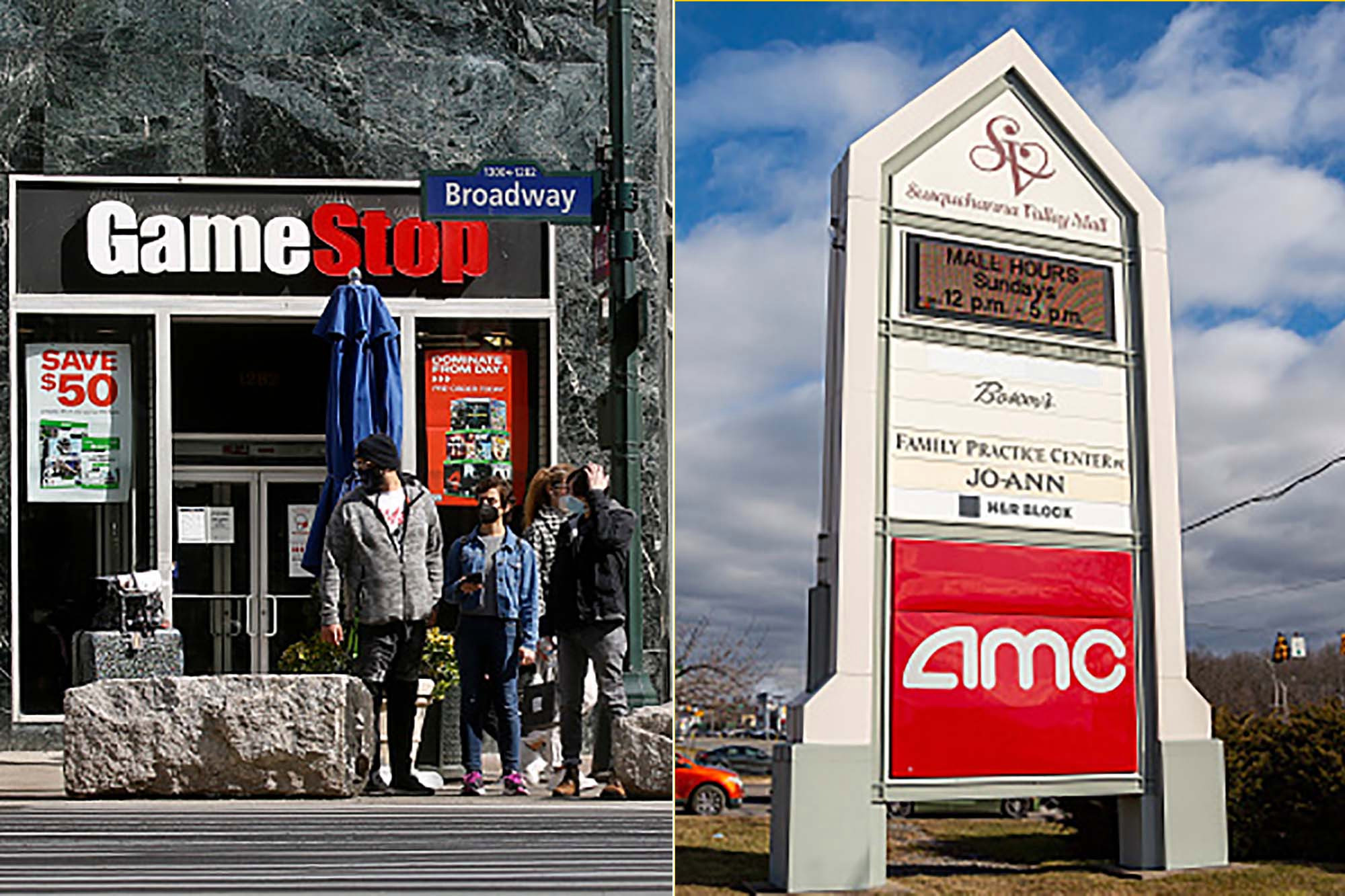
GameStop and AMC shorters lost $930 million

Investors are estimated to have lost $930 million on their short positions in meme stocks GameStop and AMC Entertainment over the last five trading days, data from financial analytics firm Ortex showed on Tuesday.

Shares in GameStop, which was at the heart of the so-called “stonks” retail trading mania earlier this year, have risen by a third in the last one week, while shares in cinema operator AMC are up 39 percent.

Ortex said short interest in AMC is currently estimated to be 18.3 percent of freefloat and in GME it is estimated at 21.8 percent of freefloat.

On Monday alone, short-sellers lost over $200 million each in both of those stocks, Ortex data shows.

Late Tuesday afternoon, GameStop shares were trading up 2.4 percent, at 184.87, and AMC had gained 5 cents, to $14.01.

Shopify stock pops after Google announces online shopping expansion

In this articleAMZNGOOGLGoogle CEO Sundar PichaiGoogleGoogle is deepening its partnership with Shopify by making it easier for the company’s 1.7 million merchants to reach shoppers in Google Search and across some of its other properties.The move comes as Google and Shopify are ramping up their efforts to compete against Amazon in e-commerce. Amazon is also increasingly competing with Google on search ads for commercial queries, which typically mean a consumer is actively considering a purchase, and is expected to earn 19% of all search ad revenue this year, compared with about 57% for Google, according to eMarketer.Shares of Shopify popped as much as 4% on the news.Google made the announcement during its conference for software developers, Google I/O, which kicked off on Tuesday. The company didn’t offer many details about the integration, but it said it will allow Shopify businesses to appear across Google Search, Maps, Lens, Images and YouTube “with just a few clicks.”In a blog post, Google said this will make Shopify merchants’ products more discoverable across its various properties.”We believe you deserve the most choice available and we’ll continue to innovate on shopping every step of the way,” said Bill Ready, president of commerce and payments at Google, during a presentation at I/O.Separately, the company announced other enhancements to its e-commerce functionality: For instance, Google’s Chrome browser will persistently display shopping carts when people open new tabs, so they can return to shopping after doing other tasks.At the start of the pandemic, Google said it was waiving commission fees for merchants that participate in its “Buy” program, which allows consumers to search for and check out retailers’ products directly on its platform without being directed to retailers’ sites. The company also said it would be opening its platform to third-party providers, including PayPal and Shopify, to allow retailers more buying options outside of its own platform.Google is trying again to ramp up its e-commerce efforts, as the pandemic has created long-lasting demand for online buying, which Google’s competitors have cashed in on.In a blog post, the company said, “As we eliminate barriers like fees and improve our technology, we’ve seen a 70% increase in the size of our product catalog and an 80% increase in merchants on our platform.”